
- Machine identity management covers certificates, service account keys, workload tokens, API keys, and SSH credentials. Tools that only automate TLS renewal leave the majority of machine credentials ungoverned.
- The certificate lifecycle management market and the workload identity market have different architectures, different buyers, and different failure modes. Conflating them leads to coverage gaps that attackers find before you do.
- Certificate expiry causes outages. Ungoverned workload credentials cause breaches. Both problems require distinct tooling, and most enterprises need to solve both simultaneously.
- Short-lived credentials (SPIFFE/SPIRE, Vault dynamic secrets, workload identity federation) eliminate the rotation problem by design. Long-lived certificate estates require automated lifecycle management because manual renewal does not scale past a few hundred certificates.
- Pricing models split between per-certificate, per-node, and per-workload. At scale, per-certificate pricing on a large PKI estate can reach costs that surprise buyers who modeled only on their known certificate count.
Machine identity management tools fall into two distinct categories: certificate lifecycle management platforms that discover, issue, and renew X.509 certificates across hybrid infrastructure, and workload identity platforms that issue short-lived cryptographic credentials to services, containers, and cloud workloads at runtime. The best fit for an enterprise depends on which credential type is driving the risk. Most teams need both, operated by different owners, because a compromised service account and an expired TLS certificate are different problems with different blast radii and different remediation paths.
Why “Machine Identity Management” Is Not Synonymous With Certificate Renewal
Search results for machine identity management tools surface IAM platforms built for human identity, PAM tools built for privileged accounts, and CLM vendors built for PKI. All three are calling themselves machine identity vendors. None of them is wrong, exactly, but buying one in the belief it covers the others leaves real gaps.
A machine identity is any cryptographic credential a non-human entity uses to authenticate. That includes TLS/SSL certificates, SSH keys, API keys, service account credentials, OAuth tokens, Kubernetes service account tokens, workload identity federation tokens, cloud IAM roles, and secrets stored in code or environment variables. Certificate lifecycle management tools handle the X.509 subset. Workload identity platforms handle runtime credential issuance for services and containers. Secrets management platforms handle the storage, rotation, and access control layer for all credential types. Each of those three problem spaces has dedicated tooling, and the markets are maturing separately.
The SecurityOpsWire Credential Coverage Test is a quick audit any team can run: list every authentication handshake in your environment and classify each credential as certificate-based, token-based, key-based, or password-based. Then map each class to an owner and a tooling layer. If any class has no owner and no tool, that is your gap. The rest of this article maps specific tools to each class.
What Breaks at Certificate Expiry and Which Tools Prevent It
Certificate expiry produces hard outages, not gradual degradation. When a TLS certificate expires on an internal load balancer, every service that validates the certificate chain stops communicating with it. In microservice architectures, that cascade moves fast. The 2023 Microsoft Teams outage and several widely-reported payment processor incidents trace their root cause to an expired certificate in an internal trust chain, not an expired public-facing certificate that monitoring tools would catch.
The prevention layer has two components. First, a certificate inventory that is complete and continuously updated, because you cannot renew a certificate you do not know exists. Second, automated renewal that does not require a human to approve each renewal ticket. Teams that run manual renewal workflows at scale consistently develop renewal debt, certificates that someone meant to renew but did not, because the queue exceeds the available hours. The tools below address both components, with varying depth depending on whether the focus is PKI-only or multi-credential.
How the 11 Tools Map to the Credential Coverage Test
The table below maps each tool to the credential types it manages natively, its primary deployment model, and where it sits in the SecurityOpsWire Credential Coverage Test. A tool that covers certificates but not workload tokens does not score lower overall; it scores lower for a specific gap. Teams with Kubernetes-heavy environments need both the certificate row and the workload identity row covered.
| Tool | Certificates | Workload Tokens | Secrets/Keys | Primary Deployment | Best Fit |
|---|---|---|---|---|---|
| Venafi (CyberArk) | Yes | Partial | Partial | On-prem / SaaS | Large enterprise PKI estates |
| Keyfactor | Yes | No | No | SaaS / on-prem | Mid-to-large certificate inventory |
| DigiCert CertCentral | Yes | No | No | SaaS | Public PKI and managed TLS |
| AppViewX CERT+ | Yes | No | Partial | SaaS / on-prem | Network-heavy, F5/NetScaler shops |
| Smallstep | Yes | Yes | No | SaaS / self-hosted | DevOps teams, mTLS for services |
| HashiCorp Vault | Yes | Yes | Yes | Self-hosted / HCP | Platform engineering teams |
| Akeyless | Partial | Yes | Yes | SaaS | Multi-cloud secrets and dynamic secrets |
| Aembit | No | Yes | No | SaaS | Service-to-service workload identity |
| SPIFFE/SPIRE | Yes (SVIDs) | Yes | No | Open source / self-hosted | Platform teams building workload identity fabric |
| Entrust PKI | Yes | No | No | SaaS / on-prem | Regulated industries, device identity |
| CyberArk Conjur | No | Yes | Yes | SaaS / self-hosted | DevOps secrets and workload credentials |
Venafi: Enterprise-Grade Certificate Lifecycle at Scale

Venafi remains the most recognized name in enterprise machine identity management. Its Trust Protection Platform discovers certificates across on-premises PKI, cloud CAs, and third-party CAs, and its Control Plane for Machine Identity provides the policy and automation layer for renewal, revocation, and compliance reporting.
The platform’s strength is breadth. It handles TLS certificates, SSH keys, code-signing certificates, and S/MIME, and it integrates with major CA vendors including DigiCert, Entrust, and Microsoft ADCS. The Firefly product extends that coverage into Kubernetes and service mesh environments by issuing short-lived workload certificates. This is where Venafi starts to overlap with workload identity platforms, though its primary architecture is still certificate-centric rather than SPIFFE-native.
Venafi does not publish list pricing. Pricing is quote-based and scales with the number of managed certificates. Buyers running large estates commonly report that the per-certificate model becomes expensive at six-figure certificate counts. The operational cost is also material: Venafi deployments at enterprise scale typically require a dedicated team member or a managed services engagement to run policy and integration maintenance. Teams looking for a lighter-weight CLM alternative should evaluate Keyfactor or Smallstep before committing to a Venafi deployment.
Keyfactor: Certificate Lifecycle Management With a CA-Agnostic Model
Keyfactor positions itself as a CA-agnostic CLM platform. Its Command product handles certificate discovery, enrollment, renewal, and revocation across public and private PKI. The EJBCA product is a full open-source-rooted CA that enterprises can run as their internal PKI. Together, they let a team consolidate certificate issuance under a single management plane without migrating off existing CAs.
Keyfactor’s operational model is more approachable than Venafi’s for mid-market teams because its SaaS delivery reduces infrastructure overhead. The Kubernetes certificate operator integrates with cert-manager, which is the most widely deployed Kubernetes-native certificate controller, allowing Keyfactor to act as the issuer backend without displacing the existing workflow. Keyfactor does not publish list pricing; quotes are per environment. Teams evaluating CLM tools should request a certificate inventory scan during the proof-of-concept phase, because every platform’s discovery completeness varies, and the delta between discovered and expected certificate counts is diagnostic of how much shadow PKI exists.
DigiCert CertCentral: Best for Public PKI and Managed TLS Automation
DigiCert CertCentral is the dominant platform for managing publicly trusted TLS certificates. It integrates with ACME, which is the protocol that powers automated certificate issuance in Let’s Encrypt and most modern CA automation workflows, and it supports bulk issuance and renewal across multi-domain environments.
DigiCert’s primary limitation from a machine identity perspective is scope. CertCentral manages publicly trusted certificates well. It does not manage internal PKI certificates, SSH keys, or workload tokens. Teams with large internal PKI estates still need a separate CLM layer. DigiCert’s fit is cleanest for organizations that primarily need to govern public-facing TLS and want their CA and their management platform in one contract. For organizations running their own internal CA for internal service communication, DigiCert pairs with a CLM tool rather than replacing one.
AppViewX CERT+: Certificate Automation for Network Infrastructure Teams
AppViewX CERT+ targets the network and infrastructure team rather than the security team. Its integrations with F5 BIG-IP, Citrix NetScaler, and traditional load balancers reflect an architectural assumption that certificate management happens at the network edge. That assumption is correct for a significant slice of enterprise infrastructure that runs application delivery controllers for SSL offload.
For teams where the hardest certificate renewal problems are embedded in network device configurations rather than application code, AppViewX is operationally more relevant than a developer-first CLM tool. The trade-off is that AppViewX’s coverage of Kubernetes workloads and cloud-native services is less mature than Venafi’s or Keyfactor’s. Teams running a hybrid estate of traditional network infrastructure and Kubernetes clusters may find they need AppViewX for the network layer and a separate tool for the container layer, which adds integration complexity. AppViewX does not publish list pricing.
Smallstep: Developer-Native Certificate Automation and mTLS Identity
Smallstep builds tooling for teams that want short-lived certificates as the primary security primitive. Its step-ca open-source CA and the Smallstep Certificate Manager SaaS product issue short-lived certificates (hours to days) to devices, servers, and services using identity attestation from the platform rather than manual approval workflows.
The model Smallstep advocates is worth understanding because it addresses the rotation problem structurally. If a certificate expires after 24 hours by design, automated renewal is not a remediation practice, it is the enrollment practice. Every certificate lifecycle begins with an expiry that forces re-attestation. This eliminates the class of breach where an attacker who steals a long-lived certificate can use it for months. The trade-off is operational: high-frequency issuance requires a CA that can handle the request volume and an attestation mechanism that is reliable. Smallstep integrates with cloud identity attestation (AWS IMDSv2, GCP metadata, Azure IMDS) and with SPIFFE for workload identity attestation. Pricing information is available on Smallstep’s pricing page; contact Smallstep directly to confirm current tiers and whether a free tier is available for your deployment size.
HashiCorp Vault: The Platform Engineering Approach to Machine Credentials
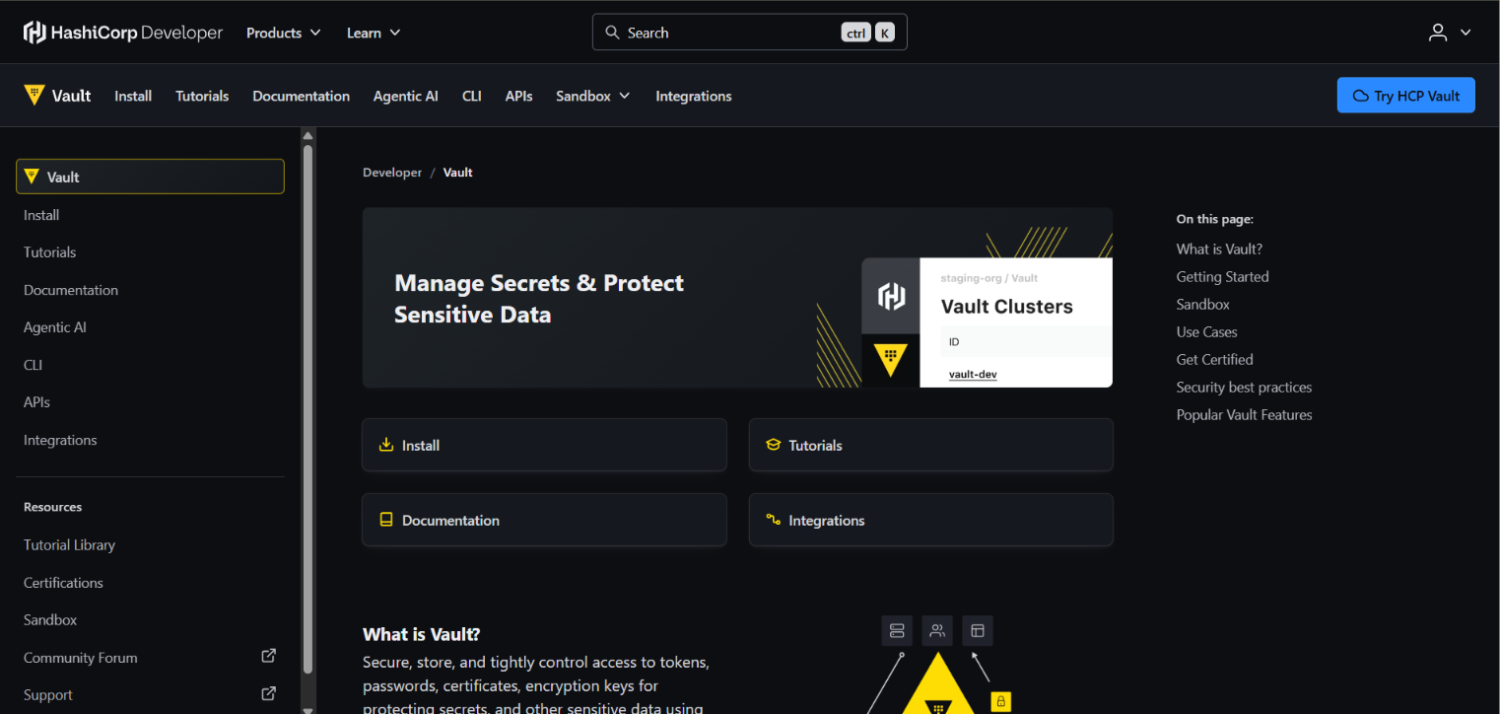
HashiCorp Vault is not a certificate lifecycle management tool in the traditional sense. It is a secrets management platform that includes a PKI secrets engine capable of issuing short-lived certificates, a transit engine for encryption-as-a-service, and dynamic secrets engines for cloud IAM, databases, and other credential types. The PKI engine can function as an intermediate CA, issuing certificates to services at runtime without storing long-lived credentials.
Vault’s fit is strongest for platform engineering teams that are already running Vault for secrets management and want to extend it to certificate issuance. Running Vault as a CLM replacement for a large enterprise PKI estate is operationally demanding. The tool does not provide the discovery, inventory, and compliance reporting that dedicated CLM platforms offer. Teams that go this route often build their own certificate inventory on top of Vault’s audit logs, which is workable but requires engineering investment. HashiCorp Cloud Platform (HCP) Vault provides a managed Vault service; for current pricing details, consult HashiCorp’s pricing page directly, as the pricing model and structure are subject to change.
Vault is also the most common backend for secrets management in enterprises that need to govern workload credentials beyond certificates. For teams evaluating how workload identity fits into a broader non-human identity security program, Vault is a foundational layer, not a complete solution on its own.
Akeyless: SaaS-First Secrets and Dynamic Credentials for Multi-Cloud
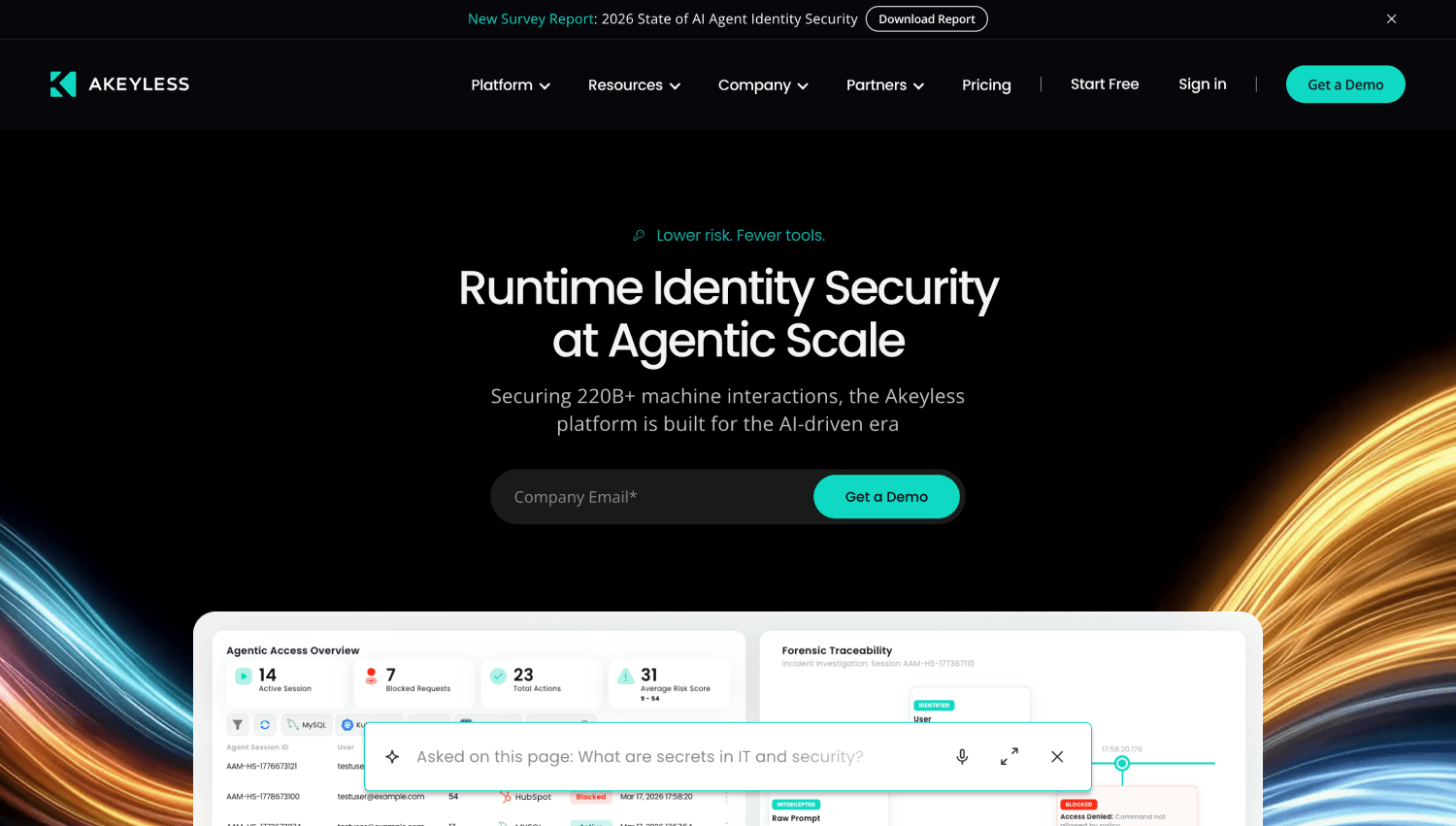
Akeyless takes a SaaS delivery model for what is otherwise Vault territory: secrets storage, dynamic secrets, and certificate issuance. Its architecture uses a distributed key fragments model where no single node holds the complete encryption key, which is the primary architectural differentiator from Vault in terms of key custody.
Akeyless’s certificate management capability is secondary to its secrets management core. Teams evaluating Akeyless as a CLM replacement will find that it handles certificate issuance via its PKI backend but lacks the discovery and inventory depth of Venafi or Keyfactor. Its primary appeal is to teams that want Vault-equivalent functionality without the operational overhead of self-hosting Vault, and who need multi-cloud secrets governance in one place. Akeyless does not publish list pricing for enterprise tiers; a free tier exists for small deployments.
Aembit: Workload Identity for Service-to-Service Authentication
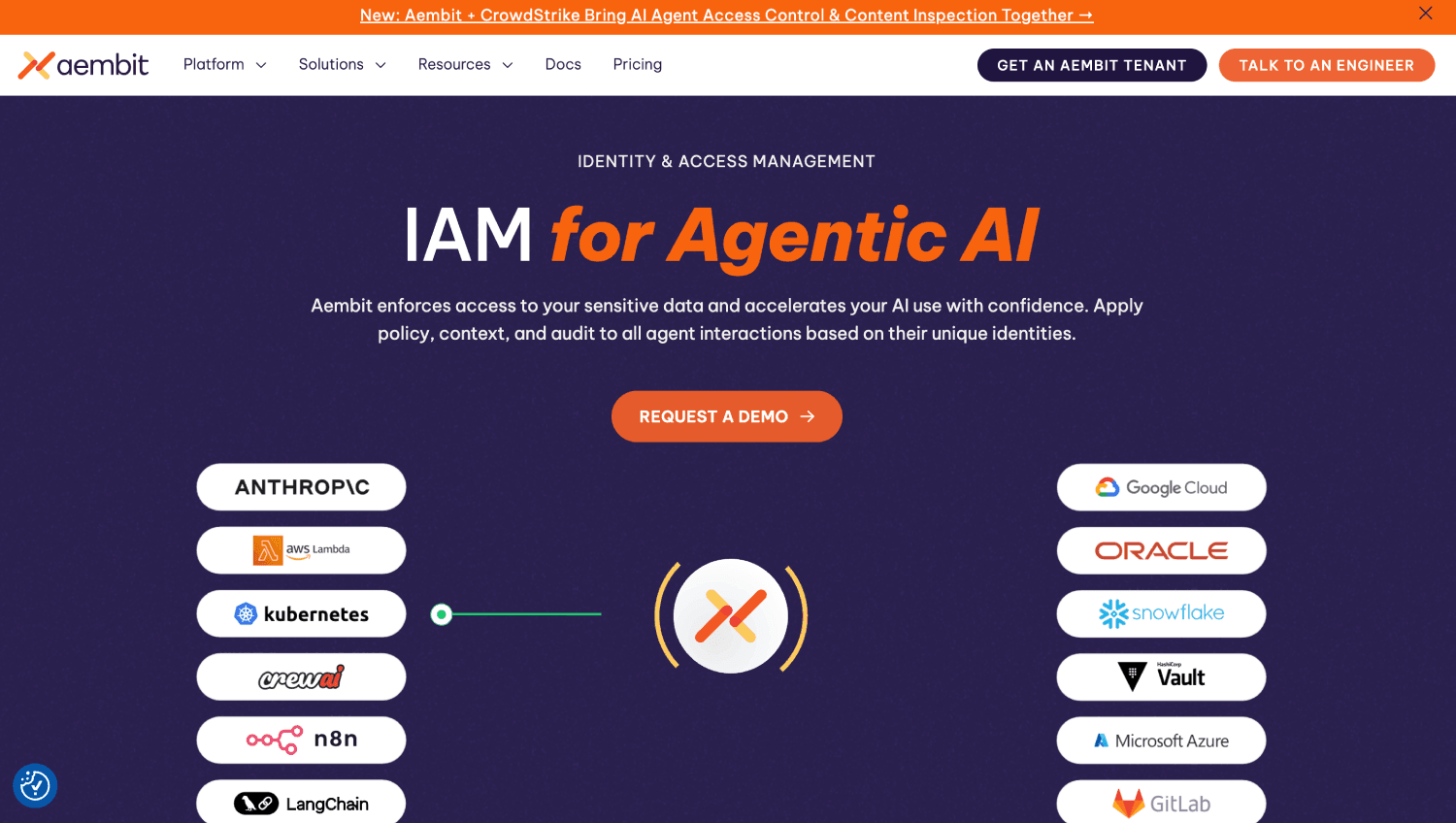
Aembit addresses a specific gap that certificate-focused tools do not cover: governing how services authenticate to each other at the application layer using cloud-native credentials. Rather than managing certificates, Aembit brokers access between workloads by issuing short-lived credentials appropriate to the target service (AWS SigV4, OAuth tokens, API keys) based on verified workload identity at runtime.
This model is closest to the zero standing privilege principle applied to service-to-service communication. A service never holds a long-lived API key for a downstream dependency. Instead, it requests a credential at call time, Aembit verifies its identity against a policy, and issues a short-lived token. The attack surface for credential theft shrinks to the duration of the token, typically minutes. The operational requirement is that every service needing downstream access is enrolled in Aembit’s workload identity model, which requires changes to how services are deployed. Aembit does not publish list pricing.
SPIFFE/SPIRE: The Open Standard for Workload Identity Federation
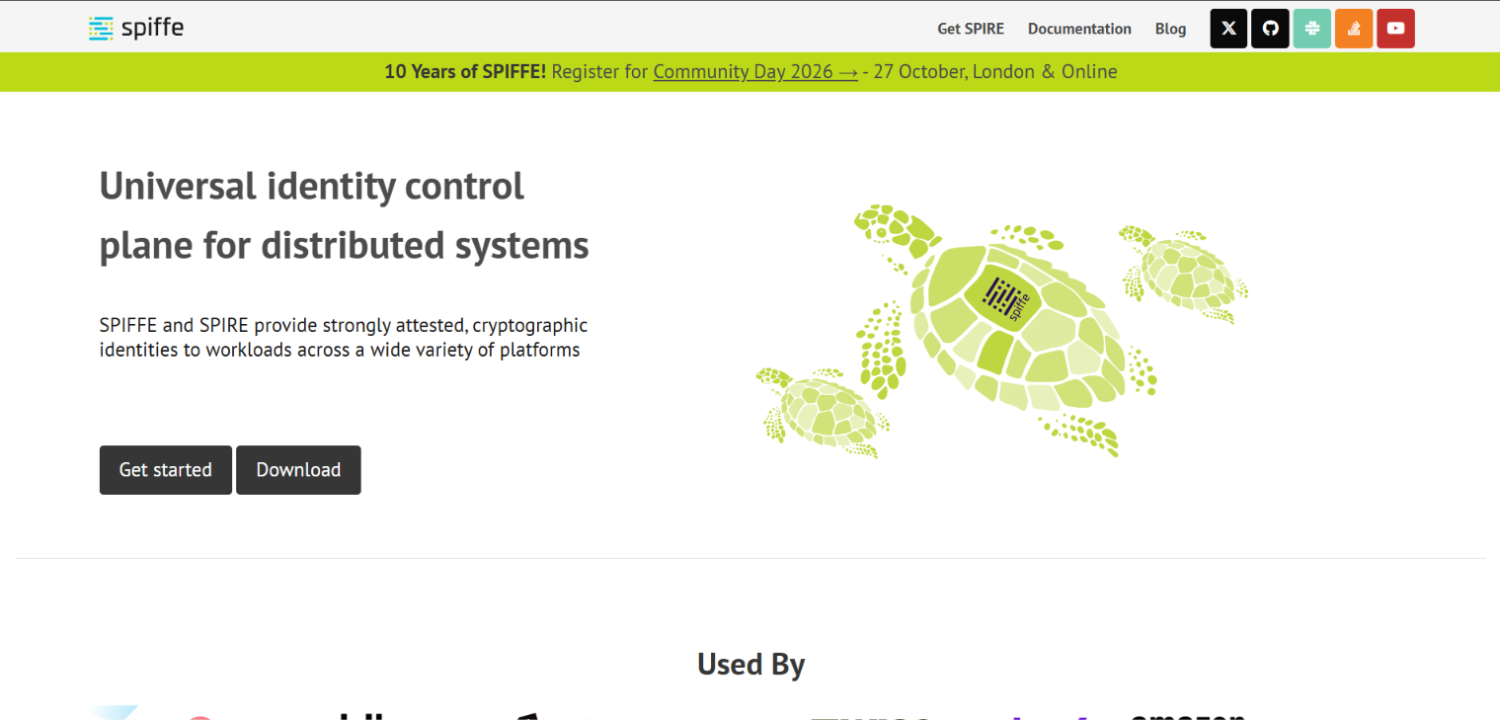
SPIFFE (Secure Production Identity Framework for Everyone) is a CNCF standard, not a vendor product. SPIRE (SPIFFE Runtime Environment) is the reference implementation. Together, they define how workloads in any environment, Kubernetes, VMs, bare metal, or cloud functions, can receive a cryptographic identity called an SVID (SPIFFE Verifiable Identity Document) that other services can verify without trusting a shared secret.
SPIFFE SVIDs are X.509 certificates (or JWT tokens) with a URI subject alternative name following the SPIFFE ID format (spiffe://trust-domain/path). This means SPIRE integrates naturally with mTLS infrastructure, service meshes like Istio and Linkerd, and any system that can validate an X.509 certificate. The critical operational requirement for a SPIRE deployment is attestation plugin configuration: SPIRE needs to verify that the workload requesting an identity is actually running where it claims to be, and the attestation mechanism varies by platform (Kubernetes service account, AWS EC2 instance identity documents, GCP metadata tokens).
Running SPIRE in production requires platform engineering capacity. The tool does not include a management UI, compliance reporting, or the certificate discovery features of a CLM platform. Teams that have built on SPIRE typically pair it with a CLM tool for their traditional PKI estate and use SPIRE for workload-to-workload authentication in their cloud-native layer. Several commercial products, including Venafi Firefly and Smallstep, offer SPIFFE-compatible issuance, which allows a team to adopt the SPIFFE standard without operating SPIRE directly.
Entrust PKI: Regulated Industry Certificate Management and Device Identity
Entrust PKI is strongest in regulated industries where the CA itself must meet specific compliance requirements. Its managed PKI service issues certificates for TLS, S/MIME, document signing, and device identity (IoT, smart card, and MDM-enrolled endpoints). Entrust holds FedRAMP authorizations and provides managed services for public sector and financial services customers where the compliance posture of the CA matters as much as the certificate management workflow.
Entrust is not primarily a developer-facing or DevOps-integrated tool. Teams choosing Entrust typically care about audit trails, CA compliance posture, and long-term vendor stability more than automation depth. The ACME support and CI/CD integrations are available but are not the primary selling point. For organizations with heavy IoT device identity requirements or public sector CA requirements, Entrust fits a gap that developer-centric CLM tools do not address well. Pricing is not publicly listed and is quoted per environment.
CyberArk Conjur: Workload Credentials for DevOps Pipelines
CyberArk Conjur manages secrets and workload credentials for CI/CD pipelines, Kubernetes workloads, and cloud-native applications. As a CyberArk product, it integrates with the broader CyberArk PAM platform, which makes it a natural choice for organizations already running CyberArk for privileged access and wanting to extend that governance model to application secrets and workload credentials.
Conjur’s authentication model for workloads uses platform-native identity where available (Kubernetes service account tokens, AWS IAM roles, Azure Managed Identities) to authenticate the requesting workload before issuing a secret. This is the same principle SPIRE uses for attestation, but implemented within a commercial product with a management UI and policy engine. The trade-off relative to Vault is that Conjur’s integration surface is narrower. Teams that run a mixed environment of on-premises Windows workloads, Jenkins pipelines, and AWS Lambda functions will find Vault’s broader integration surface more complete. Conjur fits best in enterprises where the CyberArk platform is already the PAM standard and adding workload credential governance is an extension of an existing investment.
How Short-Lived Credentials Change the Operational Model
The traditional certificate lifecycle management workflow assumes long-lived certificates (one to two years was standard before browsers and CAs began pushing toward 90-day maximums) that require proactive renewal before expiry. The operational burden scales linearly with certificate count. At a few hundred certificates, a renewal calendar and some automation scripts work. At tens of thousands of certificates across hybrid environments, they do not.
Short-lived credentials invert this. A certificate that expires in 24 hours cannot be forgotten, because the service stops working the next day if renewal fails. This forces renewal automation to be reliable by necessity rather than by discipline. The platforms that issue short-lived credentials natively, Smallstep, Vault’s PKI engine, SPIRE, and Aembit, eliminate the class of risk where a long-lived credential is stolen and used long after the theft is detected.
The practical limit of the short-lived credential model is that it requires a reliable issuance infrastructure. If your CA or your attestation service goes down, your services cannot get credentials and may fail to start or fail to authenticate. This is a new class of availability dependency that teams adopting short-lived credentials need to design for explicitly, with redundant SPIRE servers, multi-region CA deployments, or cached credentials with graceful degradation. For teams thinking about how AI agents and automated workloads fit into this model, the AI agent security platforms coverage examines credential governance for autonomous workloads specifically.
What Does Per-Certificate or Per-Workload Pricing Look Like at Scale
Most certificate lifecycle management vendors do not publish list pricing. The per-certificate model is common but opaque: vendors typically tier pricing by certificate count bands, and the per-certificate rate decreases as volume increases. The practical problem for buyers is that the initial certificate discovery scan almost always surfaces more certificates than expected, because shadow PKI grows quietly over years of manual issuance. A team that budgets for 2,000 certificates and discovers 8,000 in their first CLM scan faces a significant pricing renegotiation before the tool is even deployed.
Workload identity platforms generally use per-node or per-workload pricing, and the count scales with the compute estate. A large Kubernetes cluster running hundreds of pods per node can produce credential request volumes that exceed the assumptions of a per-workload pricing model quickly. Teams should request pricing based on their actual peak workload count, not their node count, because pods and containers are the credential-requesting entities in a Kubernetes environment, not nodes.
Smallstep publishes its pricing at smallstep.com/pricing, which makes it the most transparent of the tools covered here. HashiCorp’s HCP Vault pricing is published at the link cited earlier. Every other vendor in this list requires a direct conversation for pricing. That is not unusual in enterprise security, but it means buyers should request detailed pricing scenarios for their specific certificate count, workload count, and CA configuration during evaluation, not during contract negotiation.
The SecurityOpsWire Credential Coverage Test: Assigning Owners Before You Buy
The most common failure mode in machine identity management is not buying the wrong tool. It is buying a certificate tool and assuming the workload credential problem is solved, or buying a secrets manager and assuming certificate inventory is covered. The SecurityOpsWire Credential Coverage Test prevents this by requiring an owner assignment before a tool selection.
Run it in four steps. First, enumerate your credential classes: TLS/SSL certificates, SSH keys, API keys, service account credentials (cloud IAM, Kubernetes service accounts, AD service accounts), workload tokens (OIDC, OAuth, SPIFFE SVIDs), and secrets stored in code or configuration. Second, for each class, identify who currently owns its lifecycle: who issues it, who rotates it, who revokes it, and who knows when it expires. Third, identify which classes have no owner and no tooling. Fourth, select tools to cover the gaps, one tool per gap, with ownership assigned before the procurement starts.
Teams that run this audit before evaluating tools consistently find that their certificate gap and their workload credential gap require different tools and different owners. The security engineering team that owns PKI is rarely the same team that owns CI/CD pipeline secrets. Buying Venafi for the PKI team and then expecting the DevOps team to govern their pipeline secrets through the same tool does not work operationally. The credential classes are different, the teams are different, and the tooling needs to match both. For a broader view of how non-human identity governance fits into the overall identity program, the non-human identity security platforms coverage addresses the full scope beyond machine credentials specifically.
One additional consideration for organizations deploying AI agents and automated pipelines: machine identity governance for agentic workloads is an emerging requirement that most CLM tools have not yet addressed. The AI agent security platforms market is developing credential governance features specifically for autonomous workloads that operate outside traditional human-approval workflows.
Frequently Asked Questions
Does machine identity management mean certificates, workload identity, or both?
Both, and more. Machine identity management covers every credential type a non-human entity uses to authenticate: X.509 certificates, SSH keys, API keys, service account credentials, OAuth and OIDC tokens, SPIFFE SVIDs, and cloud IAM roles. Certificate lifecycle management tools handle the X.509 subset. Workload identity platforms handle runtime credential issuance for services and containers. Most enterprises need both, and the tools do not overlap as much as vendors suggest.
What breaks at certificate expiry and how fast does it happen?
Certificate expiry on an internal service produces an immediate hard failure for any client that validates the certificate chain. In microservice architectures, that failure cascades across dependent services in seconds to minutes. Publicly trusted certificates that expire produce browser warnings or connection refusals depending on the client. The failure is binary: the certificate is either valid or it is not. There is no graceful degradation, which is why automated renewal before expiry is the only reliable mitigation at scale.
How do machine identity tools handle short-lived credentials?
Platforms like Smallstep, HashiCorp Vault’s PKI engine, SPIRE, and Aembit issue credentials with short validity periods (hours to days) that expire by design, forcing automated re-issuance rather than manual renewal. This eliminates long-lived credential theft as a persistent attack vector, because a stolen credential expires before an attacker can reliably reuse it. The operational requirement is a reliable CA or credential issuance service with redundancy, since every service depends on it for authentication at startup and at token expiry.
What is mTLS and which tools support it natively?
Mutual TLS (mTLS) is a variant of the TLS handshake where both the client and the server present certificates, allowing each to verify the other’s identity. It is the primary authentication mechanism for service-to-service communication in zero trust network architectures. SPIRE and Smallstep issue certificates specifically designed for mTLS workload authentication. Venafi Firefly and Keyfactor support mTLS certificate issuance in Kubernetes environments. Service meshes like Istio implement mTLS using SPIFFE-compatible certificates, making SPIRE a natural integration point.
What is SPIFFE and do I need to run SPIRE to use it?
SPIFFE is a CNCF open standard for workload identity that defines a common format for cryptographic workload identities (SVIDs) and a set of APIs for issuing and validating them. SPIRE is the reference implementation you run yourself. You do not have to run SPIRE directly: commercial products including Venafi Firefly and Smallstep Certificate Manager issue SPIFFE-compatible SVIDs. Teams that want the SPIFFE standard without the operational overhead of self-hosting SPIRE can use either of those commercial options.
How does per-certificate pricing scale for large PKI estates?
Per-certificate pricing models typically tier by volume, with the per-certificate rate decreasing at higher counts. The risk for buyers is certificate discovery: CLM platforms routinely surface more certificates than teams expect because shadow PKI grows silently over years of manual issuance. A team budgeting for a specific count that discovers double that number in their first inventory scan will face a significant price increase before deployment is complete. Request pricing based on a worst-case discovery scenario, not your current estimated count, before signing a contract.
Is CyberArk’s Conjur the same as Venafi’s machine identity platform?
No. CyberArk Conjur manages application secrets and workload credentials for DevOps pipelines, Kubernetes, and cloud-native environments. Venafi manages certificates, SSH keys, and code-signing credentials across enterprise PKI. The two products serve adjacent but distinct problems: Conjur governs how applications get secrets at runtime, while Venafi governs the certificate lifecycle of the credentials machines use to authenticate. CyberArk positions them as complementary within its platform.
Which machine identity management tool fits a team with no dedicated PKI engineer?
Smallstep or Keyfactor in SaaS mode are the most operationally accessible for teams without dedicated PKI expertise. Smallstep’s short-lived certificate model reduces the operational burden of renewal management, and its developer-native tooling integrates with existing CI/CD workflows. Keyfactor’s SaaS delivery eliminates the infrastructure maintenance that Venafi’s on-premises deployment requires. HashiCorp Vault and SPIRE both require platform engineering capacity to operate reliably; they are not appropriate for teams without that expertise on staff.
Drawing the Line Between Certificate Lifecycle and Workload Identity
The category confusion in machine identity management exists because vendors have financial incentives to expand their definitions. A certificate tool that calls itself a machine identity platform reaches a larger buyer pool. A secrets manager that adds a PKI backend can legitimately claim certificate support. None of that marketing is wrong, but it obscures a real architectural distinction: certificate lifecycle management is a governance and compliance discipline applied to a specific credential type, while workload identity is an authentication architecture that determines how services prove their identity at runtime.
Enterprises that treat these as one problem end up with one of two failure modes. The first is buying a CLM tool, declaring machine identity solved, and leaving CI/CD pipeline secrets, Kubernetes service account tokens, and cloud IAM role bindings ungoverned. The second is adopting a workload identity platform for their modern cloud infrastructure while running no inventory on thousands of certificates embedded in load balancers, network devices, and legacy application servers. Both gaps are real, both get found, and neither is hard to address once the credential coverage map exists.
Start with the SecurityOpsWire Credential Coverage Test before evaluating tools. Assign an owner to each credential class before you write a vendor shortlist. The right tool for your certificate problem and the right tool for your workload credential problem may be the same vendor or they may be two separate products, but the decision is clearer once each class has an owner who can evaluate tools against their operational reality rather than a consolidated vendor’s marketing map.