
- The tools that actually reduce tier-1 workload produce a full investigation trail: every query run, every data source checked, every inference made. Without that trail, a human analyst still has to redo the work to trust the conclusion.
- Most platforms on this list go further than alert summarization. The better ones perform multi-step investigations, pull enrichment from integrated sources, and hand off with a structured verdict and supporting evidence.
- Investigation transparency is the right comparison axis, not automation rate. A tool claiming 90% auto-close means nothing without knowing what percentage of those closures were correct and auditable.
- Pricing models vary significantly: some tools charge per alert investigated, some per analyst seat, some as a platform tier. At high alert volumes, per-alert pricing can outrun the cost of a junior analyst. Ask vendors for a volume break before signing.
- Platform-native AI analysts (CrowdStrike Charlotte, Microsoft Security Copilot) carry lower integration friction but give up breadth when your stack is heterogeneous. Purpose-built analysts (Dropzone, Prophet, Radiant) ingest across stacks but require more connector configuration upfront.
The best AI SOC analyst tools for tier-1 alert investigation are purpose-built autonomous agents that execute multi-step investigations, gather evidence across integrated data sources, and produce a structured, auditable verdict with supporting reasoning. They are distinct from SIEM correlation rules and SOAR playbooks because they reason over context rather than matching static conditions. Platforms worth evaluating include Dropzone AI, Prophet Security, Radiant Security, Intezer, Qevlar AI, Exaforce, Conifers, CrowdStrike Charlotte AI, Microsoft Security Copilot, and Legion. The comparison that matters is investigation transparency, not the automation percentage a vendor quotes in a pitch deck.
Is the “AI SOC Analyst” Category Real, or Is It Repackaged Automation?
The Reddit thread ranking second for “ai soc analyst” asks exactly this: future or hype? It deserves a direct answer. Most of what vendors called “AI-assisted triage” through 2023 was threshold-based filtering with a language model bolted on to write the summary. That is not what the current generation of purpose-built AI SOC analysts does.
The structural difference is where the reasoning happens. A SOAR playbook executes a fixed sequence of steps when a condition is met. An AI SOC analyst generates its own investigation plan based on alert context, executes queries it was not explicitly told to run, and revises its hypothesis when evidence contradicts the initial read. The output is not a formatted alert; it is a documented investigation with sourced conclusions. That distinction matters operationally because it changes what a human analyst has to verify rather than redo.
Where the hype is real: many platforms in this space overstate their closed-loop capability. Auto-close rates above 80% sound impressive until you ask what the false-negative rate is on those closures, and most vendors do not publish that figure. Teams evaluating these tools should run a structured backtest against closed tier-1 tickets before any production deployment. That backtest is the methodology described in the behavioral goal of this article, and it is the only honest way to answer the hype question for your own environment.
What Does an AI Analyst Actually Do That a Triage Rule Cannot?
A triage rule answers one question: does this alert match a known pattern? An AI analyst answers a different set of questions: what else is happening in this environment that is related, what does the involved entity’s history look like, does the sequence of events indicate a real threat or an administrative action, and what is the next logical investigative step?
The operational gap a rule cannot close is multi-hop correlation without pre-defined paths. Say an EDR alert fires on a process executing from a temp directory. A rule can check a threat intel feed for the hash and close it if it is clean. An AI analyst can check the hash, then check whether that user account made a VPN connection from an unusual geography in the prior 12 hours, then check whether any lateral movement occurred from that endpoint after the process ran, then check whether the process spawned any child processes that contacted external IPs. None of those subsequent checks required a human to specify them in advance.
That is the architectural difference. It matters for tier-1 work specifically because tier-1 volume is high, context is low, and the cost of sending a false positive to tier-2 is wasted senior analyst time. The tools in this list are evaluated on whether they actually do that kind of multi-hop reasoning or whether they are sophisticated summarizers dressed in agentic language.
The SecurityOpsWire Investigation Transparency Test
Before the per-tool breakdown, a methodology for evaluation. This framework is what separates a credible bench test from a vendor demo. We call it the Investigation Transparency Test: four questions that map to four observable outputs any AI analyst should be able to produce.
1. Query visibility: Can you see every data query the system issued, in order, with the results it returned? If a vendor shows you a verdict without showing you the queries, the reasoning is a black box and the verdict is unauditable.
2. Evidence chain: Does the system produce a linked chain from raw evidence to conclusion, or does it produce a prose summary that asserts a conclusion? A prose summary can be correct and still untestable. An evidence chain can be wrong and still show you exactly where the error occurred.
3. Escalation handling: When the system cannot reach a conclusion with high enough confidence, does it escalate with a structured partial investigation, or does it dump the raw alert back on the queue? The escalation artifact is often more useful than the auto-close, because it shows a tier-2 analyst exactly what was already checked.
4. Confidence scoring: Does the system communicate uncertainty, or does it present every conclusion as equally definitive? A system that says “I assessed this as benign with high confidence based on X, Y, Z” is more useful than one that says “alert closed” with no supporting material.
Run your team’s last 50 closed tier-1 tickets through any candidate platform and grade it on all four dimensions. That is the benchmark the behavioral goal describes. No demo covers this. A proof of concept does.
The 10 AI SOC Analyst Platforms Compared
| Platform | Investigation depth | Query visibility | Escalation artifact | Pricing model | Best fit |
|---|---|---|---|---|---|
| Dropzone AI | Multi-hop, agentic | Full query log | Structured partial investigation | Not publicly disclosed | Mid-market to enterprise, heterogeneous stacks |
| Prophet Security | Multi-hop, agentic | Full audit trail | Structured escalation | Not publicly disclosed | Enterprise, complex multi-tool environments |
| Radiant Security | Multi-step, AI-driven | Step-by-step log | Partial investigation handoff | Not publicly disclosed | Teams with high EDR and SIEM alert volume |
| Intezer | Deep file and process analysis | Genetic analysis report | Triage report with evidence | Not publicly disclosed | Malware-heavy alert queues, SOCs with endpoint focus |
| Qevlar AI | Agentic, playbook-free | Investigation notebook | Structured escalation | Not publicly disclosed | Lean SOC teams, MSSP environments |
| Exaforce | Agentic, SIEM-integrated | Query and reasoning log | Escalation with context | Not publicly disclosed | Organizations migrating off legacy SIEM |
| Conifers | Workflow-driven investigation | Audit trail | Structured handoff | Not publicly disclosed | Teams wanting analyst workflow integration |
| CrowdStrike Charlotte AI | Falcon-native, guided queries | Conversation and query log | Summary with evidence links | Not publicly disclosed | CrowdStrike-native environments |
| Microsoft Security Copilot | Multi-product, M365/Sentinel native | Promptbook and step log | Incident summary with linked signals | Capacity-based (SCU model); contact Microsoft for pricing | Microsoft-heavy enterprise environments |
| Legion | Agentic, threat hunting capable | Investigation log | Escalation report | Not publicly disclosed | Threat hunting teams augmenting tier-1 |
Dropzone AI
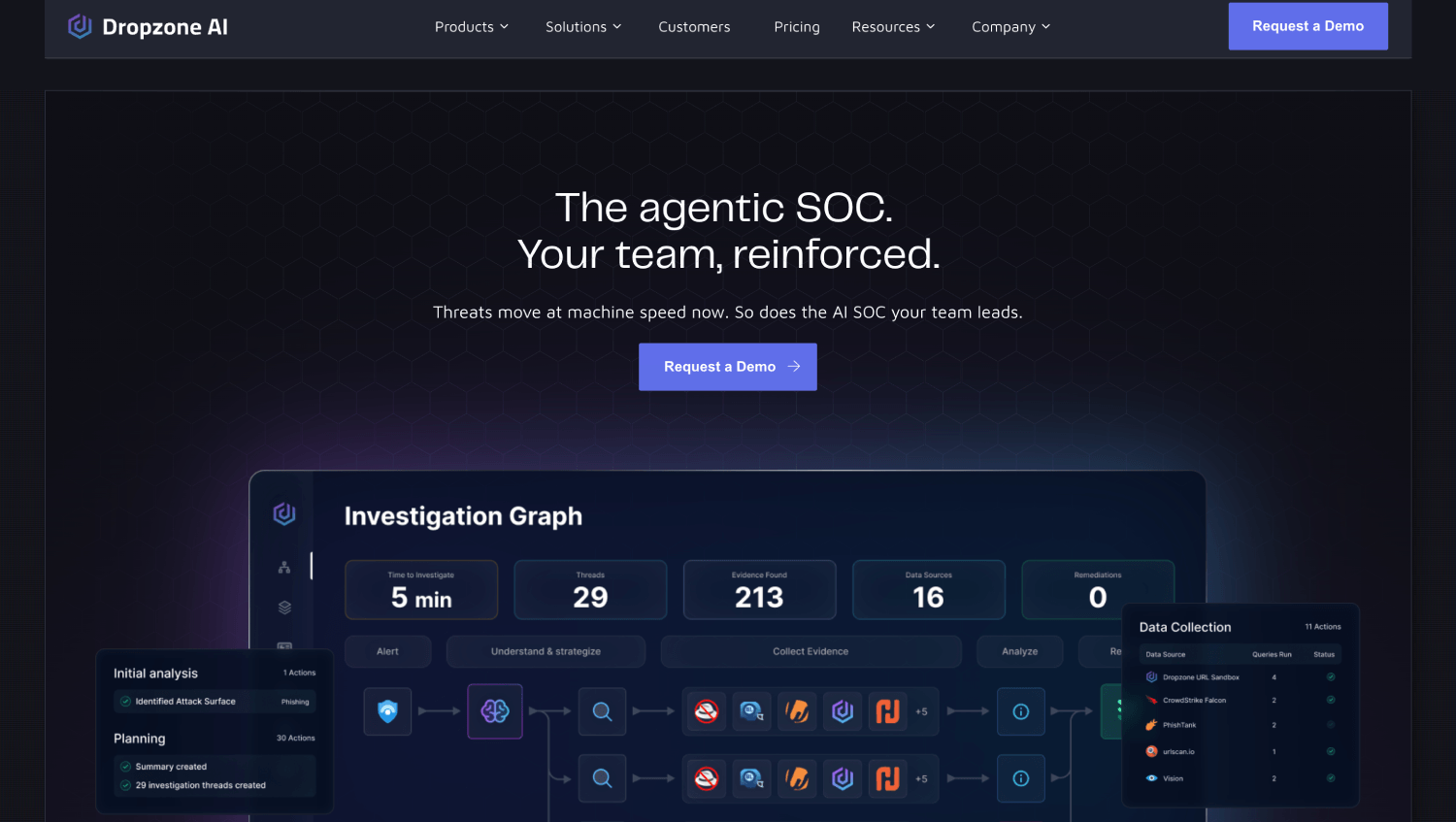
Dropzone AI positions itself as a fully autonomous SOC analyst that investigates every alert without requiring a human to initiate the process. The platform builds an investigation plan per alert, executes queries across connected data sources, and produces a structured report with evidence and a verdict. The query log is visible, which satisfies the first dimension of the Investigation Transparency Test.
Where Dropzone earns its placement at the top of most evaluator lists: it does not require pre-written playbooks. The agent reasons from alert context and available integrations, which means it handles alert types that were not anticipated at deployment time. The trade-off is that the quality of the investigation scales with the quality of connected data sources. A Dropzone deployment against a SIEM with poor normalization will produce thinner investigations than one against a well-tuned stack. Dropzone does not publicly disclose pricing; quotes are environment-specific.
Prophet Security
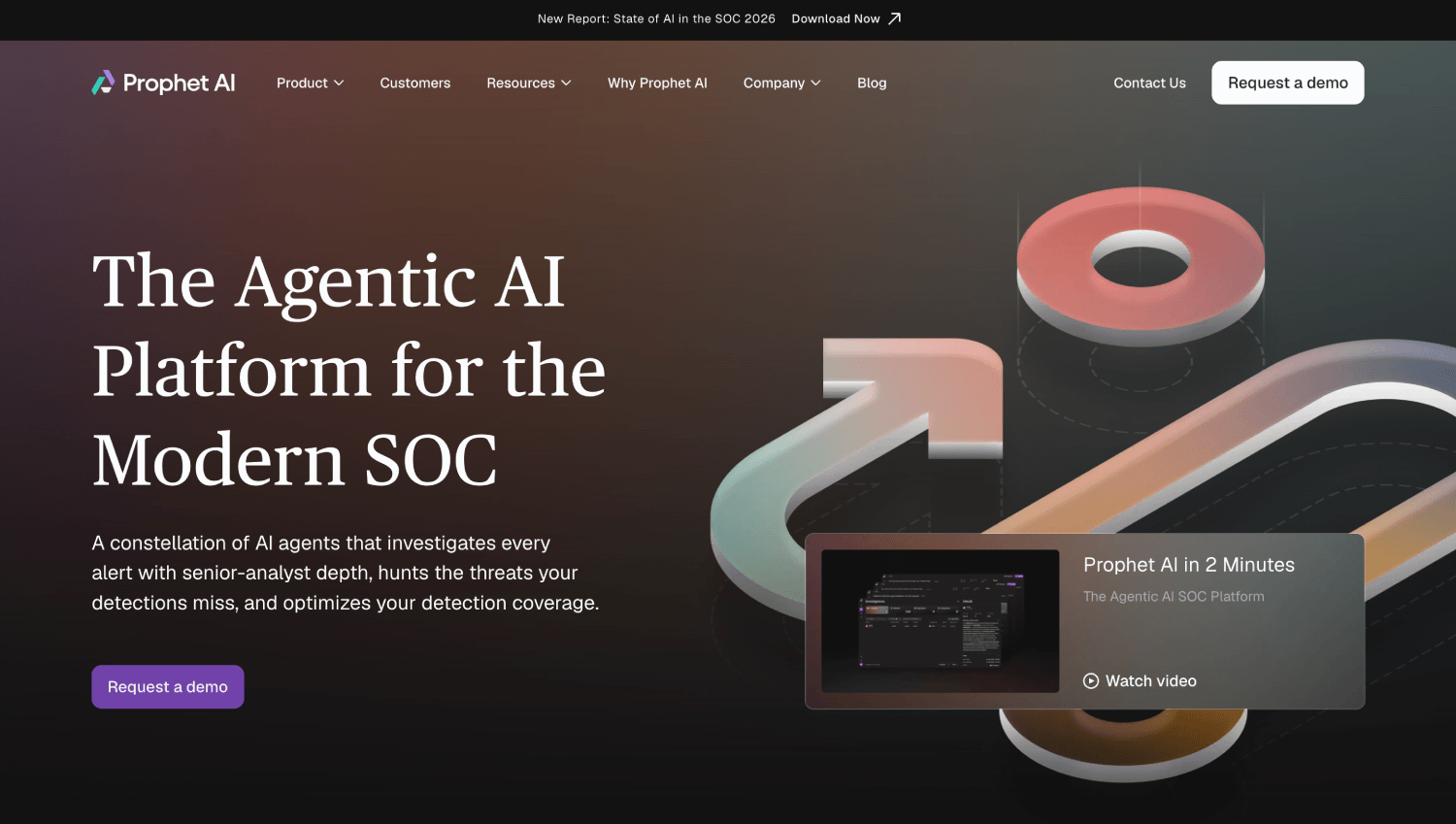
Prophet Security takes an agentic approach that emphasizes the full investigation trail. The platform runs multi-step investigations, records each step, and generates a structured audit trail that shows a human analyst exactly what was checked and in what order. This directly addresses the concern that AI SOC tools produce conclusions a human still has to rebuild from scratch.
Prophet is positioned toward enterprise environments with complex, multi-tool stacks. The connector library matters here: a platform this investigation-focused is only as good as the breadth of data it can query. Prophet does not publish pricing; prospective customers work through a scoping conversation with the sales team.
Radiant Security
Radiant Security focuses on AI-driven SOC operations with an emphasis on reducing mean time to respond at tier-1. The platform runs automated investigations across EDR and SIEM data, generates a step-by-step investigation log, and identifies whether an alert represents a real incident or a false positive before it reaches a human analyst.
Radiant fits teams where EDR and SIEM alert volume is high enough that manual triage creates a queue backlog. The platform’s escalation artifact is structured rather than a raw alert re-queue, which means tier-2 analysts receive context rather than a starting point. Pricing is not publicly disclosed.
Intezer
Intezer approaches tier-1 investigation from a different angle than the other platforms on this list. Its core capability is genetic code analysis: identifying malware by comparing code segments to a database of known malicious and legitimate software. This makes Intezer particularly strong for endpoint and file-based alert queues where the central question is whether a binary is malicious, a modified known tool, or legitimate software misused.
For SOCs where a significant portion of tier-1 volume involves file execution, process injection, or memory anomaly alerts, Intezer’s evidence model is among the most transparent available. The analysis report shows which code segments matched known malicious families and which matched benign software, giving an analyst a specific technical basis for the verdict rather than a confidence score. Pricing is not publicly disclosed.
Qevlar AI
Qevlar AI is built for lean SOC teams and MSSP environments where one analyst may be handling alerts across multiple customer environments. The platform runs playbook-free investigations, meaning it does not require a security engineer to pre-configure investigation logic for each alert type. Qevlar produces an investigation notebook per alert, which maps to the evidence chain dimension of the Investigation Transparency Test.
The MSSP fit is meaningful: Qevlar’s multi-tenancy model allows a single analyst to review AI-generated investigations across client environments without context-switching at the alert level. Pricing is not publicly disclosed.
Exaforce
Exaforce is positioning itself as a SIEM-integrated AI analyst, which makes it relevant for organizations in the middle of SIEM modernization or those who want AI investigation capabilities without ripping out their existing log infrastructure. The platform runs agentic investigations anchored to SIEM telemetry, with a query and reasoning log that satisfies the transparency requirement.
For teams evaluating Exaforce, the relevant question is how deeply it integrates with the specific SIEM in place. The strength of the investigation correlates with the depth of the data pipeline. Pricing is not publicly disclosed.
Conifers
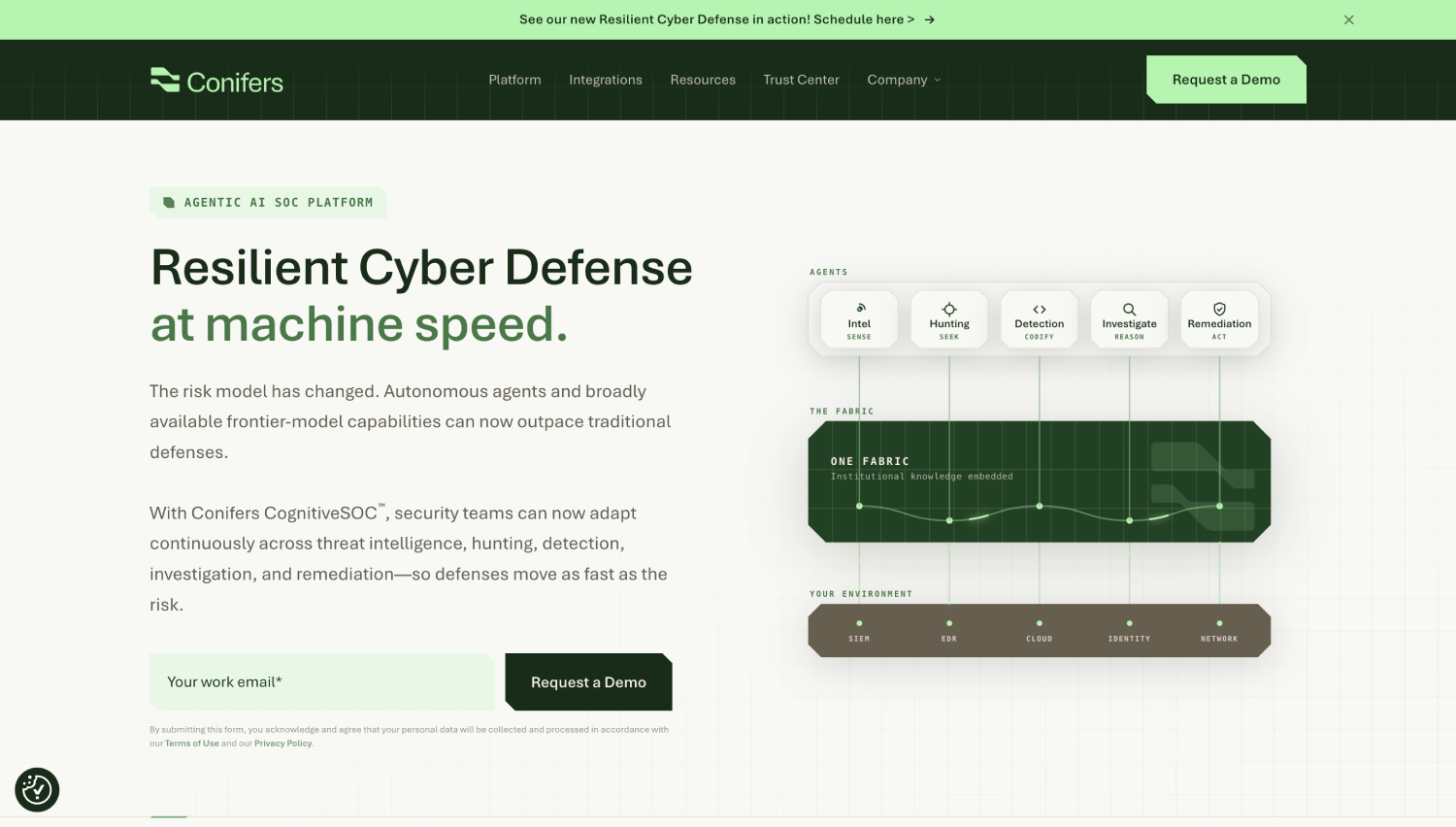
Conifers takes a workflow-centric approach, positioning the AI analyst as something that fits into existing analyst workflows rather than replacing them wholesale. The platform generates an investigation audit trail and hands off to analysts at natural decision points rather than attempting full auto-closure on every alert type.
This positioning is pragmatic for organizations where security leadership is not ready for fully autonomous closure decisions. Analysts remain in the loop, but they are reviewing structured evidence rather than starting investigations from scratch. Pricing is not publicly disclosed.
CrowdStrike Charlotte AI
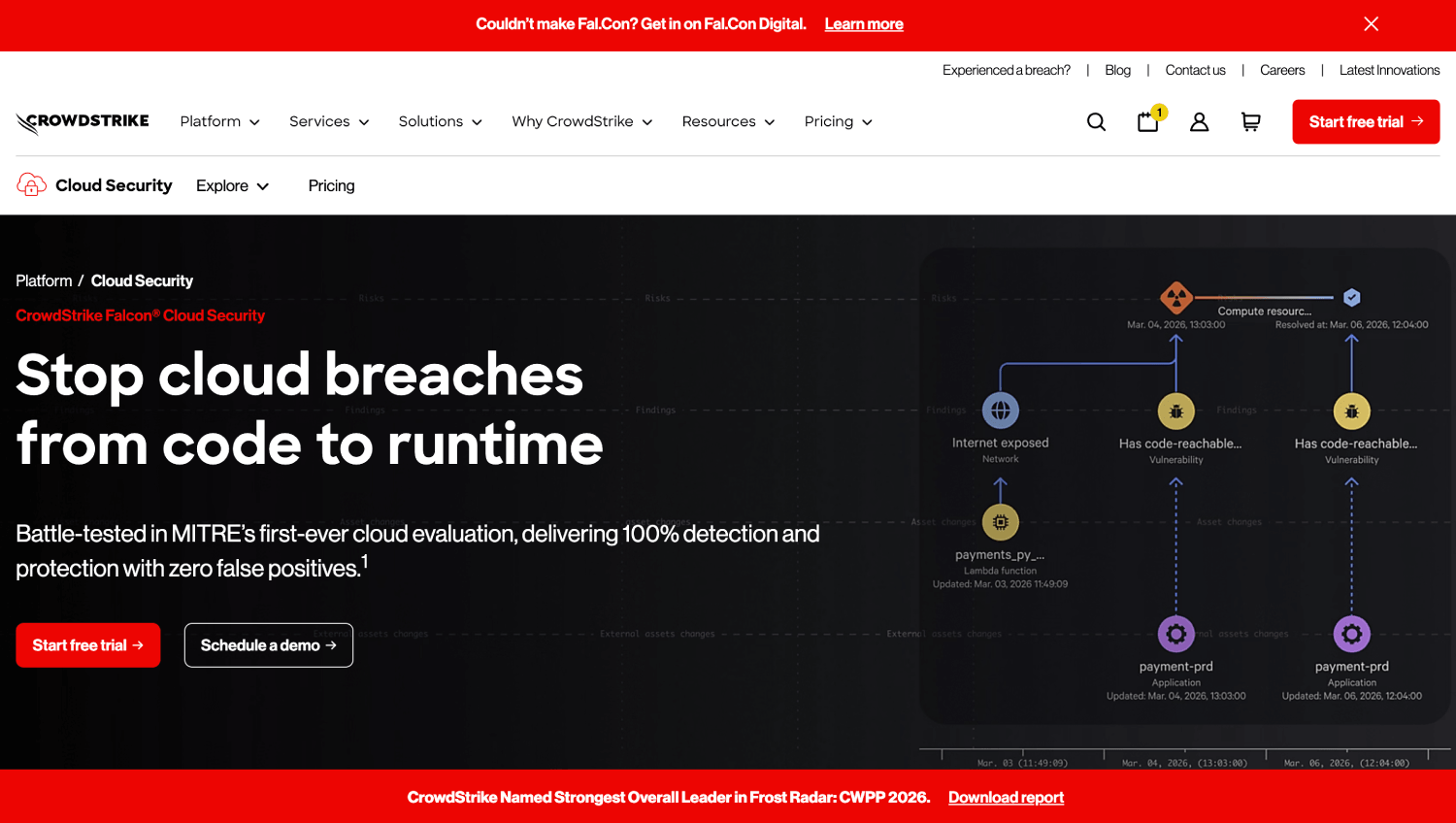
CrowdStrike Charlotte AI is the AI analyst layer embedded in the Falcon platform. For organizations already running CrowdStrike across endpoint, identity, and cloud telemetry, Charlotte AI surfaces as a natural investigation accelerator. It supports natural language queries against Falcon data, generates conversation-style investigation sessions with linked evidence, and produces incident summaries with supporting signal references. CrowdStrike does not publicly disclose which Falcon tiers include Charlotte AI or at what price point; contact CrowdStrike directly for current packaging details.
The limitation is the same as any platform-native AI analyst: it is most useful when your telemetry is already flowing through that platform. A team running CrowdStrike for endpoint but a different vendor for cloud or identity will find Charlotte AI’s investigation depth constrained to Falcon data.
Microsoft Security Copilot
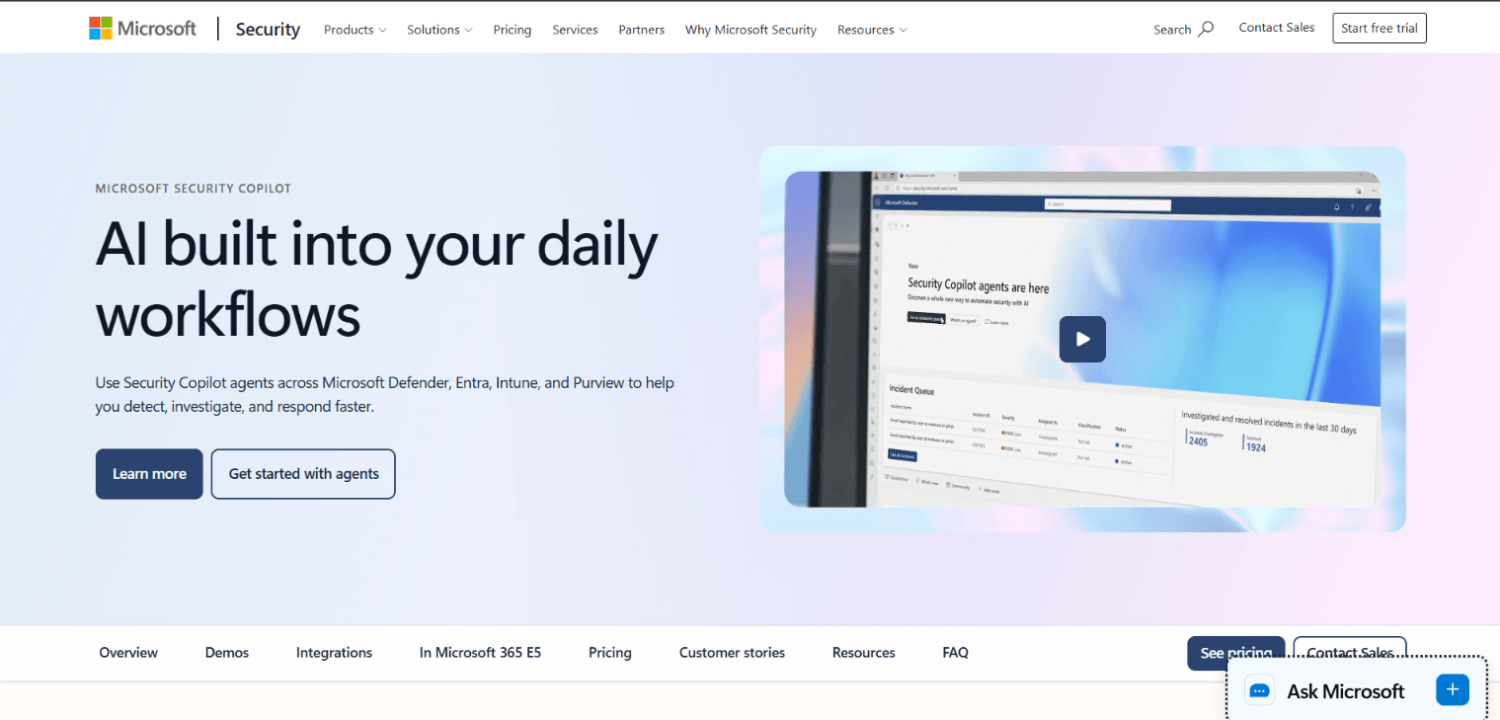
Microsoft Security Copilot operates across Microsoft Defender, Sentinel, Intune, and Entra, which gives it broad data access in Microsoft-centric environments. It uses a promptbook model: structured, repeatable investigation sequences that an analyst can run against an incident or that can be triggered automatically. Each promptbook step is logged, satisfying the query visibility requirement for auditable investigations.
Microsoft prices Security Copilot on a Security Compute Unit (SCU) model rather than per seat or per alert. The SCU model means costs scale with computational demand rather than directly with alert volume, which can be advantageous or disadvantageous depending on how the platform is used. Microsoft does not publish per-unit SCU pricing figures in a fixed list; contact Microsoft or your licensing representative for current rates, as figures change with licensing updates. For heterogeneous stacks, Security Copilot is a partial solution. For organizations with deep Microsoft investments, the promptbook model gives security leadership direct visibility into what the system is doing, and deployment friction is lower than with purpose-built tools that require connector configuration across multiple vendors.
Legion
Legion is positioned as an agentic AI analyst tool targeting the intersection of tier-1 alert investigation and threat hunting augmentation. The platform is described as generating an investigation log and escalation report for alerts it cannot fully resolve, with threat hunting capability that can surface related activity outside the reactive alert queue. No source page for Legion was independently verified during the preparation of this article; prospective buyers should contact the vendor directly to confirm current capabilities, integration support, and deployment model before evaluation. Pricing is not publicly disclosed.
How Does Per-Alert and Per-Analyst Pricing Scale at Real Alert Volumes?
Most vendors in this category do not publish pricing, which creates a specific problem during procurement. The pricing model matters more than the list price, and most buyers do not ask the right question until they are negotiating a renewal.
Consider a SOC team processing 8,000 alerts per month, with a human auto-close rate of 60% on obvious false positives. That leaves 3,200 alerts per month that would go to an AI analyst. Per-alert pricing compounds quickly at that volume: even a modest per-alert rate multiplied across thousands of monthly investigations can reach or exceed junior analyst compensation within a year, particularly if volume spikes during an incident period. Vendors offering per-alert models typically negotiate volume discounts; request a volume break scenario in writing before signing any contract. Actual pricing requires a direct quote from the vendor.
Per-analyst seat pricing behaves differently. A team paying a fixed monthly fee per analyst seat has predictable costs regardless of alert volume spikes. The risk is that per-seat pricing does not account for the AI system doing the work of multiple analysts; you are paying for seats that map to human headcount, not to workload handled. Per-alert pricing aligns cost to value but creates budget uncertainty during an incident spike. Ask every vendor on this list for their pricing model before their pricing figure. The model tells you whether costs are predictable.
Platform-native AI analysts (Charlotte AI, Security Copilot) often come as a tier upgrade or compute-based add-on rather than a per-alert or per-seat model. That can make them cost-predictable but can also mean you are paying for capacity you do not always use. If your team evaluates AI SOC platforms alongside broader security platform consolidation, the best AI SOC platforms comparison on SecurityOpsWire covers the platform economics in more depth.
What Happens to Alerts the AI Analyst Cannot Resolve?
This is the question most vendor demos skip. Every platform in this list has a confidence threshold below which it will not auto-close an alert. What happens at that threshold is operationally significant.
The weakest behavior is re-queuing the raw alert with a note that says “insufficient confidence to close.” That is not an investigation; it is a pass. A tier-2 analyst receiving that alert starts from zero, which means the AI analyst added latency without adding value.
The strongest behavior is a structured partial investigation: every step the AI took, every data source it queried, what it found, and a specific statement of what additional evidence or human judgment is required to reach a conclusion. A tier-2 analyst receiving that artifact can pick up where the AI stopped, rather than restarting. Most platforms on this list describe their escalation output as structured; during a proof of concept, ask to see actual escalation artifacts from genuine unresolved alerts, not manufactured demo cases.
Lean security teams evaluating autonomous SOC capabilities alongside AI analyst tools should also review the autonomous SOC platforms comparison for lean security teams for context on how escalation handling differs across the broader platform category.
How Does Investigation Transparency Actually Get Verified in Production?
Verification in production requires more than checking that a query log exists. Three practices matter.
First, periodic blind sampling: take a random sample of auto-closed alerts from the prior week and have a senior analyst independently investigate them. Compare their conclusion to the AI’s. Disagreements require root-cause analysis to determine whether the AI was wrong, whether the human was wrong, or whether the case was genuinely ambiguous. Without this practice, auto-close rates are marketing numbers.
Second, false-negative tracking: build a mechanism to flag when a closed alert later correlates with a confirmed incident. This is harder than it sounds because the time window between a false-negative closure and a confirmed incident can be days or weeks. Platforms that support case correlation across the alert lifecycle make this easier.
Third, tuning debt audits: AI analysts, like detection rules, develop blind spots over time as the environment changes. A quarterly review of what the system is consistently auto-closing, and whether those closures still hold up under scrutiny, prevents the system from developing a persistent false-negative pattern that nobody notices because nobody is looking.
Teams building agentic workflows around AI SOC tools should also understand the security posture of the AI agents themselves. The best AI agent security platforms comparison covers how to govern autonomous agents operating with access to sensitive security data and tooling.
Which Platform Fits Which Environment?
The decision is not one-size-fits-all, and it should not be. A few clear patterns emerge from the tool profiles above.
For organizations running a predominantly Microsoft stack (Sentinel, Defender, Entra, Intune), Microsoft Security Copilot is typically the lowest-friction starting point, given its native integrations across those products. Investigation quality scales with how well those products are configured and integrated. The SCU pricing model rewards teams that use the platform consistently rather than sporadically. Buyers should verify current capabilities and data access scope directly with Microsoft, as the product continues to add integrations.
For CrowdStrike-native environments, Charlotte AI is the natural first evaluation. It requires no additional connector configuration for Falcon data and the evidence links in its summaries point directly to Falcon events. The constraint is that it does not reach outside the Falcon data model without additional work.
For heterogeneous stacks where the alert queue spans multiple EDRs, cloud providers, identity systems, and network tools, purpose-built AI analysts (Dropzone, Prophet, Qevlar, Radiant) are the more appropriate evaluation targets. They invest more engineering in connector breadth and cross-source correlation, which is where multi-hop investigation value is actually created.
For SOC teams with a significant malware analysis workload, Intezer deserves a standalone evaluation because its evidence model is technically distinct from the others. It is not trying to do general-purpose tier-1 investigation; it is trying to definitively classify file and process-based alerts, and it does that with more depth than a general-purpose agent can match.
For lean teams or MSSPs managing multiple environments, Qevlar and Conifers are worth evaluating specifically because of their multi-tenancy and workflow integration posture. The investigation depth may be somewhat lower than a full enterprise platform, but the operational fit for a small team is better.
Frequently Asked Questions
Is an AI SOC analyst the same as a SOAR playbook?
No. A SOAR playbook executes a fixed, pre-defined sequence of steps when specific conditions are met. An AI SOC analyst generates its own investigation plan based on alert context, executes queries it was not explicitly pre-programmed to run, and revises its approach when evidence changes the hypothesis. The key difference is that a playbook cannot handle alert types it was not written for; an AI analyst can attempt to investigate novel alert patterns using available data sources and general reasoning.
What does an AI analyst do when it cannot reach a conclusion?
The quality of the escalation artifact separates well-designed platforms from weak ones. Strong platforms produce a structured partial investigation showing every step taken, every query issued, every data source checked, and a specific statement of what additional evidence is needed. Weak platforms re-queue the raw alert with a low-confidence flag, which adds latency without adding value. During any proof of concept, request real escalation artifacts from genuinely unresolved alerts to evaluate this behavior.
How do you verify that an AI analyst’s auto-closures are correct?
Through periodic blind sampling: pull a random set of auto-closed alerts and have a senior analyst independently investigate them, then compare conclusions. Also build a mechanism to flag when a closed alert later correlates with a confirmed incident. These two practices, run consistently, turn auto-close rate from a marketing number into an operational metric. Without them, you have no production data on false-negative rate.
Does per-alert pricing scale reasonably at high alert volumes?
It depends on volume and vendor-negotiated discounts. At 3,000 to 5,000 alerts per month reaching the AI analyst, per-alert pricing can be cost-effective compared to a junior analyst salary. At 20,000 or more alerts per month, it requires careful modeling and volume discount negotiation. Per-seat pricing is more predictable but does not align cost to workload. Platform tier pricing (as with Charlotte AI or Security Copilot) can be the most predictable if alert volume is variable but platform usage is consistent.
Will AI analysts replace tier-1 SOC analysts?
The realistic near-term outcome is role shift rather than elimination. AI analysts handle the high-volume, lower-complexity investigation work that tier-1 analysts spend most of their time on. This frees tier-1 analysts to handle escalated investigations, tuning, and the alert types where human judgment genuinely matters. Teams that have deployed these tools typically do not reduce headcount immediately; they absorb more alert volume without adding headcount, or they redeploy existing analysts to higher-complexity work.
How does an AI analyst handle alerts from data sources it is not integrated with?
It cannot investigate what it cannot query. An AI analyst with no integration to your cloud trail will produce a thin investigation on cloud-sourced alerts. Connector breadth is a first-order evaluation criterion. Before selecting a platform, map the alert sources that generate your highest-volume and highest-severity tier-1 tickets, then confirm which of those the AI analyst can actually query during an investigation rather than just reference as static context.
What is the difference between an AI SOC analyst and an AI SOC platform?
An AI SOC analyst is the investigation and triage function: it takes an alert, runs an investigation, and produces a verdict. An AI SOC platform is broader, typically including case management, detection engineering support, response orchestration, and reporting alongside the analyst function. Some platforms on this list (Dropzone, Prophet) are building toward full SOC platform status. Others are purpose-built analyst tools that integrate with existing case management. The distinction matters for procurement scope and total cost.
How do I run a fair benchmark of an AI SOC analyst before buying?
Export your last 50 to 100 closed tier-1 tickets, anonymize any sensitive data, and run them through the candidate platform during a proof of concept. Apply the four Investigation Transparency Test dimensions: query visibility, evidence chain, escalation handling, and confidence scoring. Grade each alert on all four. Compare the AI verdict to the human verdict in your ticket history. This gives you a ground-truth accuracy rate, an escalation quality sample, and a direct read on whether the investigation trail is actually auditable. No demo replicates this.
The One Question That Cuts Through Everything
After reviewing platforms in this category, the single most diagnostic question to ask a vendor is: “Show me the investigation artifact for an alert the system escalated rather than closed.” Not a demo alert. Not a prepared case. An actual escalation from a real customer environment (appropriately anonymized). That artifact reveals the system’s reasoning under uncertainty, which is when reasoning quality matters most.
A system that produces a confident verdict on clear-cut alerts is not remarkable. A system that produces a useful, structured partial investigation when the evidence is ambiguous is doing real analytical work. That is what shifts the tier-1 analyst’s job from re-investigating AI conclusions to reviewing AI conclusions, and it is the difference between a tool that helps and a tool that adds a step.
Teams building out agentic security workflows more broadly, beyond the SOC analyst function, should consider how AI agents with investigation access integrate with the rest of their security stack. The security posture of those agents, and how access to sensitive tooling is governed, is a separate but related problem that the best MCP security tools comparison addresses for teams building on the Model Context Protocol. The investigation transparency standard described here applies equally to any autonomous agent operating in a security context: show the work, or the conclusion does not count.