
- AI-SPM covers asset classes that CSPM never modelled: trained models, datasets, Jupyter notebooks, vector databases, AI pipelines, and the service accounts that access them.
- The coverage gap becomes real the moment a self-hosted model is in scope. Most CSPM tools see the compute instance; AI-SPM sees what is running on it and who can reach it.
- Most AI-SPM tools in this list are modules inside CNAPP platforms, not standalone purchases. If you already pay for Wiz, Orca, or Prisma Cloud, AI-SPM may cost less than you think and require no new agent.
- Noma, Aim, and Securiti are the clearest standalone alternatives for teams whose cloud security platform has not shipped an AI-SPM module, or whose AI stack is primarily SaaS and self-hosted rather than cloud-native.
- The SecurityOpsWire AI-SPM Coverage Matrix below is the fastest way to match a tool to your deployment model: cloud-managed AI, self-hosted models, or agentic pipelines.
AI-SPM tools inventory AI-specific assets that CSPM ignores: trained models, datasets, Jupyter notebooks, vector databases, AI agents, and the IAM paths that connect them to sensitive data. The best standalone options are Noma, Securiti, and Aim. The strongest platform-integrated modules are Wiz AI-SPM, Prisma AIRS, and Orca AI-SPM. Teams running self-hosted models get the most complete coverage from Sysdig or AccuKnox, which instrument at the workload layer rather than the cloud API layer.
What Does AI-SPM Inventory That CSPM Already Does Not?
CSPM scans cloud provider APIs for misconfigured storage buckets, open security groups, and IAM policies that violate least privilege. It models cloud resources. It does not model AI workloads running inside those resources.
A CSPM tool sees an S3 bucket tagged “ml-training-data” the same way it sees any other S3 bucket: it checks whether the bucket is public, whether encryption is on, whether access logging is on. It does not know what type of data is in the bucket, which training run consumed it, which model artifact resulted, or which inference endpoint is now serving predictions from that model. Those relationships are the problem AI-SPM exists to solve.
The asset classes AI-SPM adds fall into five categories CSPM never addressed:
- Model artifacts: serialized model files, weights, ONNX exports, and the registries (MLflow, SageMaker Model Registry, Hugging Face Hub) that store them.
- Training and fine-tuning datasets: the source data and its lineage, including whether it contains PII, PHI, or proprietary code.
- Notebooks and pipelines: Jupyter notebooks, Airflow DAGs, Kubeflow pipelines, and similar orchestration artifacts that represent executable code with direct access to data and model registries.
- Vector databases and embedding stores: Pinecone, Weaviate, Chroma, pgvector, and similar stores that may contain encoded sensitive data in a form DSPM tools were not built to interpret.
- AI agents and their access paths: autonomous agents with tool-calling permissions, MCP servers, API keys embedded in agent configurations, and the downstream systems those agents can reach.
The access path problem is where AI-SPM diverges most sharply from CSPM. A model endpoint granted an overprivileged IAM role, a notebook with a hardcoded API key to a production database, an agent with write access to a code repository: these are the exposure patterns CSPM misses because it models permissions at the cloud resource level, not the AI workload level. For more on where agent-specific security controls begin, the AI-SPM versus AI agent security breakdown covers where one discipline stops and the other starts.
The SecurityOpsWire AI-SPM Coverage Matrix
Before evaluating individual tools, map your environment against the three deployment models that determine which tool class actually fits:
- Cloud-managed AI: SageMaker, Vertex AI, Azure ML, Bedrock. The cloud provider controls the infrastructure. You control the data, the model configuration, and the IAM boundaries.
- Self-hosted models: Models running on EC2, GKE nodes, bare metal, or on-premises GPU clusters. You control the full stack. The cloud provider API tells a CSPM tool nothing useful about the workload.
- Agentic pipelines: LLM-based agents with tool-calling, memory stores, and multi-step reasoning. These introduce non-human identities with runtime permissions that change across sessions.
| Tool | Cloud-Managed AI | Self-Hosted Models | Agentic Pipelines | AI Bill of Materials | Standalone or Bundled |
|---|---|---|---|---|---|
| Wiz AI-SPM | Yes | Partial (agentless, instance-level) | Partial | Yes | Bundled (Wiz CNAPP) |
| Prisma AIRS | Yes | Partial | Yes (AI-TPS module) | Yes | Bundled (Prisma Cloud) |
| Orca AI-SPM | Yes | Partial (agentless) | No | Yes | Bundled (Orca) |
| Sysdig | Yes | Yes (eBPF agent) | Partial | Partial | Bundled (Sysdig Secure) |
| SentinelOne | Yes | Yes (Singularity agent) | Partial | No | Bundled (Singularity Cloud) |
| CrowdStrike | Yes | Yes (Falcon sensor) | Partial | No | Bundled (Falcon Cloud Security) |
| Microsoft Defender for Cloud | Yes (Azure-native) | No | No | No | Bundled (Defender) |
| Zscaler | Partial | No | No | No | Bundled (Zero Trust Exchange) |
| Tenable | Yes | Partial | No | No | Bundled (Tenable One) |
| Cyera | Yes | No | No | Partial (data lineage) | Bundled (Cyera platform) |
| Noma | Yes | Yes | Yes | Yes (AI-BOM) | Standalone |
| Securiti | Yes | Partial | Partial | Yes | Standalone |
| Aim Security | Yes | No | Yes | Partial | Standalone |
| AccuKnox | Partial | Yes (eBPF/KubeArmor) | No | No | Standalone |
“Partial” in the self-hosted column means the tool can see the instance or container but cannot inspect what is running inside it at the model or pipeline level. This distinction matters when your threat model includes model tampering, backdoored weights, or data exfiltration via the inference API.
14 AI-SPM Tools Evaluated: What Each One Actually Does
1. Wiz AI-SPM
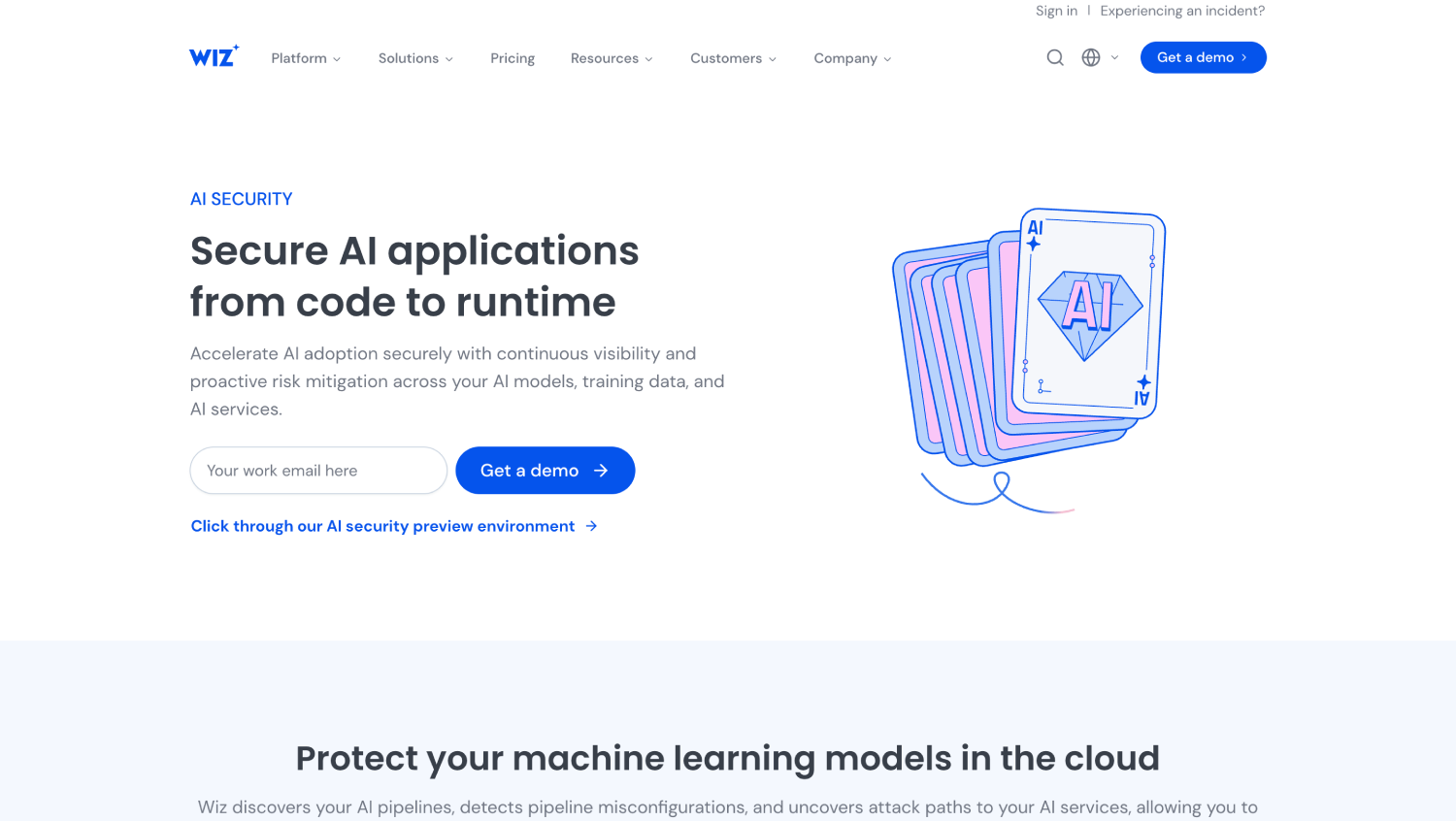
Wiz AI-SPM sits inside the Wiz CNAPP and requires no additional agent deployment. It uses Wiz’s agentless cloud scanning to discover AI services across AWS, Azure, and GCP, then builds a graph connecting model artifacts, training jobs, data stores, and the IAM identities that can access them. The Security Graph is where Wiz’s AI-SPM differentiation actually lives: it can show you a path from a publicly accessible API gateway through an overprivileged Lambda function to a Bedrock model with training data in an S3 bucket tagged as sensitive.
The limitation is the same as Wiz’s broader agentless architecture: it sees what the cloud API exposes. For self-hosted models running on EC2 without a cloud-managed ML service wrapper, Wiz can flag the instance configuration but cannot inspect the model files, the serving framework, or the API keys embedded in the serving code. Teams running Ollama clusters or self-managed vLLM endpoints should treat Wiz AI-SPM as a complement to agent-based workload protection, not a replacement.
Pricing follows Wiz’s CNAPP model. Wiz does not publish list pricing and quotes per environment based on cloud resource count and feature tier.
2. Palo Alto Prisma AIRS
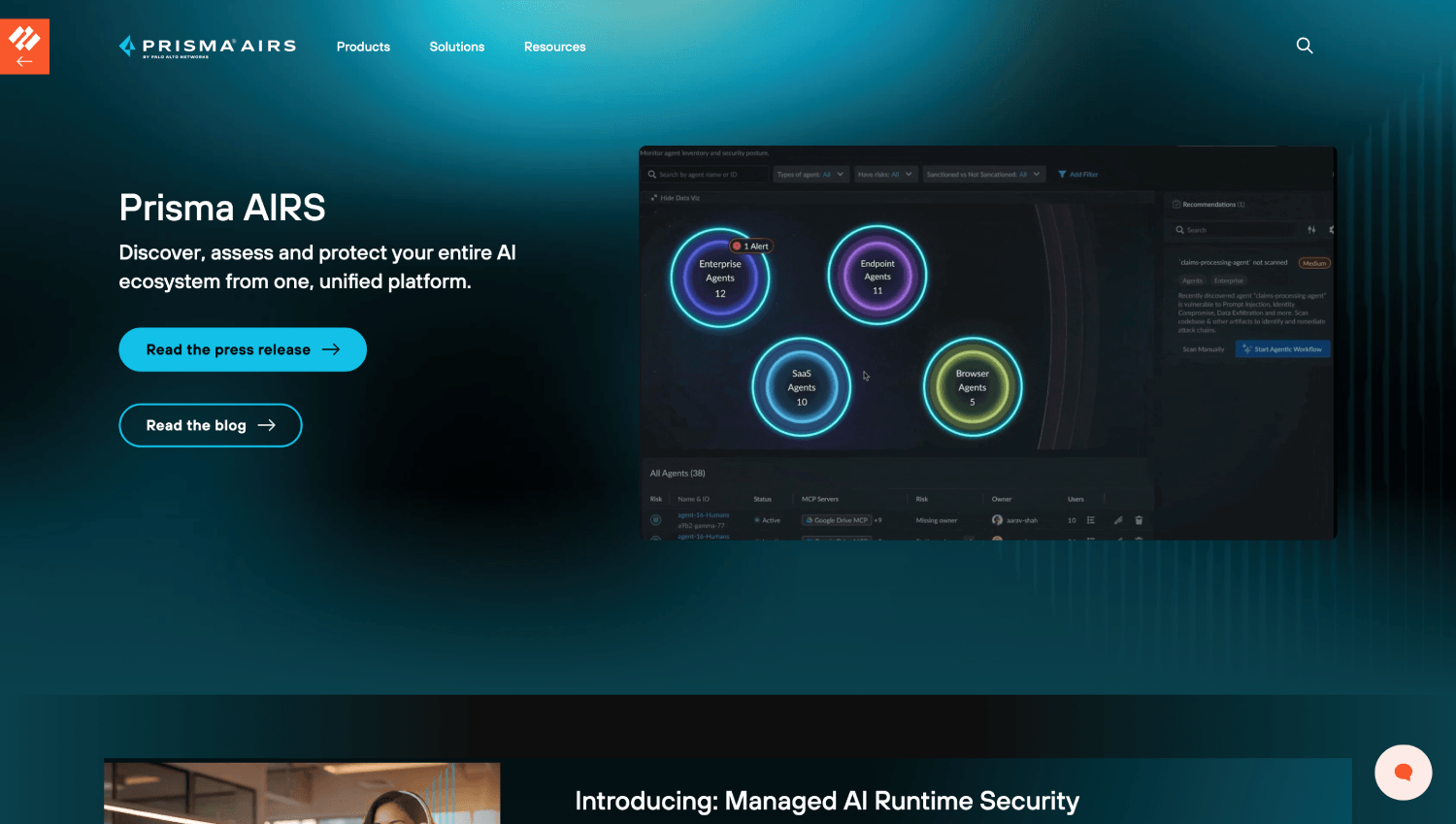
Prisma AI Runtime Security (AIRS) is Palo Alto Networks’ answer to the full AI security lifecycle, positioned to cover AI-SPM, runtime protection, and AI application security in a single module inside Prisma Cloud. The AI-SPM component focuses on model inventory, misconfiguration detection for AI services, and access path analysis. The AI-TPS (Threat Prevention Service) layer extends coverage to prompt injection and data leakage at inference time, which moves it closer to what independent AI guardrail platforms do at the application layer.
For organizations already paying for Prisma Cloud, AIRS is the most feature-complete addition available without switching vendors. The architectural bet Palo Alto is making is that AI security consolidates into the CNAPP the same way container security did. That bet is reasonable if your AI stack lives in cloud-managed services. It is less compelling if your deployment includes self-hosted models or models running at the network edge, where Prisma’s cloud API approach has the same blind spots as any other agentless tool.
Palo Alto does not publish Prisma Cloud pricing. Quotes are environment-specific.
3. Orca Security AI-SPM
Orca’s AI-SPM module follows the same agentless architecture as the rest of the Orca platform. It discovers AI assets by scanning cloud provider snapshots, identifying AI-related services, and mapping them into Orca’s attack path analysis engine. Orca’s strength is breadth of misconfiguration detection across a large library of cloud AI services: SageMaker, Vertex AI, Azure ML, Bedrock, and others. Its attack path engine can surface findings like “a publicly exposed notebook server has access to a training dataset containing credit card data.”
Orca does not currently offer runtime protection for AI inference or prompt-level monitoring. It is a posture tool, not a runtime tool. Teams evaluating Orca for AI security should be clear on that boundary before the sales call. Pricing is not publicly disclosed.
4. Sysdig Secure
Sysdig Secure approaches AI-SPM from the workload side rather than the cloud API side. Because Sysdig instruments containers and Kubernetes nodes via an eBPF agent, it can detect AI-related workloads at runtime: which processes are loading model files, which network connections an inference server is making, and whether a container running a model has privilege escalation paths. For self-hosted model deployments, this is meaningfully different coverage from any agentless tool.
Sysdig’s AI-SPM posture features, as distinct from its runtime detection, focus on detecting misconfigured AI workloads in Kubernetes: exposed model serving APIs, containers with excessive capabilities, service accounts with overprivileged access to training data. The gap is that Sysdig does not currently build the full AI asset graph that a purpose-built AI-SPM tool does. It sees the workload clearly; it does not model the pipeline lineage or generate an AI bill of materials. Sysdig does not publish list pricing.
5. SentinelOne Singularity Cloud Security
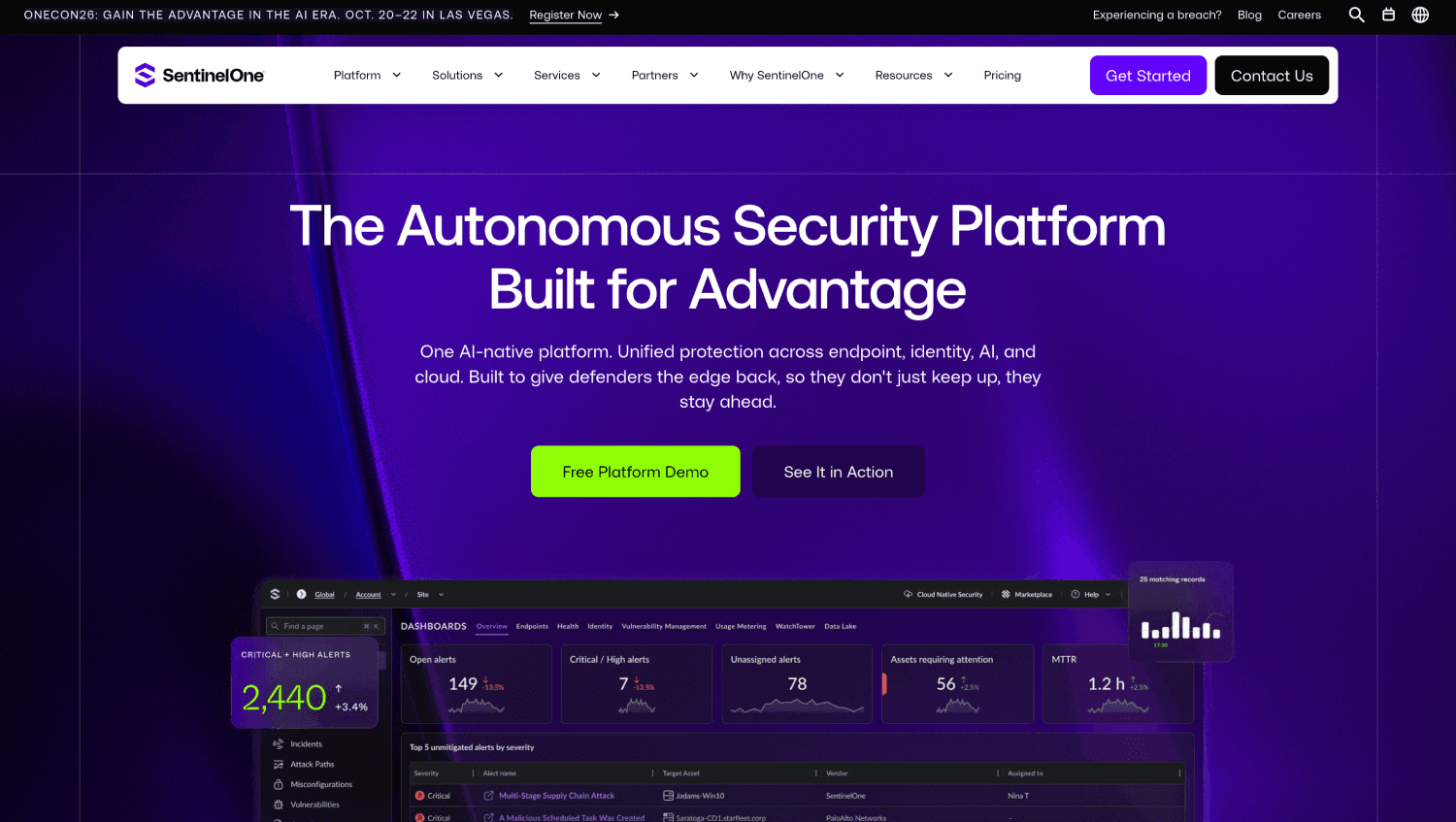
SentinelOne’s Singularity Cloud Security includes AI-SPM functionality as part of its broader CNAPP offering. Like Sysdig, SentinelOne’s AI security coverage is strongest where its Singularity agent is deployed: it can detect model loading activity, flag anomalous inference API behavior, and correlate those signals with endpoint and cloud telemetry. The posture side, specifically the inventory and misconfiguration detection for managed AI services, is less differentiated from Wiz or Orca than SentinelOne’s runtime detection story.
Teams choosing between SentinelOne and a pure-play CNAPP for AI-SPM should evaluate whether they already have Singularity deployed for EDR. If the agent is already in place, the incremental cost to add cloud and AI security is lower than deploying a new platform. SentinelOne does not publish AI-SPM pricing separately from the Singularity platform.
6. CrowdStrike Falcon Cloud Security
CrowdStrike Falcon Cloud Security added AI-SPM capabilities as part of its push to extend the Falcon platform into cloud workload protection. CrowdStrike’s architecture is sensor-first: where the Falcon sensor runs, coverage is deep. For AI workloads running on instrumented hosts, CrowdStrike can detect suspicious model access patterns, flag credential exfiltration from AI pipelines, and correlate with threat intelligence. The agentless cloud scanning component covers managed AI services for posture assessment.
CrowdStrike’s AI-SPM does not currently produce an AI bill of materials or model lineage graph. The platform is strongest as a runtime protection and detection tool for AI workloads and weakest as a pure posture and inventory tool for organizations building an AI asset catalog from scratch. CrowdStrike does not publish per-module pricing for Falcon Cloud Security.
7. Microsoft Defender for Cloud
According to Microsoft’s official documentation, Defender for Cloud’s AI security posture management automatically and continuously discovers deployed AI workloads across Azure OpenAI Service, Azure AI Foundry, Azure Machine Learning, Amazon Bedrock, and Google Vertex AI. AWS and GCP managed AI services are explicitly listed as supported. The feature identifies misconfigurations and surfaces attack paths that connect AI assets to sensitive data. Self-hosted models running outside of these managed service boundaries are not covered.
For organizations running an Azure-primary or Microsoft 365-centric environment, Defender for Cloud AI-SPM is the most practical starting point: it is already included in certain Defender for Cloud plans and requires no new vendor relationship. Teams with self-hosted model deployments, or those running AI workloads outside the supported managed services, will hit its boundaries quickly. Defender for Cloud pricing varies by plan; Microsoft’s public pricing page covers plan details.
8. Zscaler
Zscaler’s AI security capabilities sit primarily in its Zero Trust Exchange platform and focus on a different problem than the other tools in this list. Zscaler is most relevant to AI-SPM for its ability to discover which AI applications employees are using, classify them by risk, and enforce access policy. It is a SaaS AI governance and shadow AI discovery tool more than a model inventory or posture tool.
Zscaler does not inventory self-hosted models, does not scan cloud ML service configurations, and does not produce an AI bill of materials. Its inclusion in AI-SPM conversations usually reflects broad platform positioning rather than technical overlap with what AI-SPM tools do at the infrastructure layer. It belongs in an AI-SPM evaluation only if shadow AI usage by employees is the primary concern, not model and pipeline security.
9. Tenable One (AI Aware)
Tenable One added AI asset discovery capabilities under its “AI Aware” functionality, which detects AI and ML packages, models, and libraries running on scanned assets. This is vulnerability management applied to AI: Tenable scans for AI-related software with known vulnerabilities, overprivileged AI service configurations, and exposed AI assets that appear in the exposure management view.
Tenable’s AI-SPM coverage is narrower than the purpose-built tools. It does not produce full model lineage or an AI bill of materials. Its strength is that teams already using Tenable One for vulnerability management get AI asset visibility without a new platform, and Tenable’s prioritization engine applies to AI-related findings the same way it applies to any other vulnerability class. Tenable does not publish per-feature pricing for AI Aware separately from Tenable One.
10. Cyera
Cyera approaches AI-SPM from the data security posture management direction rather than the cloud infrastructure direction. It classifies data across cloud environments, identifies which datasets are being used for AI training and fine-tuning, and surfaces access risks around those datasets. For organizations whose primary AI security concern is sensitive data flowing into model training pipelines, Cyera’s data lineage and classification capabilities are relevant.
Cyera does not inventory model artifacts, scan model serving configurations, or analyze access paths through AI pipelines the way a CNAPP-based AI-SPM does. It covers the data layer of the AI stack well and the model and infrastructure layers minimally. It is a natural complement to a CNAPP-based AI-SPM rather than a replacement. Pricing is not publicly disclosed; Cyera prices per environment based on data volume and coverage scope, but does not publish list figures.
11. Noma Security
Noma is the purpose-built AI-SPM tool with the broadest coverage across the five AI asset classes described earlier. It inventories models, datasets, notebooks, pipelines, AI agents, and the service accounts and API keys that connect them. Noma produces an AI bill of materials (AI-BOM) for the AI stack, which maps to the emerging requirements in frameworks like the NIST AI Risk Management Framework and EU AI Act compliance processes.
Noma’s coverage of self-hosted models is stronger than any CNAPP module because it integrates directly with ML platforms (MLflow, Hugging Face, SageMaker, Vertex AI, Azure ML) rather than relying solely on cloud provider API scanning. It can see a model artifact in a private Hugging Face repository, trace its lineage to a training run, and identify which service accounts can access it. For teams building an enterprise AI security program from scratch rather than adding a module to an existing platform, Noma is the clearest starting point. Noma does not publish pricing publicly. For a detailed head-to-head, the Noma versus Lasso Security comparison covers architectural differences between the two platforms.
12. Securiti
Securiti’s AI security platform approaches the problem from a data governance and privacy foundation, extended to cover AI assets. It inventories AI models and datasets, classifies data sensitivity, and maps data flows through AI pipelines. Its AI-SPM capabilities include misconfiguration detection for AI services, access governance for AI assets, and policy enforcement for AI data use.
Securiti is most useful for organizations that need both data privacy compliance and AI security posture management from a single vendor, particularly in regulated industries where demonstrating data lineage and AI asset governance is a compliance requirement rather than a purely technical one. Its infrastructure-layer posture detection is less deep than Noma or the CNAPP platforms for teams whose primary concern is runtime exposure rather than compliance documentation. Securiti does not publish list pricing; like Cyera, it prices based on environment scope rather than a public per-seat or per-asset rate.
13. Aim Security
Aim Security focuses on enterprise AI adoption security: discovering which AI tools and applications employees and developers are using, enforcing policy on AI usage, and protecting against data leakage through AI applications like Copilot, ChatGPT Enterprise, and other SaaS AI tools. Its posture management focuses on the AI application layer rather than the model infrastructure layer.
Aim is most relevant for security teams whose immediate AI risk is shadow AI usage and SaaS AI governance rather than self-hosted model security. For teams running an internal ML platform or deploying models in cloud infrastructure, Aim covers less of the infrastructure attack surface than Noma, Wiz, or Prisma AIRS. For teams trying to get visibility into what AI tools their engineering and business teams are using before they have any self-hosted deployment, Aim is a practical early-stage tool. Pricing is not publicly disclosed.
14. AccuKnox
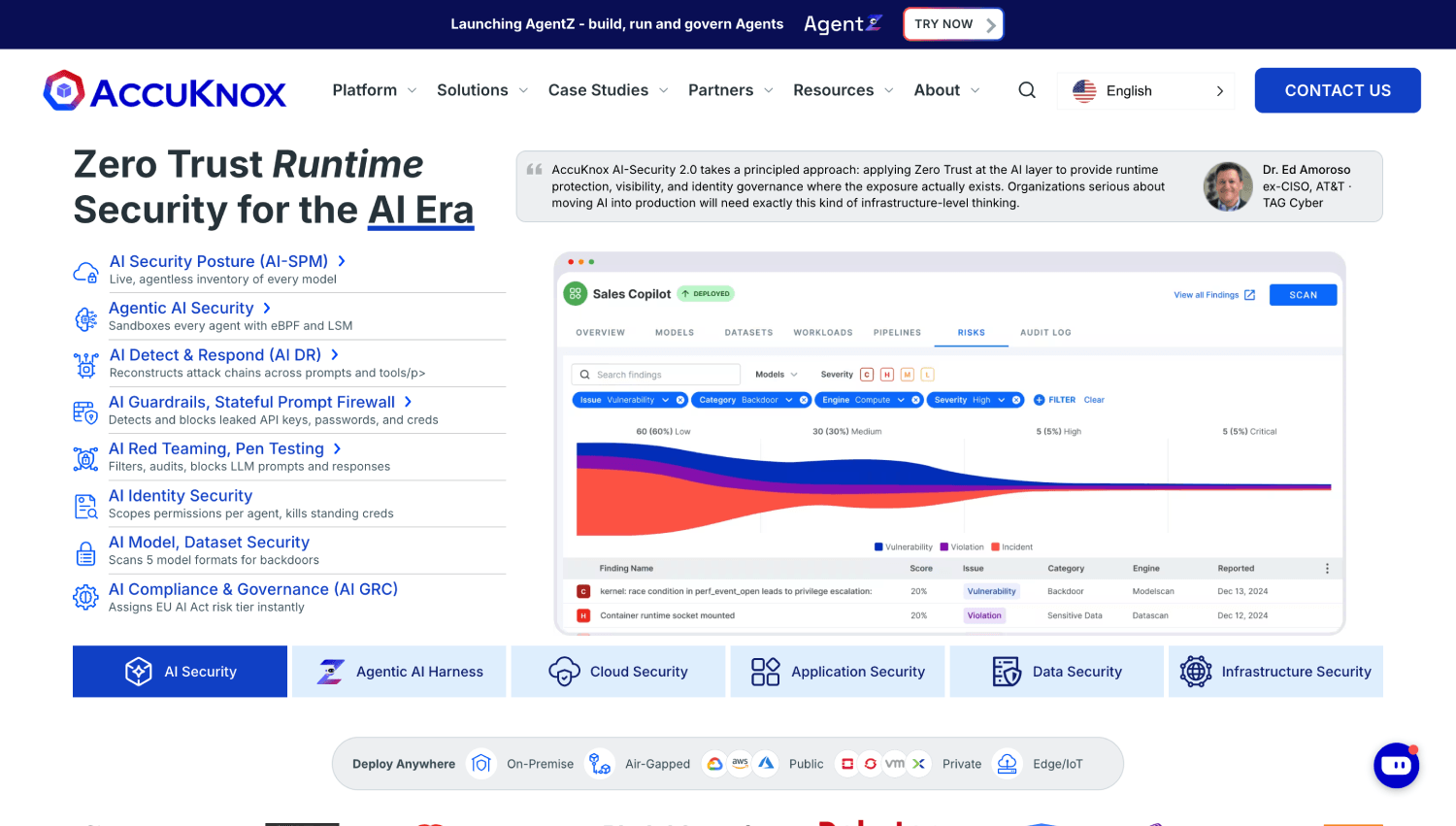
AccuKnox takes a Kubernetes-native and zero-trust workload protection approach to AI security. Its underlying engine is based on KubeArmor, an open-source eBPF-based security policy enforcement engine for Kubernetes. AccuKnox uses eBPF to enforce allowlists for processes running inside AI workload containers, which means it can detect and block unauthorized processes that attempt to read model files, exfiltrate weights, or establish unexpected network connections from an inference container.
This positions AccuKnox as one of the strongest tools for self-hosted AI workload security at the container and node level. What it does not do well is the posture inventory and asset graph work. It will not produce an AI-BOM, does not integrate with ML platforms for model lineage, and does not map IAM access paths through cloud-managed AI services. For teams running self-hosted models in Kubernetes who already have a posture tool in place, AccuKnox’s runtime enforcement fills a genuine gap that CNAPP-based AI-SPM modules leave open. AccuKnox offers open-source components via KubeArmor; enterprise pricing is not publicly disclosed. For a broader look at AI agent security tools that overlap with AccuKnox’s runtime focus, see the AI agent security platform comparison.
Is AI-SPM a Standalone Purchase or a CNAPP Module?
For most teams that already have a CNAPP contract in place, AI-SPM arrives as a module, not a new purchase. Wiz, Prisma Cloud, Orca, and Sysdig have all shipped AI-SPM capabilities inside their existing platforms, and the primary evaluation question is whether those capabilities cover the specific AI asset classes you have in scope, not whether to buy a new tool.
The case for a standalone tool is clearest in three scenarios. First, if your cloud security platform has not shipped AI-SPM yet, or its current module is immature for your use case. Second, if your AI stack includes a significant self-hosted component that agentless CNAPP tools cannot inspect at the model layer. Third, if your AI security requirements include AI-BOM generation, model lineage, or ML platform integration that no CNAPP module currently delivers at the depth you need.
Consider a team running 300 AI workloads across a mix of SageMaker, self-hosted Llama deployments on GKE, and a Hugging Face private hub. Their CNAPP (say, Wiz) covers the SageMaker posture well. It sees the GKE nodes but cannot inspect the serving framework configuration or the model artifacts inside the containers. It has no integration with Hugging Face to track which models were downloaded and which service accounts have access. That gap is exactly what Noma or a Sysdig-plus-Noma combination closes. The standalone tool is not redundant; it covers the 40% of the AI asset graph the CNAPP cannot reach.
What Does AI-SPM Pricing Actually Look Like?
Pricing transparency in the AI-SPM category is poor. None of the vendors in this list publish list pricing for their AI-SPM modules or platforms, with the partial exception of Microsoft Defender for Cloud, which publishes plan pricing on its Azure pricing page but prices AI-SPM features as part of broader Defender for Cloud plans rather than as a standalone line item.
The pricing models in use fall into three patterns:
- CNAPP module pricing: Wiz, Orca, Prisma Cloud, Sysdig, SentinelOne, and CrowdStrike price AI-SPM as an add-on or included feature within their CNAPP tiers. The incremental cost depends on your existing contract and cloud resource count. In practice, larger CNAPP customers often get AI-SPM included in contract renewals as a feature expansion rather than a new line item.
- Platform expansion pricing: Tenable prices AI Aware as part of Tenable One rather than separately. Cyera and Securiti price their AI-SPM capabilities as extensions of their existing data security platforms, with quotes based on environment scope; neither publishes per-asset or per-seat figures.
- Standalone subscription pricing: Noma, Aim, and AccuKnox operate as standalone vendors and price by environment, number of AI assets, or a combination. None publish public figures.
The operational cost question matters as much as the license cost. A CNAPP module that covers 70% of your AI asset classes with no new agent deployment is often more valuable than a purpose-built tool that covers 95% but requires integrations with five ML platforms, a dedicated security engineer to maintain them, and a separate procurement process. Calculate the total cost of coverage, not just the license fee.
Which Tools Cover Self-Hosted Models and Not Just Managed Cloud AI?
Self-hosted models are the blind spot for most AI-SPM tools. When a model runs on a managed service like Bedrock or SageMaker, the cloud provider API exposes service-level configuration that agentless scanners can read. When a model runs on a plain EC2 instance, GKE node, or bare metal server, the cloud API tells the scanner almost nothing about the AI workload running on it.
The tools with genuine self-hosted model coverage fall into two categories. Agent-based tools (Sysdig, SentinelOne, CrowdStrike, AccuKnox) can instrument the host or container at runtime and detect AI-related process activity, network connections, and file access. This is strong for runtime detection but limited for posture and inventory. ML platform integration tools (Noma primarily) connect directly to the MLOps stack, including MLflow, Hugging Face, and private model registries, to inventory models regardless of where they are deployed. This is strong for posture and inventory but requires the ML platform to be in scope and integrated.
Teams running self-hosted models should ask vendors two specific questions during evaluation: whether the tool can inventory a model artifact stored in a private Git LFS repository or private Hugging Face space, and whether it can detect when a new model is deployed to a Kubernetes cluster without going through an approved registry. Vague answers to those two questions indicate the tool’s self-hosted coverage is thinner than marketing suggests. Discovery and monitoring of AI agents operating across these environments follows similar patterns, which the AI agent discovery and monitoring tool overview covers in more detail.
What Is an AI Bill of Materials and Which Tools Actually Produce One?
An AI bill of materials (AI-BOM) is an inventory of the components that make up an AI system: the base model, any fine-tuning datasets, the training framework and its version, the serving framework, and the third-party libraries in the inference stack. The concept is an extension of the software bill of materials (SBOM) concept that NIST’s Secure Software Development Framework and Executive Order 14028 helped establish for traditional software.
Of the 14 tools in this list, only Noma explicitly positions AI-BOM generation as a core deliverable. Wiz, Prisma AIRS, and Orca produce AI asset inventories that overlap with some AI-BOM content but do not frame them as AI-BOMs or export them in a standard format. The AI-BOM concept does not yet have a universally adopted schema the way SPDX and CycloneDX provide for software SBOMs, which means AI-BOM outputs vary significantly in structure between vendors.
For teams with EU AI Act compliance obligations or internal AI governance requirements that call for documented AI asset inventories, Noma’s AI-BOM output and Securiti’s governance documentation capabilities are currently the strongest options. For teams whose primary concern is security posture rather than compliance documentation, a CNAPP-based AI asset inventory covers the practical security use cases without requiring AI-BOM-specific tooling.
Frequently Asked Questions About AI-SPM Tools
What is AI-SPM and how is it different from DSPM?
AI security posture management inventories AI-specific assets: models, datasets, notebooks, AI pipelines, vector databases, and AI agents, along with their access paths and configurations. Data security posture management (DSPM) inventories data stores and classifies data by sensitivity. The two overlap at the training dataset layer, where DSPM classifies what is in a dataset and AI-SPM tracks which AI pipelines consume it. A complete AI security program typically needs both, but they start from different root problems.
Can an AI-SPM tool replace CSPM for teams deploying AI workloads?
No. AI-SPM extends CSPM by adding AI-specific asset classes; it does not replace the underlying cloud infrastructure posture coverage. A team running AI workloads on AWS still needs CSPM to detect open security groups, public S3 buckets, and IAM policy misconfigurations across the entire cloud environment. AI-SPM narrows in on the model, dataset, and pipeline layer that CSPM does not model. Most AI-SPM deployments sit alongside or inside a CNAPP platform for exactly this reason.
Which AI-SPM tools work without deploying a new agent?
Wiz, Orca, and Microsoft Defender for Cloud all operate agentlessly by scanning cloud provider APIs and snapshots. Tenable’s AI Aware works through Tenable’s existing scanner infrastructure. Noma integrates with ML platforms and cloud APIs without requiring a host agent for its core posture and inventory features. If agent deployment friction is a decision factor, these tools reduce operational overhead compared to Sysdig, SentinelOne, CrowdStrike, or AccuKnox, which require host or container instrumentation for their deepest AI workload coverage.
Is AI-SPM a standalone product category or will it get absorbed into CNAPP?
The market is moving toward CNAPP absorption for cloud-managed AI workloads, the same way container security and KSPM did. For teams running entirely in managed cloud AI services, a CNAPP module will likely cover the majority of AI-SPM use cases within two to three years. The standalone market will persist for organizations with complex self-hosted deployments, ML platform integrations, or AI governance and compliance requirements that CNAPP vendors have not prioritized. Noma, Securiti, and Aim are betting on that persistence.
What should a team evaluate in an AI-SPM proof of concept?
Run the POC against your actual AI asset inventory, not a demo environment. Test whether the tool discovers models and pipelines you did not manually register, not just the ones you pointed it at. Verify whether it identifies access paths from AI assets to sensitive data without manual configuration. For self-hosted models, test whether it sees inside the workload or only at the infrastructure layer. Ask the vendor to show a finding for a misconfigured service account attached to a model endpoint. If they need to construct that scenario manually, the tool’s discovery is shallower than the demo suggested.
Which AI-SPM tools are best for teams in regulated industries?
Securiti and Noma have the strongest positioning for regulated industry use cases because both produce structured AI asset documentation that maps to governance and compliance workflows. Securiti’s data privacy foundation gives it native integrations with consent management, data residency tracking, and policy enforcement that regulated industries require. Noma’s AI-BOM output supports audit and documentation requirements for AI systems under frameworks like the EU AI Act and NIST AI RMF. CNAPP-based modules from Wiz and Prisma Cloud cover the technical security posture requirements but produce less compliance-ready documentation output.
How to Decide: Module or Standalone
The decision comes down to what percentage of your AI asset classes your existing CNAPP covers. If you run a primarily cloud-managed AI stack on one or two cloud providers and your CNAPP already supports those services, the module is the right call. The incremental cost is lower, the operational burden is lower, and the security graph integrates with findings your team already reviews. Wiz, Prisma Cloud, and Orca all deliver genuine value in that scenario.
The standalone case earns its budget when self-hosted models are in scope, when ML platform integration depth matters, or when AI governance documentation is a compliance requirement. Noma is the strongest standalone choice for organizations that need all three. AccuKnox earns consideration for teams who need runtime enforcement for self-hosted Kubernetes-based AI workloads and already have a posture tool in place. The AI-SPM market is moving fast enough that a re-evaluation in 12 months is reasonable: CNAPP vendors are shipping features quarterly, and the gap between module and standalone is narrowing for cloud-native deployments.
The sharpest question to take into your next vendor call is not “do you do AI-SPM?” Every vendor in this list will say yes. The question is: “Show me a discovery finding for a model artifact that was not registered in an approved repository.” That single scenario separates tools with genuine AI asset discovery from tools with a model inventory feature that only knows about what you manually told it.
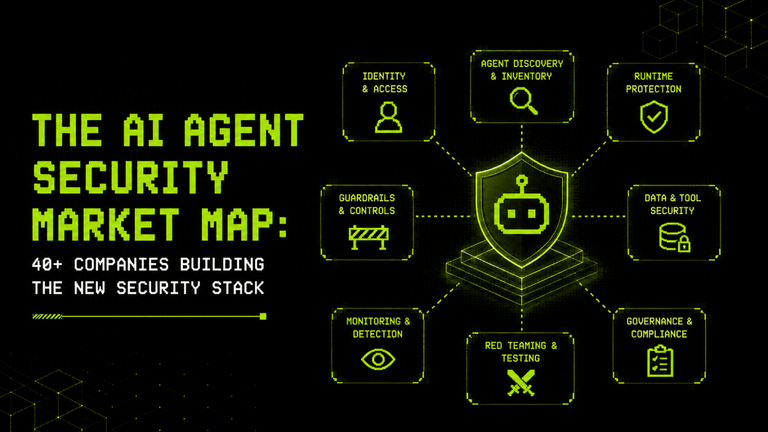
For teams still mapping out where AI-SPM fits relative to broader AI security controls, the AI agent security market map charts the full range of vendors building across posture, runtime, and governance layers.