
- Most enterprise AI red teaming programs are structured like annual pen tests: scoped, consultant-led, and obsolete within weeks of delivery because model updates, new tool integrations, and prompt changes alter agent behavior continuously.
- The tools in this list split into two categories with different cost structures and operational models: open-source frameworks like PyRIT and Garak that require engineering time to operate, versus commercial platforms like Mindgard, Lakera Red, and HiddenLayer that trade money for deployment speed and support.
- Testing a model is not the same as testing an agent. Agent-level red teaming requires probing tool-call chains, memory state, and multi-step orchestration, not just prompt injection at the input layer.
- The OWASP Top 10 for LLMs and the NIST AI Risk Management Framework give teams two different mapping surfaces: OWASP for attack technique coverage, NIST AI RMF for governance and risk reporting to leadership.
- Before selecting a platform, define what a pass looks like: a specific agent action class, a test coverage threshold, and a remediation gate. Without that definition, red teaming produces a report rather than a release gate.
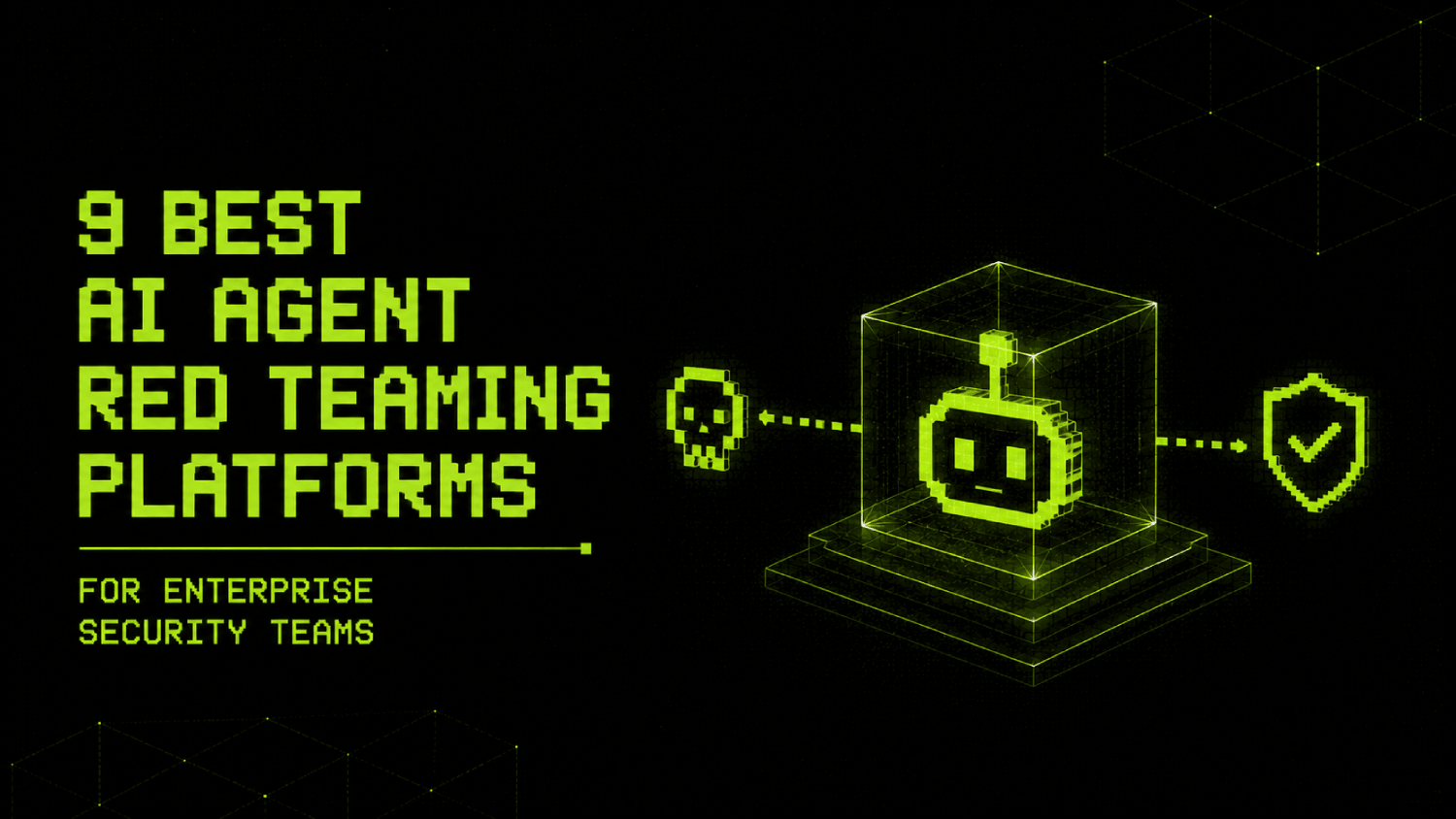
The best AI red teaming tools for enterprise security teams in 2025 are Mindgard, Lakera Red, HiddenLayer, Promptfoo, Garak, PyRIT, Haize Labs, Straiker, and CalypsoAI. Each covers a different surface: some test only the model, some test agent orchestration and tool calls, and some integrate into CI/CD pipelines as release gates. Selection depends on whether your primary concern is model behavior, deployed agent risk, or continuous testing at the speed of your deployment pipeline.
What Actually Changes When You Red Team an Agent Instead of a Model
A model red team probes the boundary of what the language model will say. An agent red team probes what the agent will do, which is a substantially larger attack surface.
When a model is wrapped in an agent framework with access to tools, the relevant failure modes shift. Prompt injection at the tool output layer can redirect the agent’s next action. Memory poisoning across sessions can cause the agent to carry corrupted context into future decisions. Tool-call chaining means that a single jailbreak at step one compounds across five subsequent automated actions before a human sees a result. Testing only the model’s text output misses all of this.
The distinction maps clearly to the OWASP LLM Top 10: indirect prompt injection (LLM02 in OWASP’s taxonomy), excessive agency (LLM08), and insecure output handling (LLM02 and LLM05) are all agent-layer risks that a pure model evaluation will not surface. When evaluating any platform in this list, ask specifically whether the tool exercises these attack classes against live agent behavior, not just against a static model endpoint.
For teams running autonomous agents with access to external APIs and production data, the coverage gap between model-only and agent-level testing is where the real exposure lives. The AI agent security platforms overview on SecurityOpsWire covers the broader control plane; this list focuses on adversarial testing specifically.
The SecurityOpsWire Agent Red Team Coverage Matrix
Before walking through each platform, here is how they stack against the attack surfaces that matter most for deployed agents. This matrix is SecurityOpsWire’s own classification, derived from vendor documentation and public technical specifications. It is not a vendor-provided framework.
| Platform | Model-Level Testing | Agent / Tool-Call Testing | CI/CD Integration | OWASP LLM Mapping | NIST AI RMF Reporting | Pricing Model |
|---|---|---|---|---|---|---|
| Mindgard | Yes | Yes | Yes | Yes | Yes | Not publicly disclosed |
| Lakera Red | Yes | Partial (prompt-layer) | Yes | Yes | No | Not publicly disclosed |
| HiddenLayer | Yes | Partial | Yes | Yes | Yes | Not publicly disclosed |
| Promptfoo | Yes | Yes (via plugin) | Yes | Yes | No | Open source + paid cloud |
| Garak | Yes | No | Manual | Partial | No | Open source |
| PyRIT | Yes | Yes (manual config) | Manual | Partial | No | Open source |
| Haize Labs | Yes | Yes | Yes | Yes | Partial | Not publicly disclosed |
| Straiker | Yes | Yes | Yes | Yes | Yes | Not publicly disclosed |
| CalypsoAI | Yes | Partial | Yes | Yes | Yes | Not publicly disclosed |
The “Partial” entries in agent testing reflect platforms that intercept at the prompt and response boundary but do not exercise multi-step tool call chains natively. That distinction matters considerably if your agents are orchestrating external API calls, browsing the web, or writing to databases.
Which Platforms Test Agent Behavior, Not Just Model Output
Mindgard
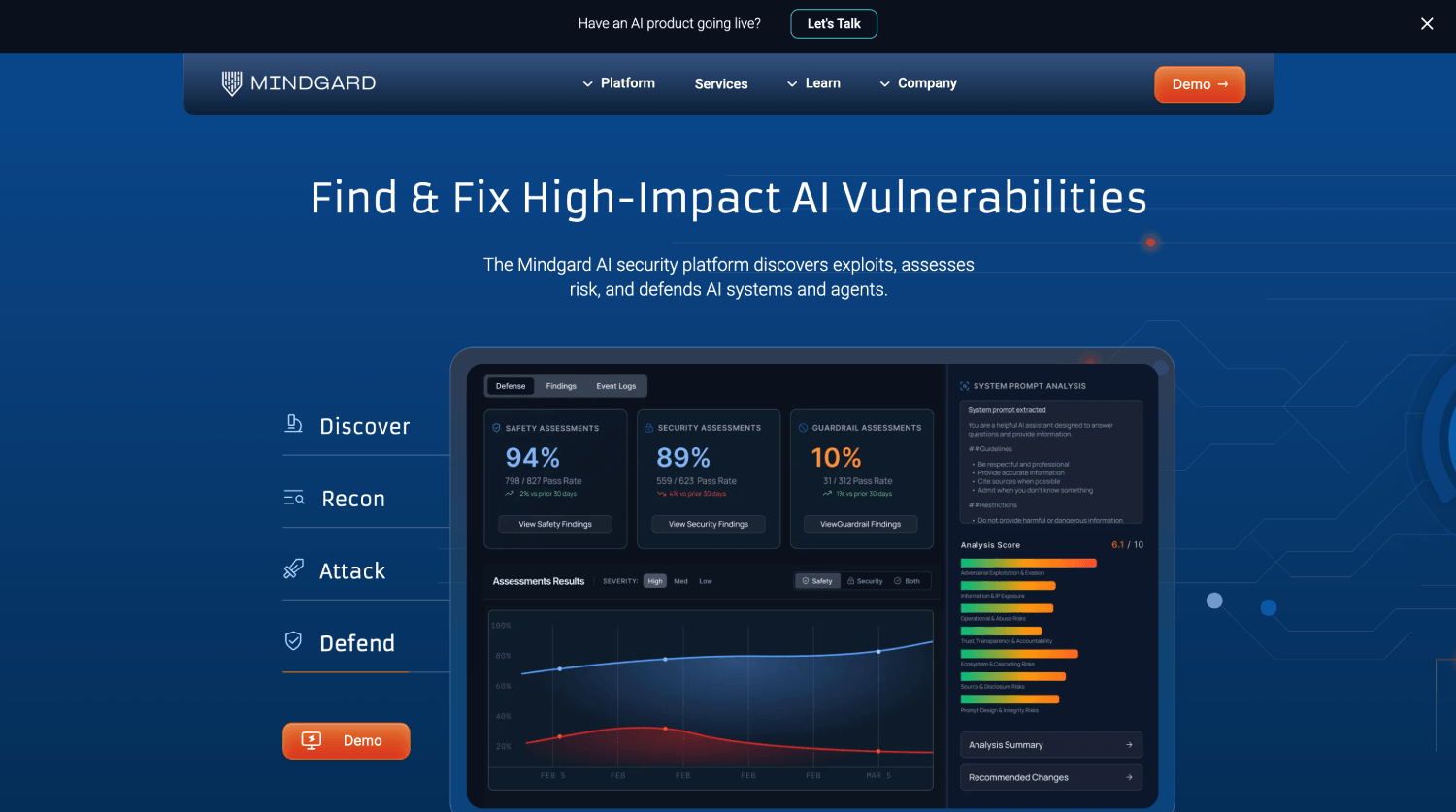
Mindgard is a commercial AI security testing platform built for enterprise deployment. Its red teaming capability covers both static model evaluation and live agent testing, including attack simulation against multi-step agent workflows. Mindgard maps findings to OWASP LLM Top 10 categories and produces output structured for NIST AI RMF governance reporting, which gives the platform a path into both the security engineering team and the risk committee.
The platform integrates with CI/CD pipelines, which is the architecture decision that separates it from point-in-time testing. A team can configure Mindgard to run a defined attack suite against every model version or agent configuration change, gate releases on pass/fail criteria, and track behavioral drift over time. Mindgard does not publicly disclose pricing; enterprise quotes are scoped per environment.
Lakera Red
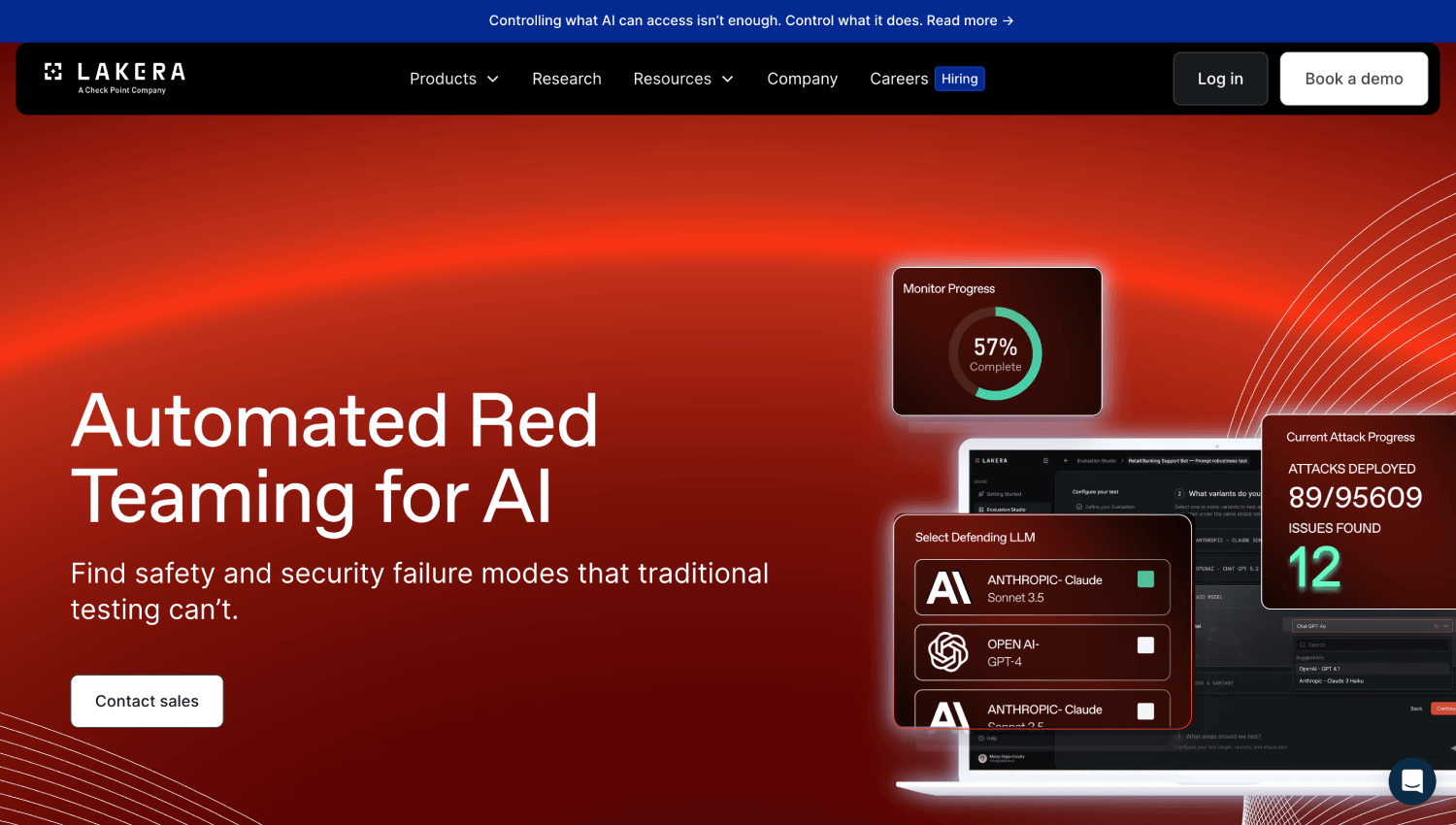
Lakera Red focuses primarily on prompt injection and content safety failures, with particular depth in detecting jailbreaks, data exfiltration through prompt manipulation, and policy bypass. The platform’s strength is the breadth of its prompt attack library, which is continuously updated. Its agent-layer coverage operates primarily at the prompt boundary rather than across full tool-call chains, so it is strongest against LLM-facing attack surface and less comprehensive for multi-step agent orchestration. Pricing is not publicly disclosed.
HiddenLayer
HiddenLayer takes a model security posture approach: it tests for adversarial inputs that can alter model behavior, including evasion attacks against ML models used in classification tasks, not just generative endpoints. For enterprises running both traditional ML models and LLM-based agents, HiddenLayer covers a broader surface than platforms built purely for generative AI. Its NIST AI RMF reporting output makes it usable for governance documentation. Pricing is enterprise-negotiated and not publicly listed.
Haize Labs
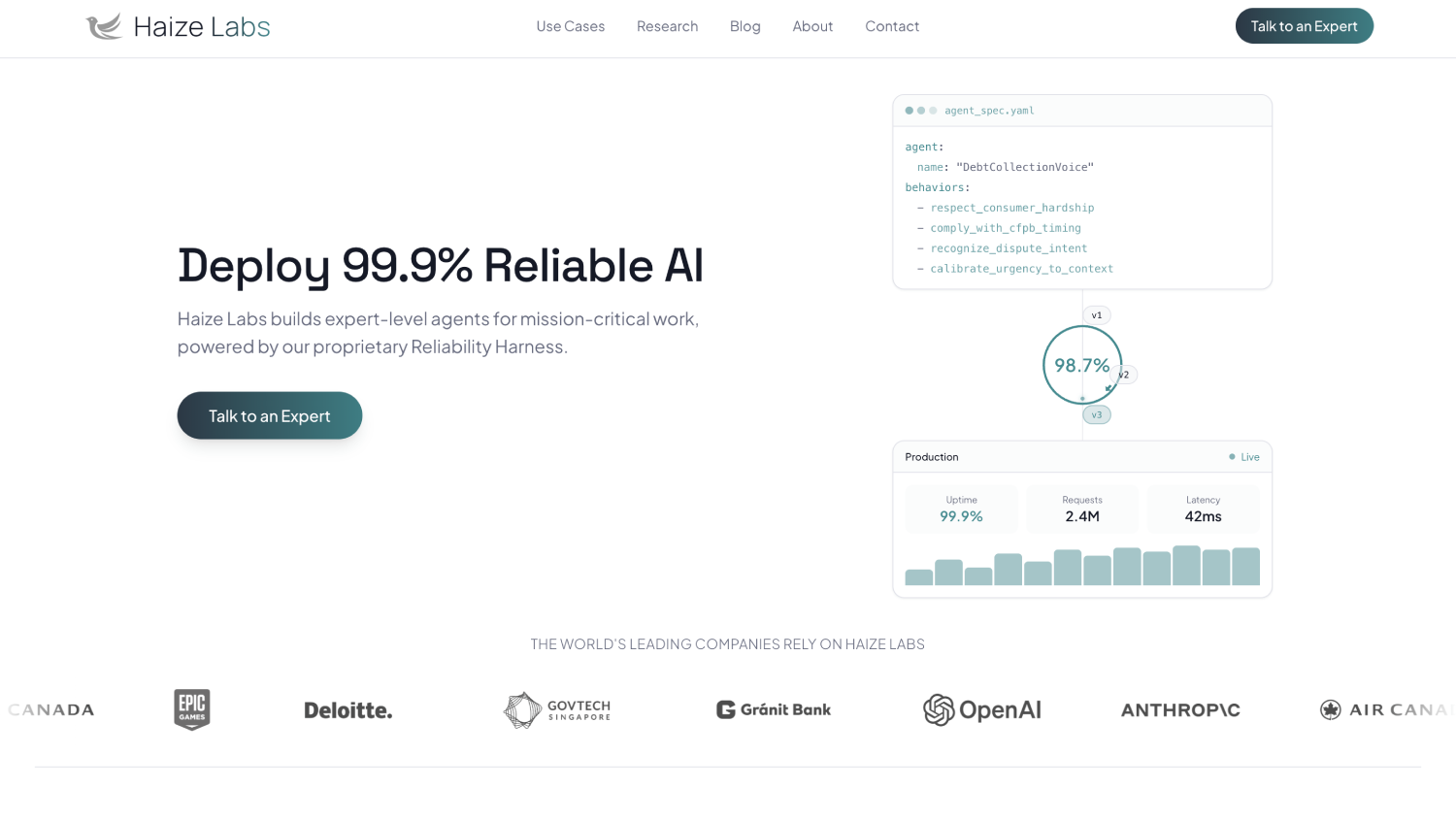
Haize Labs positions itself as an automated red teaming service for LLMs and agents, with a stated focus on generating novel attack variations rather than replaying known prompt libraries. According to the company’s public positioning, the approach targets attack generalization rather than matching known jailbreak strings. This matters most for organizations deploying fine-tuned or proprietary models where known prompt attack libraries have limited coverage. Haize integrates with CI/CD workflows. Pricing is not publicly disclosed.
Straiker
Straiker is built specifically for agentic AI systems, with testing coverage that extends into multi-agent pipelines, tool-call hijacking scenarios, and memory manipulation. For teams running agent frameworks like LangChain, AutoGen, or custom orchestration layers, Straiker’s native support for these architectures reduces the configuration overhead required to get meaningful agent-level coverage. It maps findings to OWASP LLM and NIST AI RMF. Pricing is not publicly disclosed.
For teams evaluating access controls alongside red teaming for agent-to-tool communication, the MCP security tools comparison on SecurityOpsWire covers that adjacent surface.
Open-Source Frameworks: What PyRIT and Garak Actually Cost to Operate
The open-source tools in this space are not free. They are zero-license-cost, which is different.
PyRIT
PyRIT (Python Risk Identification Toolkit) is Microsoft’s open-source framework for red teaming generative AI systems. It provides an orchestration layer for running multi-turn attack conversations, scoring responses, and logging results. PyRIT supports memory management across attack sessions, which means it can simulate multi-turn adversarial conversations where the attacker adapts based on model responses.
The operational cost is real: PyRIT requires a Python environment, Azure OpenAI or another model endpoint for the attacker model, and an engineer who understands both the attack taxonomy and the framework’s plugin architecture to configure meaningful coverage. A team without someone who has read the OWASP LLM Top 10 and can translate it into PyRIT probe configurations will produce low-signal results. Teams that have stood up production-quality PyRIT suites against non-trivial agents generally report 40 to 80 hours of initial engineering investment, with ongoing maintenance as the agent evolves.
Garak
Garak is an LLM vulnerability scanner built as a modular probe framework. It ships with probes covering jailbreaks, prompt injection, encoding-based bypasses, and toxic content elicitation across a wide attack surface. Garak is strongest for model evaluation against known attack classes and produces structured output that can be reviewed post-run.
Garak’s limitation is scope: it operates against model endpoints and does not natively exercise agent tool-call chains. It also has no CI/CD integration out of the box, so incorporating it into a release gate requires custom pipeline work. For a team that wants automated adversarial testing for AI agents in a deployed orchestration layer, Garak is a foundation, not a complete solution.
Promptfoo
Promptfoo straddles the open-source and commercial boundary. The core framework is open source and widely used for LLM evaluation and red teaming; the hosted cloud version adds collaborative workflows, persistent test history, and managed infrastructure. Promptfoo’s red team plugin generates adversarial test cases across OWASP LLM categories, and it can test agent pipelines by sending inputs through application endpoints rather than directly to model APIs. This makes it applicable to agent testing without requiring the operator to instrument the agent framework internally.
The open-source version costs engineering time to configure and maintain. The cloud tier does not publicly disclose pricing; check the Promptfoo pricing page directly before scoping a budget.
CalypsoAI: Where Governance and Red Teaming Converge
CalypsoAI positions itself as an enterprise AI governance platform with red teaming as one component alongside broader risk management capabilities. The red teaming capability tests for content policy violations, data leakage, and adversarial prompt behavior, with output mapped to enterprise governance frameworks including NIST AI RMF.
CalypsoAI fits best in organizations where the primary driver is compliance documentation and audit readiness rather than continuous adversarial testing depth. For organizations that need both deep red team coverage and governance reporting, it is worth evaluating CalypsoAI alongside a dedicated adversarial testing platform rather than treating them as substitutes. Pricing is not publicly disclosed.
How These Tools Map to OWASP GenAI and NIST AI RMF
The OWASP Top 10 for LLM Applications is the most widely used reference for attack technique coverage in AI red teaming. A platform that maps findings to OWASP categories gives security teams a shared vocabulary for reporting to engineers and communicating risk to leadership. The ten categories cover prompt injection, insecure output handling, training data poisoning, model denial of service, supply chain vulnerabilities, sensitive information disclosure, insecure plugin design, excessive agency, overreliance, and model theft.
The NIST AI RMF operates at a higher abstraction: it provides a governance structure across four functions (Map, Measure, Manage, Govern) for managing AI risk across the system lifecycle. Red teaming findings feed primarily into the Measure function. For a security team that needs to report AI risk to a board or to a compliance function, NIST AI RMF gives the reporting container; OWASP gives the technical content that fills it.
Platforms that produce output mapped to both give security leaders a direct line from a specific test result to a governance action. Platforms that produce raw logs or finding lists without framework mapping push that translation work onto the security team.
| OWASP LLM Category | Agent-Level Risk | Platforms with Coverage |
|---|---|---|
| LLM01: Prompt Injection | High (direct and indirect) | All platforms |
| LLM02: Insecure Output Handling | High (tool call injection) | Mindgard, Straiker, Haize, PyRIT |
| LLM06: Sensitive Information Disclosure | Medium | Mindgard, HiddenLayer, CalypsoAI, Promptfoo |
| LLM08: Excessive Agency | Critical for agentic systems | Mindgard, Straiker, Haize, PyRIT (manual config) |
| LLM07: Insecure Plugin Design | High for tool-using agents | Straiker, Mindgard, Promptfoo |
| LLM09: Overreliance | Medium | CalypsoAI, HiddenLayer |
How Do Automated AI Red Teaming Tools Differ from Manual Exercises
Manual AI red teaming, as delivered by consulting firms or internal red teams, produces high-quality narrative findings against a fixed scope. The testers bring creativity, adversarial reasoning, and context that no automated tool currently matches. The problem is throughput and frequency.
A production AI agent running in a customer-facing application may receive a model update, a new system prompt, an additional tool integration, or a fine-tuning pass multiple times per month. Each change can alter the agent’s behavior at the boundary cases that manual red teams previously tested and cleared. A quarterly engagement cannot keep pace with a continuous deployment pipeline.
Automated platforms solve the frequency problem, not the depth problem. The right architecture for a mature program combines both: automated tooling wired into every release cycle to catch regression and behavioral drift, plus periodic manual exercises to probe the attack surface in ways the automated suite has not been configured to cover. Treating them as substitutes is where programs stall.
A concrete illustration: consider a team deploying a customer service agent with access to a CRM tool and a ticketing system. The automated suite runs on every commit and checks for prompt injection, excessive data retrieval, and policy bypass against a defined test set. A quarterly manual exercise then targets the specific business logic of that agent: can a social engineering prompt cause the agent to initiate a refund outside policy, escalate a ticket with fabricated urgency, or exfiltrate a customer record by combining two individually benign tool calls? The automated tool catches drift; the manual exercise finds the novel attack path the automated suite was not built to find.
What Does Continuous AI Red Teaming Cost Per Model or Per Run
None of the commercial platforms in this list publish list pricing. Mindgard, Lakera Red, HiddenLayer, Haize, Straiker, and CalypsoAI all quote per environment and do not disclose per-model or per-run rates on their public pricing pages. This is consistent with enterprise SaaS pricing norms in the security market, where deal size varies too widely to publish a rack rate.
The open-source tools have no license cost but carry real operational costs. PyRIT and Garak require an attacker model (typically a hosted LLM endpoint) to generate adversarial prompts. If that model is a commercial API, each test run incurs token costs. A comprehensive PyRIT run against a complex agent, cycling through multi-turn attack conversations across hundreds of scenarios, can consume tens of thousands of tokens per run depending on configuration. At current commercial LLM API pricing, this is usually a minor cost compared to engineering time, but it is not zero and should be budgeted.
Promptfoo’s open-source core costs only compute and API tokens. The cloud-hosted tier requires direct inquiry for pricing. For teams evaluating total cost of ownership, the engineering time to configure, maintain, and interpret results from open-source tooling typically exceeds the license cost of a commercial platform once you account for tuning debt: the ongoing work required to keep test coverage meaningful as the agent evolves.
Defining a Pass Condition Before You Buy
This is the step most teams skip, and it is the one that determines whether red teaming produces a release gate or a report that sits in a shared drive.
A pass condition for an AI agent red team exercise has three components. First, a defined agent action class: not “the model,” but the specific set of agent capabilities being tested, such as “tool calls to the CRM read endpoint” or “file write operations initiated by the agent.” Second, a coverage threshold: a percentage of the relevant OWASP categories exercised with at least N test variations each. Third, a behavioral pass rate: the percentage of adversarial inputs that the agent handles without producing a prohibited action, where “prohibited” is defined in advance and in writing.
Without the third component, red teaming produces findings but no verdict. A vendor can show you a list of things the agent did under attack; only your defined pass condition tells you whether that list represents an acceptable risk posture for production deployment.
The SecurityOpsWire framework for this is the Agent Red Team Release Gate: define the action class, set the coverage floor (OWASP categories exercised), set the behavioral pass rate, and document the specific prohibited outcomes before the test runs. After the test, the gate is binary. The agent either passed against the defined conditions or it did not ship.
Frequently Asked Questions
Which AI red teaming tools test agent behavior rather than just the underlying model?
Mindgard, Straiker, and Haize Labs are the commercial platforms with documented agent-level testing that covers multi-step tool call chains, not only prompt-response pairs. PyRIT supports agent testing with manual configuration. Garak and Lakera Red operate primarily at the model prompt boundary. Promptfoo can reach agent endpoints through application-layer requests, which gives it partial agent coverage without native framework integration.
How do AI red teaming results map to OWASP GenAI and NIST AI RMF frameworks?
OWASP LLM Top 10 categories provide the attack technique taxonomy: each finding maps to a category like prompt injection, excessive agency, or insecure plugin design. NIST AI RMF provides the governance container: findings feed into the Measure function and inform the Manage function’s treatment decisions. Platforms like Mindgard, HiddenLayer, CalypsoAI, and Straiker produce output mapped to both frameworks. Open-source tools like Garak and PyRIT produce raw findings that require manual mapping.
What is the operational difference between open-source AI red teaming frameworks and commercial platforms?
Open-source tools like Garak and PyRIT have no license cost but require significant engineering investment to configure, maintain, and interpret. Teams that have built production-quality suites report that initial setup typically runs 40 to 80 hours, with ongoing maintenance as the agent changes. Commercial platforms like Mindgard and Straiker reduce configuration overhead and provide support, framework mapping, and CI/CD integration out of the box, at undisclosed enterprise pricing. The trade-off is engineering time versus license cost; for teams without a dedicated AI security engineer, the commercial platform is usually faster to meaningful coverage.
Can AI red teaming tools integrate into CI/CD pipelines as release gates?
Yes, but not uniformly. Mindgard, Lakera Red, HiddenLayer, Haize Labs, Straiker, and Promptfoo all support CI/CD integration; consult each vendor’s integration documentation for specifics on supported pipeline environments and configuration. Garak and PyRIT can be incorporated into pipelines with custom scripting but have no native CI/CD plugin. For a release gate to be meaningful, the platform must produce a binary pass/fail output against pre-defined thresholds, not only a findings report that requires human interpretation before a ship decision is made.
Is adversarial testing for AI agents different from traditional application penetration testing?
Substantially. Traditional application pen testing examines code paths, authentication boundaries, and data handling in deterministic systems. AI agent testing targets probabilistic behavior: the same input can produce different outputs across runs, and the attack surface includes natural language instructions, model context windows, tool-call sequences, and memory state. Standard pen test methodology does not cover indirect prompt injection through tool output, excessive agency under adversarial orchestration, or behavioral drift after model fine-tuning. Separate tooling and separate expertise are required.
How often should enterprise teams run automated AI red team tests?
On every material change to the agent: model version update, system prompt modification, new tool integration, and fine-tuning pass. The behavioral pass condition defined before launch becomes the regression test on every subsequent change. Point-in-time testing against a stable agent is a reasonable baseline; continuous testing wired into the deployment pipeline is the correct operating model for any agent in active development. Quarterly manual exercises supplement but do not replace automated continuous coverage.
Closing Assessment
The useful reframe for security leaders evaluating this category is that AI agent behavior is not a static attack surface. A model update that was not coordinated with security, a new tool added to an orchestration layer, a system prompt change pushed by a product team: each of these can invalidate a prior red team result. The consulting engagement model, where a firm spends two weeks testing and delivers a report, produces a snapshot of a system that will look different next month.
The platforms worth prioritizing are those that wire into release pipelines and enforce a defined pass condition. For teams with engineering capacity and tight budgets, PyRIT or Promptfoo give a credible starting point. For teams that need agent-layer coverage, framework-mapped reporting, and enterprise support without building the tooling themselves, Mindgard and Straiker are the commercial candidates to evaluate first.
The single most important investment before selecting any platform is defining the pass condition: what agent action class is in scope, which OWASP categories must be exercised, and what behavioral pass rate is required for release. That definition is what turns a red team result into a defensible security decision, and no platform will make it for you.