
- GitLab Ultimate bundles SAST, DAST, dependency scanning, and secret detection, but it does not correlate findings across scanners, apply reachability filtering, or give you a portfolio-level risk posture. Those are different capabilities.
- The comparison that matters is not GitLab Ultimate versus a third-party ASPM tool. It is bundled scanning versus posture management, and most teams need both layers.
- GitLab Premium plus a dedicated ASPM platform can cost less than Ultimate for mid-market teams, and produces fewer developer interruptions because posture tools filter noise before routing findings.
- The vendors worth evaluating for GitLab-native workflows are ArmorCode, Apiiro, Cycode, Legit Security, Ox Security, Phoenix Security, Mend, Snyk, Aikido, Jit, and Xygeni. Each fits a different team size and maturity level.
- Native GitLab CI integration without agent overhead is the first filter. Cross-scanner correlation and developer-workflow routing are the second and third.
The best ASPM tools for GitLab are platforms that ingest findings from GitLab’s built-in scanners, correlate them with third-party tool output, apply reachability and exploitability filters, and route prioritized findings to developers inside merge requests without adding pipeline latency. GitLab Ultimate includes the scanners. It does not include the correlation layer, the portfolio view, or the risk-based prioritization that sits above the scan results. ArmorCode, Apiiro, Cycode, Legit Security, Ox Security, Phoenix Security, Mend, Snyk, Aikido, Jit, and Xygeni each address that gap differently depending on team size, existing toolchain, and whether the buyer is coming from a security or a developer-first perspective.
What Does GitLab Ultimate Include, and Where Does the Security Coverage Stop?
GitLab Ultimate packages SAST, DAST, dependency scanning, container scanning, secret detection, and a basic vulnerability report into a single tier. For a team that needs scanners and does not want to manage separate integrations, that is a real operational advantage. The scanners run inside the pipeline and results surface in the merge request UI, which is the workflow most developers already live in.
The gap is above the scan layer. GitLab’s vulnerability report aggregates findings per project, but it does not normalize findings across different scanner types, deduplicate across tools, or weight vulnerabilities by whether the vulnerable code path is actually reachable from a production entry point. A team running 40 microservices gets 40 separate reports. There is no portfolio-level risk score, no automatic cross-project deduplication, and no mechanism to suppress findings that exist in code that never executes in a given environment. That gap is where tuning debt accumulates, and it is what application security posture management (ASPM) platforms address.
GitLab’s documentation describes the vulnerability report as a per-project view. Portfolio-level security dashboards exist in Ultimate, but they operate as aggregated lists rather than correlated, prioritized risk queues. For a security team managing a large number of repositories, the operational result is alert volume without triage automation.
How Does the GitLab Ultimate Versus Premium Plus ASPM Cost Model Actually Work?
GitLab does not publish per-seat pricing and directs buyers to sales; the per-seat cost delta between tiers can be compared at quote time. The practical question for a 150-person engineering organization is whether the security features bundled in Ultimate justify that per-seat premium across every developer seat, or whether buying Premium and adding a dedicated ASPM platform produces better outcomes at comparable or lower cost.
Consider a SaaS company with 120 active GitLab seats and a three-person security engineering team. If the per-seat delta between Premium and Ultimate represents a meaningful annual budget line, that same budget could fund an ASPM platform that ingests GitLab’s scanner output alongside results from a dedicated SCA tool, applies reachability analysis, and delivers a prioritized finding queue to the security team. The security team gets higher-signal data. Developers receive fewer false-positive interruptions. The company does not pay Ultimate pricing for developer seats whose owners never open the vulnerability report.
This is the cost model nobody covers in ASPM comparisons: Ultimate charges per developer seat for security features that primarily benefit a small security team. ASPM platforms charge per application, per repository, or per security user, depending on vendor, which often maps more accurately to actual consumption. For teams where security function is centralized but development seats are large, the Premium plus ASPM model frequently wins on per-outcome cost.
How Do Third-Party ASPM Tools Integrate With GitLab CI Without Slowing Pipelines?
Native GitLab CI integration works through one of three patterns: a GitLab-native pipeline template that injects as a CI job, a webhook or API pull where the ASPM platform pulls results from GitLab’s vulnerability API after the pipeline completes, or a runner-level integration where the ASPM tool’s scanner runs as a CI job alongside GitLab’s native scanners. The third pattern adds latency proportional to scan time. The second pattern adds no latency because findings are collected asynchronously after the pipeline finishes.
The practical implication: if a vendor’s GitLab integration requires adding a scan job to the pipeline, test that integration against your slowest pipeline before buying. A five-minute SAST job that now runs twice, once via GitLab’s native scanner and once via the ASPM vendor’s scanner, is a developer experience problem and an eventual pipeline-skipping problem. The better integrations consume GitLab’s existing scan artifacts via the vulnerability API rather than running parallel scans.
GitLab exposes a Vulnerability Findings API that some ASPM platforms use to pull findings in JSON format; however, GitLab’s documentation notes that this API is in the process of being deprecated and considered unstable, and recommends using the GraphQL API instead. Platforms that pull findings asynchronously via API add zero pipeline latency and can run correlation logic in their own infrastructure. Confirm with any vendor which API endpoint their GitLab integration uses and whether they have migrated to the GraphQL API.
The SecurityOpsWire ASPM Routing Test: Three Questions Before Buying
Before evaluating any vendor on this list, run three operational questions against their GitLab integration. These are the filters that separate a scanning aggregator from a posture management platform.
Question 1: Where does the finding land after the pipeline runs? Does it go into a ASPM dashboard only, or can the platform write a finding back into the GitLab merge request as a comment, a blocking check, or a security approval gate? Findings that stay in the ASPM tool require developers to leave their workflow. Findings surfaced in the MR get fixed faster.
Question 2: Does the platform apply reachability analysis before routing to developers? A reachability filter traces whether a vulnerable dependency or code path is actually called in the application’s execution flow. Without it, developers receive findings for vulnerabilities in libraries that ship in the build but are never invoked, which is the primary source of AppSec program credibility damage.
Question 3: What is the deduplication model? GitLab’s native SAST and a third-party SCA tool will report overlapping findings on the same CVE. Does the ASPM platform deduplicate by CVE, by asset, or by code location? The answer determines whether the developer sees one finding or three.
9 Best ASPM Platforms for GitLab and DevSecOps Teams
| Vendor | Best Fit | GitLab Integration Model | Reachability Analysis | Pricing Model |
|---|---|---|---|---|
| ArmorCode | Enterprise, multi-tool consolidation | API pull, MR comment write-back | Yes, via code context | Not publicly disclosed |
| Apiiro | Enterprise, risk-based change management | Native CI integration | Yes, behavioral graph | Not publicly disclosed |
| Cycode | Mid-market to enterprise, pipeline security | GitLab SCM integration | Yes | Not publicly disclosed |
| Legit Security | Enterprise, software supply chain | Pipeline scanning, API pull | Yes | Not publicly disclosed |
| Ox Security | Mid-market, SBOM and supply chain | Native GitLab integration | Yes | Not publicly disclosed |
| Phoenix Security | Mid-market, vuln prioritization | API pull from GitLab | Yes, EPSS and exploit context | Not publicly disclosed |
| Mend | Mid-market, SCA-heavy stacks | GitLab CI job, API pull | Yes, for SCA findings | Not publicly disclosed |
| Snyk | Developer-first, all sizes | Native MR integration | Yes, for SCA | Free tier; paid tiers not publicly disclosed |
| Aikido Security | SMB to mid-market | Native GitLab integration | Yes | Free tier available; paid tiers not publicly disclosed |
| Jit | Startups, small engineering teams | Native GitLab CI integration | Partial, context-based | Free tier; paid tiers not publicly disclosed |
| Xygeni | Mid-market, supply chain and secrets | GitLab pipeline native | Yes | Not publicly disclosed |
ArmorCode
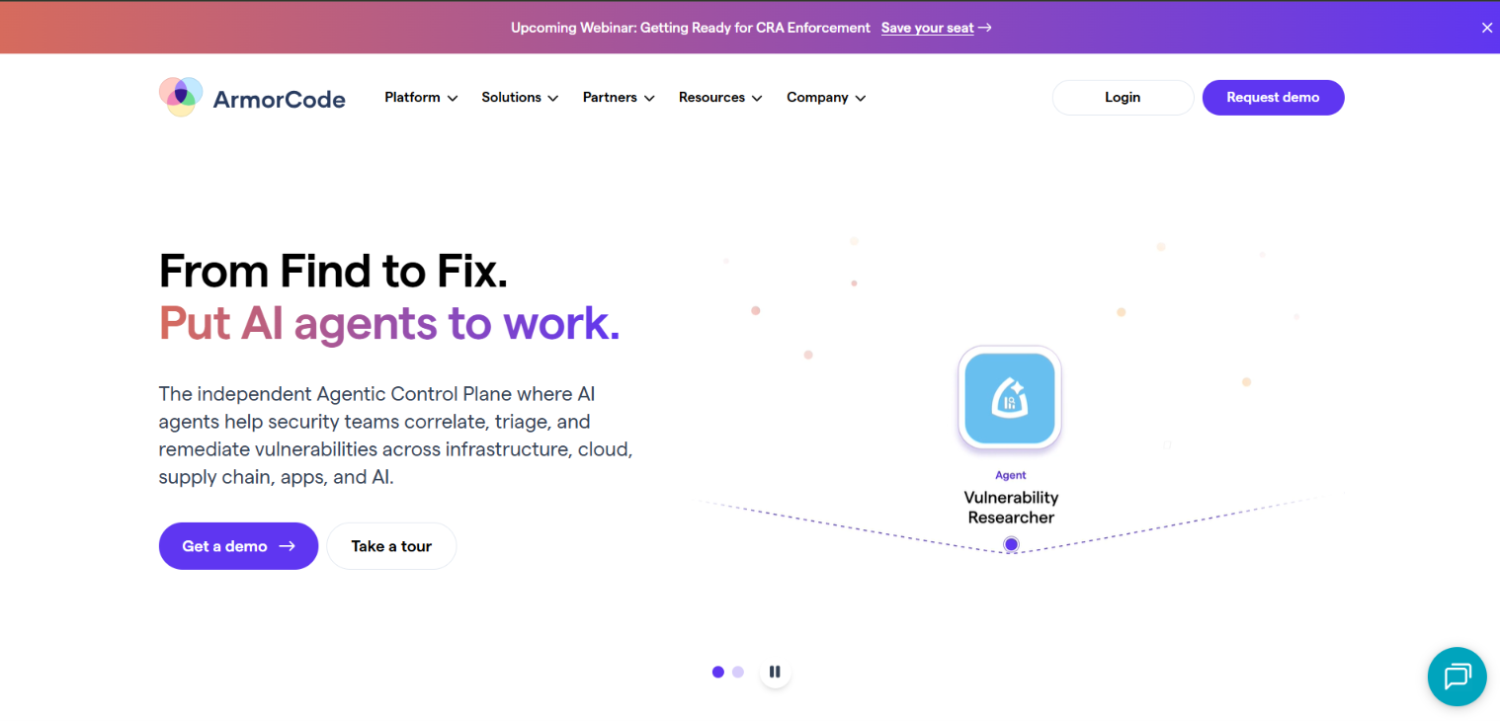
ArmorCode positions itself as an ASPM platform for enterprises managing dozens or hundreds of tool integrations simultaneously. Its GitLab integration pulls findings via the API and can write prioritized issues back to GitLab as security approval conditions. The platform’s correlation engine normalizes findings across scanner types, so a SAST finding and an SCA finding on the same component appear as one risk record rather than two alerts.
Where ArmorCode earns its place in enterprise evaluations is deduplication across heterogeneous toolchains. Teams running GitLab’s native SAST alongside a dedicated DAST tool and a third-party secrets scanner frequently find that each tool generates independent findings for the same root issue. ArmorCode’s correlation model addresses that directly. The operational cost is setup time: mapping connectors and tuning correlation rules across a large tool inventory takes meaningful security engineering hours upfront.
ArmorCode does not publish pricing. Buyers should request a quote based on application count, which is the variable that most affects cost in this type of platform.
Apiiro
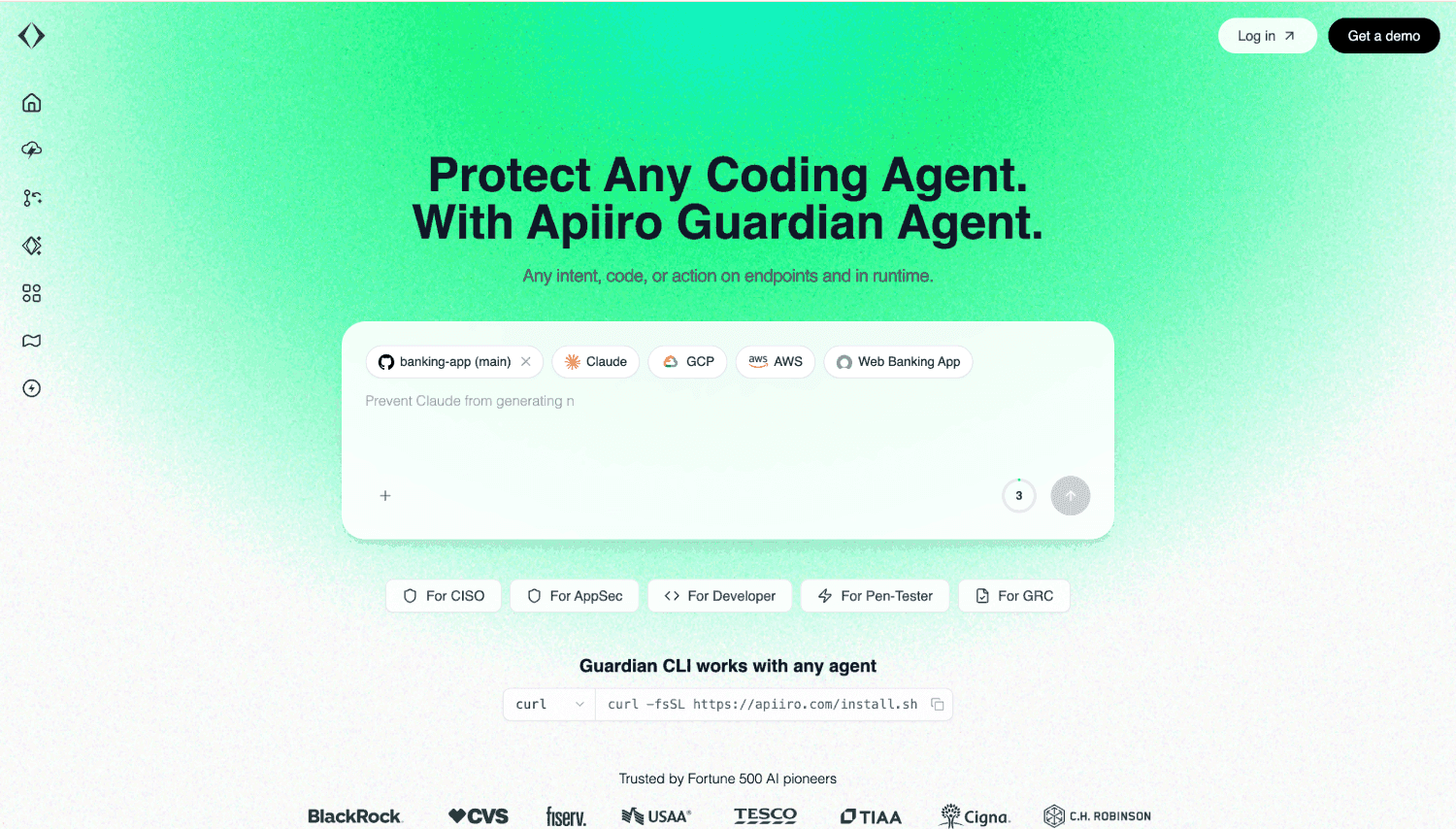
Apiiro approaches ASPM through a code risk graph that maps changes in GitLab repositories to business risk based on what the changed code touches: authentication logic, payment processing, external APIs, sensitive data. When a developer opens a merge request, Apiiro’s risk engine queries the graph to determine whether the change intersects a high-risk code area and routes accordingly.
This behavioral graph model is meaningfully different from scanners that run at merge time. Apiiro’s approach produces risk context before a finding is generated, not just after. For security teams that want to gate high-risk changes before they reach CI rather than flagging them afterward, that distinction matters. The trade-off is deployment complexity: Apiiro requires deep integration with the GitLab SCM layer to build an accurate graph, and that integration takes time to tune before the risk scores are reliable.
Apiiro does not publish pricing. It targets enterprise buyers and quotes per application.
Cycode
Cycode covers the full GitLab pipeline security stack: SCM hardening, pipeline integrity, secrets detection, SCA, and SAST, with a posture layer that aggregates findings across all of those. Its GitLab integration covers both GitLab.com and self-managed GitLab instances, which matters for organizations running GitLab in a private data center or a sovereign cloud region.
Cycode’s specific strength for DevSecOps teams is pipeline security. It monitors GitLab CI configuration for misconfigurations, detects when pipeline jobs are modified unexpectedly, and flags when third-party CI actions introduce unvetted code. That supply-chain-aware pipeline monitoring layer is something GitLab’s native scanners do not cover. Teams concerned about pipeline-level attacks rather than just application-level vulnerabilities will find Cycode’s coverage model more complete.
Cycode does not publish pricing publicly.
Legit Security
Legit Security focuses on software supply chain security with GitLab-native pipeline scanning as a first-class feature. It inventories every artifact, runner, and dependency introduced across the CI/CD pipeline and flags deviations from expected behavior. For GitLab teams that have grown their pipeline infrastructure organically and now have limited visibility into what each job actually does or what dependencies it pulls, Legit’s posture model provides an inventory layer that GitLab itself does not offer natively.
The SBOM generation capability in Legit integrates with GitLab’s existing dependency metadata and augments it with a continuously updated software bill of materials that maps transitive dependencies. For teams with regulatory requirements to maintain an SBOM, this reduces the manual work of generating and maintaining that artifact separately. Legit does not publish pricing.
Ox Security
Ox Security integrates natively with GitLab and covers SAST, SCA, secrets detection, and container scanning through a single pane of prioritized findings. Its SBOM capabilities are central to its positioning. Ox generates an SBOM per pipeline run, tracks it over time, and can alert when a newly introduced dependency carries a known exploitable vulnerability before the merge request is approved.
The finding prioritization model applies exploit context from public threat intelligence feeds, weighting findings by whether a CVE is being actively exploited in the wild. That is a meaningful filter for mid-market security teams that cannot manually triage large queues of SCA findings per sprint. Ox does not publish pricing. Teams evaluating Ox against GitLab Ultimate should compare not just feature coverage but the per-repository cost model against the per-seat Ultimate premium.
Phoenix Security
Phoenix Security is built specifically around vulnerability prioritization using EPSS scores and runtime exploit context, making it a strong fit for teams whose primary problem is not finding more vulnerabilities but deciding which ones to fix first. Its GitLab integration pulls findings from the vulnerability API and re-ranks them using threat intelligence and asset criticality.
Phoenix is worth evaluating specifically for GitLab teams that already have good scanner coverage through Ultimate or through separate tools and are drowning in findings they cannot prioritize. If the problem is signal quality rather than signal volume, Phoenix addresses that more directly than platforms whose primary value is finding aggregation. Phoenix does not publish pricing publicly.
For teams also thinking about their broader exposure management program, the continuous threat exposure management tools covered in SecurityOpsWire’s CTEM platform comparison address a related but distinct layer of the prioritization problem.
Mend
Mend is primarily an SCA platform with ASPM capabilities layered on top. For GitLab teams whose dominant security concern is open-source dependency risk, Mend’s reachability analysis for SCA findings is one of the more mature implementations available. It traces whether a vulnerable function in a dependency is actually called in the application code, not just whether the dependency exists in the manifest.
Mend integrates with GitLab CI as a pipeline job and also supports API pull mode. The CI job model adds pipeline time, which is worth measuring before deployment. For teams with large monorepos or slow pipelines, the API pull model is preferable. Mend does not publish pricing publicly and quotes per repository or per application.
Snyk
Snyk has a mature GitLab integration that surfaces SCA, SAST, container, and IaC findings directly in merge requests, making it one of the most developer-native options on this list. Snyk’s merge request decoration means developers see findings in the code review context without leaving GitLab’s UI, which is the friction point that determines whether developers actually act on findings or ignore them.
Snyk offers a free tier with limited scans per month. Paid tiers are not publicly listed on its pricing page, directing buyers to sales for team and enterprise pricing. The developer-first positioning means Snyk’s ASPM layer is less mature than platforms built specifically for security team consumption. Portfolio-level risk aggregation and cross-project posture scoring are not Snyk’s primary use case. It is the right tool when developer adoption is the primary metric, and a secondary tool when security team posture visibility is the primary metric.
Teams evaluating Snyk alongside GitHub-native workflows should also review SecurityOpsWire’s comparison of ASPM tools for GitHub-centric engineering teams, which covers the integration patterns in more depth for that SCM context.
Aikido Security
Aikido Security targets smaller engineering teams that need multi-scanner coverage without the deployment overhead of enterprise platforms. Its native GitLab integration covers SCA, SAST, secrets detection, container scanning, and cloud configuration scanning from a single dashboard. For a 20-person startup running GitLab with one person responsible for security, Aikido’s consolidated coverage model reduces the number of separate tools to manage.
Aikido’s reachability analysis filters SCA findings by whether the vulnerable code is called at runtime, which meaningfully reduces developer-facing noise for teams without a dedicated security engineer to do that filtering manually. Aikido offers a free tier. Paid tier pricing is not publicly listed.
Jit
Jit takes an orchestration approach rather than building its own scanners. It runs open-source and commercial scanning tools as CI jobs inside GitLab pipelines and aggregates results into a central dashboard. For early-stage companies that want a structured DevSecOps posture without buying an enterprise platform, Jit provides a reasonable starting point by wiring existing scanners together into a managed workflow.
The limitation is posture maturity. Jit’s correlation and prioritization capabilities are less developed than enterprise platforms like Apiiro or ArmorCode, and its reachability analysis is partial rather than comprehensive. It is the right choice for teams whose current state is no structured AppSec program at all, not for teams migrating from a mature but fragmented tool stack. Jit offers a free tier. Paid tiers are not publicly listed.
Xygeni
Xygeni covers software supply chain security with specific depth in secrets detection, pipeline integrity, and artifact provenance. Its GitLab integration monitors CI pipelines for anomalous behavior, unexpected dependency introductions, and secrets committed to code, with findings routed to both the security team dashboard and the developer’s GitLab interface.
Xygeni’s specific value for GitLab teams is its coverage of the pipeline layer itself, not just the application code running through it. It monitors GitLab runner configurations, job dependencies, and external action usage patterns. For organizations that have experienced or are concerned about supply chain attacks at the build system level, Xygeni addresses a threat surface that application-layer ASPM tools do not fully cover. Xygeni does not publish pricing publicly.
How Are Findings Routed to Developers In-Workflow Without Creating Alert Fatigue?
The routing model is where ASPM platforms either earn or lose developer trust. GitLab supports merge request notes, blocking approval rules, and security dashboard entries as three distinct output channels. Most platforms on this list can write to all three, but the default configuration matters more than the capability.
The worst routing pattern is writing every finding to the merge request as a blocking check. Developers learn quickly to ignore or override security checks that fire on every PR, regardless of severity. The correct model is a risk-based gate: block only on findings above a defined severity and reachability threshold, surface medium findings as informational comments, and route low-severity findings to the ASPM dashboard for batch triage. That pattern requires the ASPM platform to apply its prioritization logic before writing back to GitLab, not after.
Platforms that route findings to a developer’s GitLab issue queue rather than the merge request trade immediacy for context. Issue queue routing is better for findings that require multiple sprints to remediate, worse for findings that should block a specific merge. The buying decision here is about configuring the right channel for the right finding class, and that configuration work falls on the security team, not the vendor.
Teams building out a broader AppSec program alongside this routing work should review SecurityOpsWire’s coverage of ASPM tools for cloud-native application security, which covers the posture layer above the pipeline in more detail.
Which Vendors Fit Which GitLab Team Profile?
Team profile drives vendor fit more than feature lists do. A four-person security team at a 200-person SaaS company running 80 GitLab repositories has completely different operational constraints than a 30-person security engineering team at an enterprise running 2,000 repositories across GitLab, GitHub, and Bitbucket simultaneously.
For enterprise teams with heterogeneous toolchains, ArmorCode and Apiiro are the strongest fits. Both handle large tool inventories, produce portfolio-level posture views, and have the connector depth to normalize findings across scanner types. The deployment investment is real and the tuning timeline is measured in months, not days.
For mid-market teams primarily on GitLab with supply chain concerns, Cycode, Legit Security, Ox Security, and Xygeni offer focused value. Each covers a distinct angle of the supply chain problem: Cycode for pipeline integrity, Legit for artifact and runner inventory, Ox for SBOM-centric posture, and Xygeni for secrets and provenance.
For teams whose primary problem is prioritization rather than discovery, Phoenix Security applies exploit context and EPSS weighting to existing findings in a way that reduces triage time without requiring a full platform migration. It layers on top of what GitLab already produces.
For developer-first organizations where adoption is the constraint, Snyk’s merge request native experience and Aikido’s low-friction onboarding are the fastest paths to meaningful coverage. Both sacrifice some posture depth for usability.
For startups and early-stage teams, Jit or Aikido’s free tiers provide a structured starting point. Neither replaces an enterprise ASPM platform at scale, but both are significantly better than no program at all.
Security teams building out NHI and identity controls alongside their AppSec programs will find the non-human identity security platforms covered by SecurityOpsWire relevant to the service account and CI/CD token exposure that ASPM tools surface but do not fully remediate.
Frequently Asked Questions
What is ASPM and how does it differ from what GitLab Ultimate already includes?
Application security posture management (ASPM) is a category that aggregates findings from multiple security scanners, normalizes and deduplicates them, applies risk-based prioritization, and provides a portfolio-level view of application risk. GitLab Ultimate includes individual scanners for SAST, DAST, dependency scanning, container scanning, and secret detection. It does not include cross-scanner correlation, reachability analysis, or a risk-ranked posture view across all repositories. ASPM platforms operate above the scan layer, not instead of it.
Can an ASPM tool slow down GitLab CI pipelines?
It depends on the integration model. ASPM tools that add their own scan jobs to the GitLab pipeline will add latency proportional to scan duration. Platforms that pull findings from GitLab’s Vulnerability Findings API after the pipeline completes add zero pipeline latency because they run asynchronously. Before buying, confirm which integration model the vendor uses for GitLab specifically, and whether the vendor can consume GitLab’s native scanner output rather than running parallel scans.
Is GitLab Premium plus a third-party ASPM platform cheaper than GitLab Ultimate?
It can be, particularly for organizations where the security function is centralized but engineering headcount is large. GitLab charges per developer seat for both Premium and Ultimate, so the Ultimate premium applies across every seat regardless of whether those developers use the security features. ASPM platforms typically charge per application, per repository, or per security user. For teams with high developer-to-security-engineer ratios, the Premium plus ASPM model frequently produces better per-outcome cost. GitLab does not publish list pricing; contact sales for current rates before modeling this comparison.
What is reachability analysis and why does it matter for GitLab SCA findings?
Reachability analysis traces whether a vulnerable function in a third-party dependency is actually called in the application’s execution path. Standard SCA tools report every CVE in every dependency that appears in the manifest, whether or not the vulnerable code is ever invoked. Without reachability filtering, typical enterprise applications generate high-volume SCA finding queues, the majority of which describe vulnerabilities in unused code paths. Reachability analysis filters that noise before findings reach developers, which is the primary lever for reducing AppSec-driven developer interruptions.
Do these ASPM tools support self-managed GitLab instances, not just GitLab.com?
Support for self-managed GitLab varies by vendor. Cycode explicitly supports both GitLab.com and self-managed instances. Most enterprise-focused platforms on this list include self-managed GitLab support, but the integration mechanism and data residency model may differ. Organizations running GitLab in air-gapped or private cloud environments should confirm the data flow model during evaluation. Some platforms require outbound connectivity from the GitLab instance to the vendor’s cloud. Others support on-premises or private cloud deployment of the ASPM component.
How do ASPM platforms handle findings from both GitLab’s native scanners and third-party tools without duplicating alerts?
Deduplication approaches vary. Platforms that deduplicate by CVE identifier merge findings about the same vulnerability regardless of which scanner reported it. Platforms that deduplicate by code location match findings to a specific file and line range. The CVE-based approach reduces alert volume faster but can obscure scanner-specific context. The code-location approach preserves more detail but requires accurate source mapping from every connected tool. Ask vendors specifically how they handle the case where GitLab’s native SAST and a third-party SAST both report the same vulnerability in the same file.
What to Carry Into an ASPM Vendor Evaluation
The most common mistake in evaluating ASPM platforms for GitLab is treating the evaluation as a scanner comparison. These platforms do not primarily compete with GitLab’s built-in scanners. They compete with the absence of a layer above those scanners. A proof of concept that measures scan coverage is the wrong proof of concept. The right one measures what happens to a specific finding after it is detected: how fast it is prioritized, how accurately it is ranked, whether the developer receives it in the right channel, and whether it is deduplicated against related findings from other tools.
Run the SecurityOpsWire ASPM Routing Test against every vendor in the evaluation: where does the finding land, does reachability apply before routing, and what does the deduplication model look like? Those three questions surface the operational behavior that determines whether an ASPM platform reduces security team work or simply adds another dashboard to monitor.
The GitLab Ultimate versus Premium plus ASPM cost question resolves differently for every organization depending on headcount ratios and existing tool investments. The analysis worth doing is not which tier has more features listed on the comparison page. It is which model produces more prioritized, developer-facing findings per dollar spent on security engineering time. That is the number that maps to actual risk reduction, and it is the one that belongs in the board presentation.