
- CVSS scores rank severity of a vulnerability in isolation. They say nothing about whether anyone is actively exploiting it, whether your environment is reachable, or whether the affected asset matters to your business.
- EPSS (Exploit Prediction Scoring System) and the CISA KEV catalog together collapse most enterprise backlogs dramatically: the majority of CVEs rated high or critical by CVSS have low EPSS scores and no active exploitation record.
- The tools that move the needle pair exploitability signals with asset criticality and compensating controls. Exploitability without blast radius, or blast radius without exploitability, still produces a noisy queue.
- Tenable VPR, Qualys TruRisk, Rapid7’s risk scoring, Nucleus, Vulcan Cyber, Seemplicity, Balbix, Hive Pro, Zafran, and Nagomi/Phoenix all take different architectural bets. The right choice depends on whether your bottleneck is scan data quality, remediation routing, or cross-tool risk aggregation.
- None of these vendors publish list pricing publicly. Budget conversations start with environment size, scan source count, and asset inventory depth.
The top vulnerability prioritization tools use EPSS probability scores, the CISA Known Exploited Vulnerabilities catalog, and asset criticality context to rank remediation work. EPSS estimates the probability that a CVE will be exploited in the wild within 30 days; KEV confirms active exploitation has already occurred. Together with compensating control awareness and business context, these signals typically eliminate the majority of high-severity findings from the active queue before a single ticket is written.
Why CVSS Is a Starting Point, Not a Prioritization Engine
CVSS was designed to measure the theoretical severity of a vulnerability under defined conditions. The score reflects attack vector, complexity, privileges required, and potential impact on confidentiality, integrity, and availability. What it does not factor in: whether anyone is actually trying to exploit this vulnerability today, whether your specific configuration is reachable from the internet, or whether the affected system processes anything your business cares about.
A CVSS 9.8 vulnerability in a library that runs on an air-gapped development laptop is less urgent than a CVSS 6.5 finding in a payment processor with a public-facing API and active exploitation evidence. CVSS cannot distinguish between those two situations. That is not a flaw in the standard. It was never designed for queue management at scale.
The practical consequence: teams sorting by CVSS generate backlogs of thousands of critical findings, most of which will never be weaponized against their specific environment. The remediation team burns out, patch cycles slip, and the genuinely dangerous items sit in the same pile as theoretical risks.
What Do EPSS, KEV, and SSVC Actually Measure?
EPSS is a machine learning model maintained by FIRST that estimates the probability a given CVE will be exploited in the wild within 30 days. The model ingests threat intelligence feeds, proof-of-concept availability, exploit kit prevalence, and related signals. The output is a probability score between 0 and 1, along with a percentile rank that positions each CVE relative to all other scored CVEs. A CVE sitting at the 95th EPSS percentile is far more likely to see exploitation than a CVE at the 40th percentile regardless of its CVSS score. According to FIRST’s EPSS documentation, exploitation activity data used in EPSS is provided in part by a number of industry and government partners, which includes but is not limited to VulnCheck KEV (VulnCheck Known Exploited Vulnerabilities), Shadow Server Foundation, and LevelBlue. FIRST publishes EPSS scores and percentile ranks publicly and updates them daily.
KEV is the CISA Known Exploited Vulnerabilities catalog. A CVE appears in KEV only when CISA has confirmed active exploitation in the wild. KEV is a binary signal: either exploitation has been documented or it has not. For federal agencies, KEV drives mandatory remediation timelines under BOD 26-04 (Prioritizing Security Updates Based on Risk). For everyone else, it is a high-confidence triage filter. If a CVE is in KEV and you have the affected asset in production, it goes to the top of the queue without debate.
SSVC (Stakeholder-Specific Vulnerability Categorization) is a decision framework associated with Carnegie Mellon’s Software Engineering Institute. Where EPSS and KEV are external signals about exploitation, SSVC asks internal questions: Is exploitation technically possible? Has exploitation been detected in your environment? Is the affected system mission-critical? Does your organization have safety implications? The output is a prioritized action recommendation, not a score. SSVC is harder to automate than EPSS or KEV because it requires accurate asset context, but it produces the most operationally grounded prioritization of the three.
Mature programs use all three in sequence: KEV surfaces the confirmed-exploitation tier, EPSS identifies the next likely tier, and SSVC applies environment-specific context to everything that survives the first two filters.
The SecurityOpsWire Backlog Reduction Test: A Framework for Evaluating These Tools
Before looking at specific products, it helps to have an evaluation framework that reflects how these tools actually get used. We call this the SecurityOpsWire Backlog Reduction Test, and it has four dimensions.
Signal breadth: Does the tool ingest only CVSS and EPSS, or does it also pull KEV, threat intelligence feeds, proof-of-concept databases, attacker campaign data, and compensating control status? More signal inputs produce a better-calibrated queue, but they also create more dependency on feed quality and freshness.
Asset context depth: Can the tool differentiate between the same CVE appearing on an internet-facing load balancer versus an internal developer workstation? Asset criticality, network exposure, data classification, and compensating controls (WAF, EDR coverage, network segmentation) all change the effective risk of a finding. A tool that cannot model this cannot accurately cut your backlog.
Remediation routing: Once priority is established, can the tool get the right ticket to the right owner? Many teams stall not on prioritization but on the handoff between security and the teams who own the affected systems. This is where workflow integrations with Jira, ServiceNow, and cloud ticketing systems matter more than scoring sophistication.
Score transparency: Can a security engineer explain to a skeptical infrastructure team why a specific finding is ranked where it is? Black-box scores create friction. Tools that expose the contributing signals and let teams override or tune weights for their environment produce faster organizational buy-in than tools that deliver a number without reasoning.
Which Signals Beyond CVSS Actually Predict Exploitation?
The short answer: EPSS percentile rank, KEV presence, proof-of-concept availability, and active threat actor targeting are the four signals with the strongest empirical connection to real-world exploitation. Asset exposure (is the service internet-reachable?) and compensating control coverage (is an EDR agent running? Is traffic inspected?) determine whether exploitation is possible in your specific environment even if the vulnerability is actively weaponized elsewhere.
Proof-of-concept availability matters because it compresses the time between disclosure and weaponization. A CVE with working exploit code published on GitHub moves from theoretical to practical overnight. EPSS captures this signal, but some tools also pull directly from Exploit-DB and similar sources to get ahead of the EPSS model’s update cycle.
Threat actor targeting is underused outside of the largest security programs. When a CVE is associated with a named campaign or threat group that targets your industry vertical, that specificity changes the risk calculation entirely. A few of the tools below ingest this kind of campaign-level intelligence.
10 Vulnerability Prioritization Tools That Go Beyond CVSS
1. Tenable One / Tenable VPR
Tenable builds its prioritization around Vulnerability Priority Rating (VPR), a proprietary score that incorporates threat intelligence, exploit availability, and EPSS signals alongside CVSS. VPR appears within Tenable.io and the broader Tenable One exposure management platform. The advantage for existing Tenable customers is that VPR enriches scan results without a separate tool purchase. The limitation is that VPR is proprietary and the contributing weights are not fully transparent to end users, which creates the black-box friction described above. Tenable does not publish list pricing; pricing is quoted per environment. For teams already running Nessus at scale, Tenable One is the logical path to EPSS-informed prioritization without adding a vendor.
2. Qualys TruRisk

Qualys TruRisk is the prioritization layer sitting above the Qualys VMDR (Vulnerability Management, Detection, and Response) platform. TruRisk aggregates vulnerability data with asset criticality scores, business context tags, and threat intelligence to produce a unified risk score at the asset and finding level. It incorporates EPSS and maps findings to CISA KEV. The architecture assumes Qualys as the primary scanner, which is a reasonable bet for organizations already standardized on it, but creates integration work for teams running mixed scan environments. Qualys does not publish list pricing publicly.
3. Rapid7 InsightVM
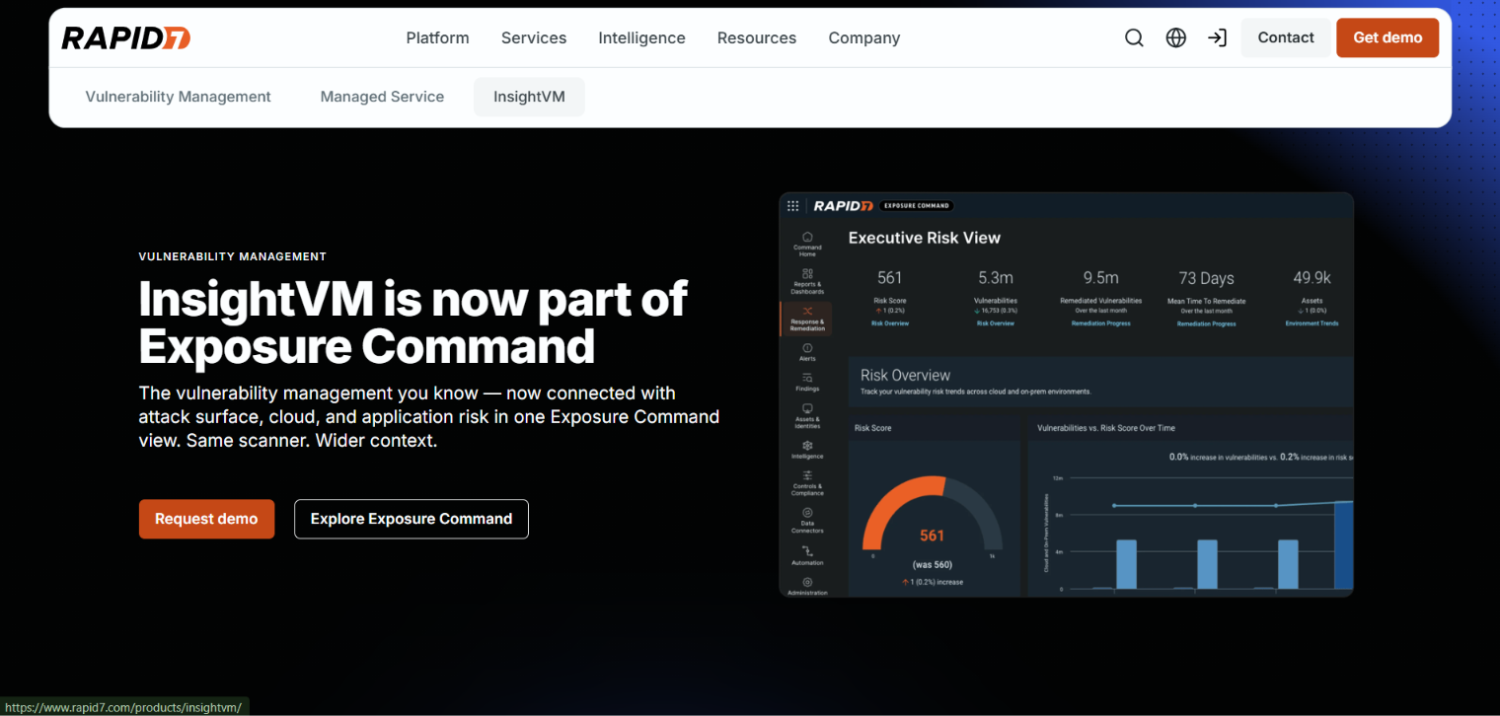
Rapid7 InsightVM includes a real risk score that incorporates exploit availability, CVSS, and asset exposure data. The Insight platform connects vulnerability findings to the threat intelligence Rapid7 collects through its managed detection operations, which means the risk scores reflect observed attacker behavior, not just public databases. InsightVM also supports goal-based SLA tracking, which helps remediation owners understand when a finding is approaching breach. The pricing model ties to number of assets. For teams that also run Rapid7’s MDR or SIEM products, the shared asset model reduces duplication, though the platform integration story is more coherent in concept than in day-to-day operation for some mixed environments.
4. Nucleus Security
Nucleus positions itself as an aggregation and prioritization layer rather than a scanner. It ingests findings from existing scanners (Tenable, Qualys, Rapid7, Crowdstrike, and others), deduplicates them, and applies prioritization using EPSS, KEV, and configurable business context. The value proposition is specifically for organizations running multiple scan sources that produce duplicate and conflicting findings. Nucleus does not replace a scanner. For teams with three or more scan products generating separate queues, it addresses a real operational problem. Score transparency is a relative strength: the platform surfaces contributing factors, not just a final number. Pricing is not publicly disclosed.
5. Vulcan Cyber
Vulcan Cyber (Tenable) takes a remediation-routing angle on vulnerability prioritization. The platform aggregates scanner output, applies risk scoring using EPSS and asset context, and then focuses heavily on the workflow side: routing tickets to the right owners, tracking SLA adherence, and measuring fix rates by team. The explicit bet is that prioritization without remediation accountability produces a ranked backlog that nobody acts on. The integration library covers major scanners, cloud providers, and ticketing systems. For teams where the actual bottleneck is getting infrastructure or application teams to act on findings rather than figuring out which findings to surface, Vulcan Cyber’s remediation workflow layer is the differentiator. Pricing is not publicly disclosed.
6. Seemplicity
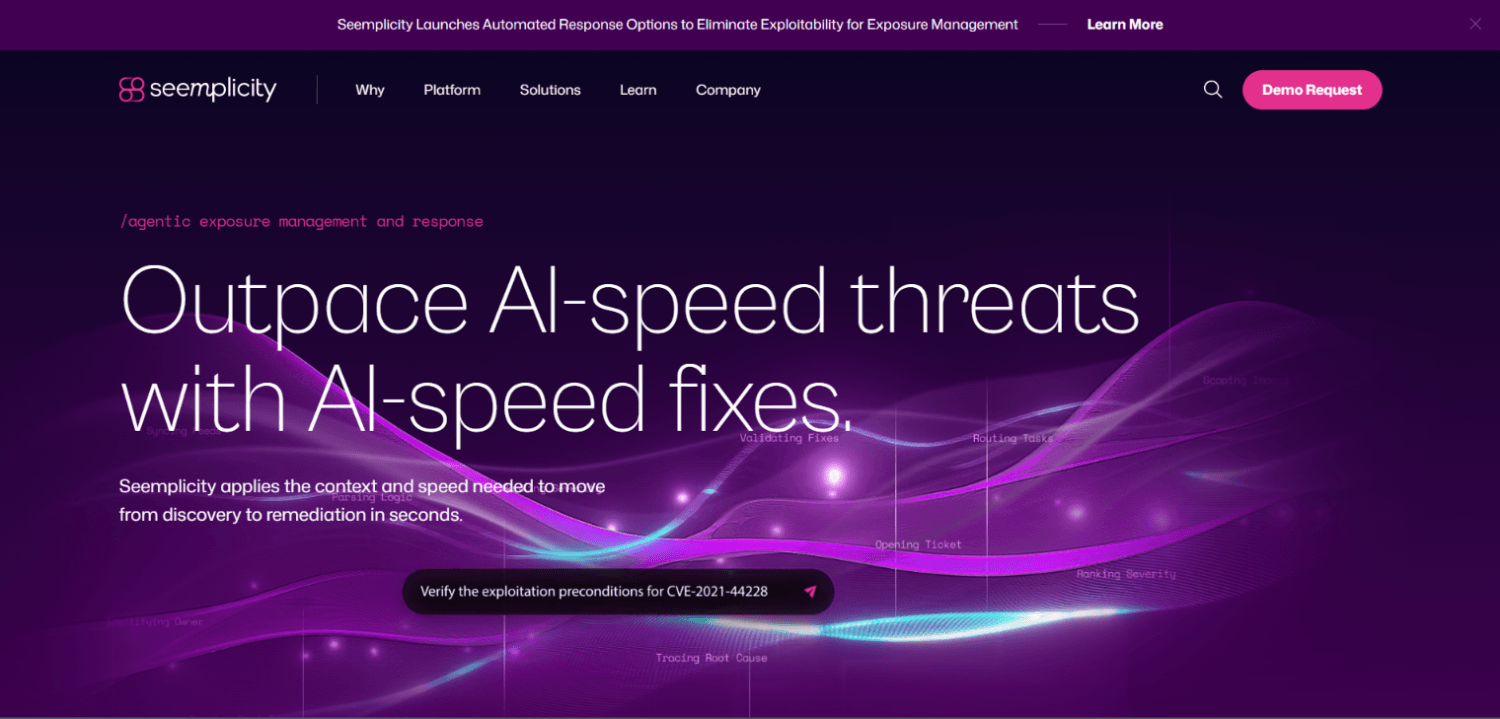
Seemplicity focuses on what the company calls remediation operations: the operational workflows between security teams and the engineers who own remediation. It ingests findings from scanners and cloud security tools, normalizes and deduplicates them, applies risk scoring that incorporates EPSS and KEV, and then manages the ticket lifecycle with SLA tracking and escalation logic. The differentiation from pure prioritization tools is the depth of remediation process management. For security teams whose primary pain point is the organizational friction of moving findings to closure rather than knowing which findings are most critical, Seemplicity addresses a different part of the problem than a scoring-focused tool does. Pricing is not publicly disclosed.
7. Balbix

Balbix (Safe) approaches risk-based vulnerability management from an asset-centric model. The platform continuously inventories assets, maps vulnerabilities to those assets, and calculates breach likelihood scores using over 100 signals including EPSS, KEV, compensating control status, network exposure, and software dependency mapping. Balbix is designed to produce a dollar-quantified risk figure per asset and per finding, which is intended to support board-level and CFO-level risk conversations. Teams that need to translate technical vulnerability data into financial risk language for executive audiences will find this framing useful. The operational cost is that the asset discovery and enrichment pipeline requires sustained attention to maintain accuracy. Pricing is not publicly disclosed.
8. Hive Pro
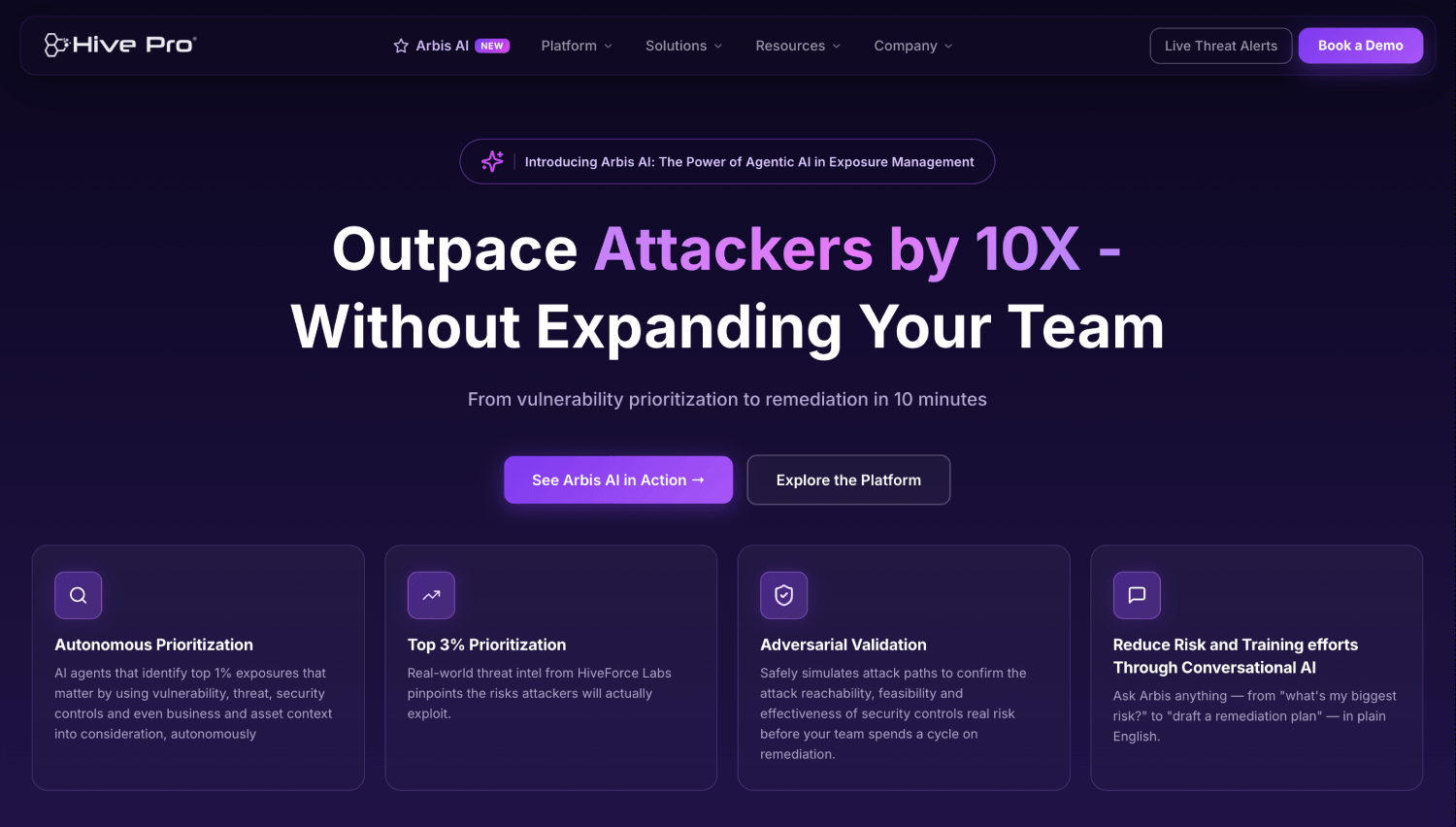
Hive Pro is a threat-informed vulnerability prioritization platform that places heavy emphasis on threat actor correlation. In addition to EPSS and KEV signals, Hive Pro maps CVEs to active threat campaigns and actor profiles, allowing prioritization to reflect not just generic exploitation likelihood but industry-specific and actor-specific targeting. For organizations in sectors with documented adversary attention (financial services, energy, healthcare), this campaign-level intelligence layer changes the prioritization calculus in ways that generic EPSS scores alone do not capture. The platform also provides remediation guidance tied to specific findings. Pricing is not publicly disclosed.
9. Zafran
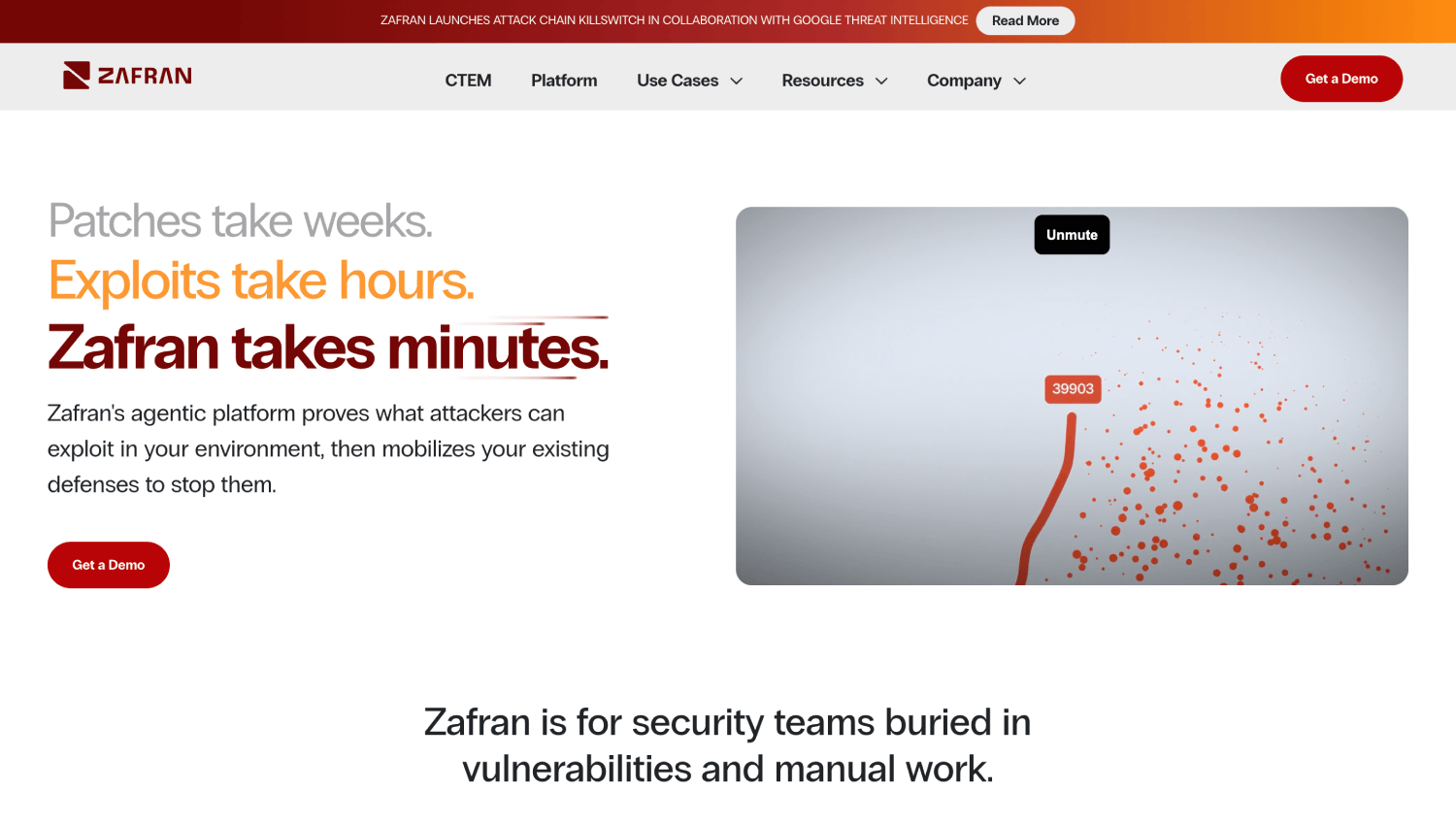
Zafran takes a compensating controls approach that distinguishes it from the aggregation and scoring tools above. The platform integrates with existing security controls (firewalls, WAFs, EDR tools, network segmentation data) and uses that context to determine whether a vulnerability in your specific environment is actually exploitable given your deployed defenses. A critical CVE on an asset fully isolated behind a WAF with no inbound attack surface gets a different risk rating than the same CVE on an exposed asset with no compensating controls. This reachability and control-aware scoring cuts backlogs more aggressively than EPSS alone for organizations with mature compensating control coverage. Pricing is not publicly disclosed.
10. Nagomi Security / Phoenix Security

Nagomi Security and Phoenix Security both operate in the risk-based vulnerability management space with an emphasis on connecting vulnerability findings to business context and application ownership. Phoenix Security is specifically designed to bridge infrastructure and application-layer vulnerability data, though the brief for this article focuses on infrastructure-side prioritization. Nagomi focuses on measuring the effectiveness of existing security controls against known threats and using that measurement to prioritize exposure reduction. Both tools are worth evaluating for teams running mixed infrastructure and application vulnerability programs. Pricing is not publicly disclosed for either.
How Do EPSS and KEV Change the Remediation Queue in Practice?
Consider a hypothetical mid-market organization: 2,000 assets, running Tenable as the primary scanner, generating around 15,000 open findings rated high or critical by CVSS. Sorting by CVSS alone, the remediation team faces a queue that would take months to work through even at full velocity.
Apply KEV as a first-pass filter. The number of those 15,000 findings that appear in the CISA KEV catalog will typically be a small fraction of the total. Those go to the top immediately, full stop. Then apply EPSS at, say, the 50th percentile as the next filter: findings where the model estimates at least a moderate probability of exploitation in the next 30 days. The queue shrinks again. Then apply asset exposure: internet-facing assets versus internal systems with no inbound network path. The resulting queue is often smaller by a full order of magnitude compared to the raw CVSS-sorted list, and it contains the findings that actual attackers are most likely to reach and use.
The important caveat: this approach only works if the asset inventory is accurate and if compensating control status is up to date. A finding scored as low-priority because an EDR agent is supposed to be covering the asset is actually high-priority if the agent has gone stale. Garbage-in on asset context produces garbage-out on risk scoring regardless of how sophisticated the prioritization model is.
Feature and Architecture Comparison
| Tool | EPSS Integration | KEV Integration | Compensating Controls Awareness | Remediation Routing | Scanner Agnostic | Best Fit |
|---|---|---|---|---|---|---|
| Tenable One / VPR | Yes (via VPR model) | Yes | Partial | Basic | No (Tenable-native) | Tenable shops scaling to exposure management |
| Qualys TruRisk | Yes | Yes | Partial | Moderate | No (Qualys-native) | Qualys VMDR customers adding risk context |
| Rapid7 InsightVM | Yes | Yes | Partial | Moderate | No (Rapid7-native) | Rapid7 platform customers |
| Nucleus Security | Yes | Yes | Limited | Strong | Yes | Multi-scanner environments with deduplication problems |
| Vulcan Cyber | Yes | Yes | Moderate | Strong | Yes | Teams where remediation accountability is the bottleneck |
| Seemplicity | Yes | Yes | Moderate | Strong | Yes | Security teams managing cross-org remediation workflows |
| Balbix | Yes | Yes | Strong | Moderate | Yes | Programs needing financial risk quantification |
| Hive Pro | Yes | Yes | Moderate | Moderate | Yes | Sectors with documented adversary targeting |
| Zafran | Yes | Yes | Strong (core feature) | Moderate | Yes | Mature control environments where reachability changes risk |
| Nagomi / Phoenix | Yes | Yes | Moderate | Moderate | Yes | Programs bridging infra and app-layer vulnerability data |
Can the Scoring Model Be Tuned to the Environment?
Score tunability varies significantly across these tools. Tenable’s VPR and Qualys’s TruRisk weight their signals according to their own models, and neither exposes full weight configuration to customers. You can add business context tags and asset criticality labels that influence scoring, but you cannot tell the model to weight EPSS at 40% and asset exposure at 35%. That is a deliberate design choice: Tenable and Qualys argue that their trained models produce better outcomes than customer-defined weights, which is plausible but harder to audit.
Nucleus, Vulcan Cyber, and Seemplicity offer more tuning surface. Business context rules, custom asset criticality tiers, and configurable SLA thresholds by finding type or asset group are common. This matters when organizational priorities differ from vendor defaults. A company processing health records has a different asset criticality model than a SaaS startup where the revenue-generating service lives in two AWS accounts.
Zafran’s control-aware scoring is tunable in the sense that the platform learns your actual control coverage as it ingests data from your security stack, which means the scores naturally reflect your specific environment rather than a generic industry baseline.
The operational implication: if your security program is early-stage and lacks the context needed to tune scoring intelligently, a vendor-managed model like Tenable VPR or Qualys TruRisk produces reasonable defaults with less configuration burden. If you have mature asset classification, well-documented compensating controls, and a security engineering team willing to maintain the model, the more configurable platforms return better prioritization at the cost of sustained calibration effort.
How Do These Tools Price Against the Scanner Already in Place?
None of the ten tools covered here publish list pricing. That is the honest answer, and it matters for budgeting.
The pricing models that vendors describe in conversations follow recognizable patterns. Scanner-native platforms (Tenable, Qualys, Rapid7) typically price the prioritization layer as an add-on to the existing platform license, usually based on asset count or a tier upgrade within the platform bundle. The marginal cost of adding prioritization to an existing Tenable or Qualys deployment is significantly lower than buying a separate tool, which is the primary competitive advantage of staying in-platform.
Standalone aggregation and prioritization tools (Nucleus, Vulcan Cyber, Seemplicity, Balbix, Hive Pro, Zafran, Nagomi/Phoenix) price based on environment size, typically by asset count or by the number of vulnerability findings under management. These tools carry their own license cost on top of existing scanner spend, which means the business case requires demonstrating remediation velocity improvement or headcount offset to justify the incremental spend.
For a team deciding whether to stay in-platform or add a standalone tool, the break-even question is: how much time does the current team spend on deduplication, false-positive triage, and manual prioritization decisions that a standalone tool would automate? If that number is measured in engineer-hours per week, the ROI math becomes straightforward.
Teams evaluating broader exposure management programs should also consider how these vulnerability prioritization tools connect to continuous threat exposure management platforms, which extend prioritization into validation and risk quantification across the full attack surface.
What Should Security Leaders Ask During an Evaluation?
The standard demo cycle for these tools shows the score improving and the backlog shrinking. That is a given. The questions that actually differentiate tools during evaluation are more specific.
Ask the vendor to show you what happens when an asset’s EPSS score changes overnight because a proof-of-concept drops. Does the queue update automatically? How quickly? Does the owner of the affected system get notified, or does the security team have to manually re-triage?
Ask how the tool handles false assets. Every large environment has stale records, decommissioned systems still in the CMDB, and cloud ephemeral assets that appear and disappear faster than scan cycles can track. A tool that scores a finding on an asset that no longer exists is adding noise, not signal.
Ask about the compensating controls model. If you have a WAF sitting in front of a vulnerable web application, does the tool know? Does it reduce the effective risk score of findings on that application, or does it treat the application’s network-layer exposure as if no WAF exists?
Ask to see the audit trail for a specific finding’s score change over the past 90 days. If the score changed and the vendor cannot explain why in terms of specific contributing signals, the scoring model is less trustworthy than the demo suggested.
Security operations teams evaluating the triage and response side of this work should also look at how exposure management platforms tie vulnerability prioritization to detection coverage gaps, since unmonitored assets with high-priority findings represent compounded risk.
Application-Layer Vulnerability Prioritization: Out of Scope Here
This article covers infrastructure and endpoint vulnerability prioritization. Application-layer prioritization (SAST, DAST, SCA findings, secrets exposure, software supply chain risk) involves different signals, different tooling, and different organizational ownership. EPSS and KEV apply to CVEs, which means they are relevant to SCA findings in third-party dependencies but not directly to first-party code findings from SAST or DAST scanners. Teams building application security prioritization programs should look at ASPM tools designed for that context. The ASPM tools built for GitHub-centric engineering teams address that layer specifically.
Frequently Asked Questions
What is EPSS and how is it different from CVSS?
CVSS (Common Vulnerability Scoring System) measures the theoretical severity of a vulnerability based on characteristics like attack complexity and potential impact. EPSS (Exploit Prediction Scoring System), maintained by FIRST, estimates the probability that a specific CVE will be exploited in the wild within 30 days, based on threat intelligence and attacker behavior signals. A CVE can have a high CVSS score and a low EPSS score, meaning it is theoretically severe but rarely targeted. EPSS is a better signal for remediation ordering because it reflects actual attacker activity rather than theoretical worst-case impact.
What is the CISA KEV catalog and why does it matter for prioritization?
The CISA Known Exploited Vulnerabilities catalog lists CVEs for which CISA has confirmed active exploitation in real-world attacks. Under BOD 26-04 (Prioritizing Security Updates Based on Risk), federal agencies must remediate KEV-listed vulnerabilities within defined timelines. For private-sector organizations, KEV provides a high-confidence shortlist of vulnerabilities that have moved from theoretical to actively weaponized. Any KEV-listed finding on an internet-facing asset should go to the top of the remediation queue regardless of CVSS score, because confirmed exploitation evidence outweighs theoretical severity assessments.
How much does risk-based vulnerability management tooling cost?
None of the major vulnerability prioritization platforms publish list pricing publicly. Scanner-native prioritization layers (Tenable VPR, Qualys TruRisk, Rapid7’s risk scoring) are typically bundled into or offered as upgrades within existing platform agreements, priced by asset count. Standalone aggregation and prioritization tools (Nucleus, Vulcan Cyber, Seemplicity, Balbix, Hive Pro, Zafran) price on environment size and are quoted per engagement. Budget planning for standalone tools should account for the license cost on top of existing scanner spend, requiring a clear operational efficiency justification.
What is SSVC and when should teams use it instead of EPSS?
SSVC (Stakeholder-Specific Vulnerability Categorization) is a decision framework associated with Carnegie Mellon’s Software Engineering Institute that produces prioritization recommendations based on mission-specific context: exploitation status, technical impact, and organizational criticality. EPSS is a probabilistic external signal about how frequently a given CVE class is being exploited across the broader population of exposed systems. SSVC incorporates internal context. The two approaches complement each other: EPSS and KEV filter the queue to findings with external exploitation evidence, and SSVC applies internal context to rank those findings against each other. SSVC requires accurate asset and mission data to work correctly, which makes it more demanding to operate at scale.
Can these tools replace the vulnerability scanner?
No. All of the tools covered here either are the scanner (Tenable, Qualys, Rapid7) or ingest from scanners (Nucleus, Vulcan Cyber, Seemplicity, Balbix, Hive Pro, Zafran, Nagomi, Phoenix). The prioritization layer requires scan data as input. Scanner-agnostic tools in this list depend on the quality of the underlying scan output. A noisy or incomplete scanner produces a noisy or incomplete priority queue regardless of how sophisticated the prioritization model is. Getting scanner coverage right is a prerequisite to getting prioritization right.
How do compensating controls factor into vulnerability prioritization?
Compensating controls reduce the effective exploitability of a vulnerability in a specific environment. A WAF blocking the attack path to a vulnerable web application, an EDR agent catching the exploit attempt, or network segmentation preventing lateral movement from a compromised asset all reduce the actual risk even if the CVSS score remains unchanged. Tools like Zafran explicitly model compensating control coverage as a core scoring input. Most other tools treat compensating controls as supplemental context rather than first-class scoring factors. For environments with mature control coverage, a tool that accounts for controls produces a more accurate priority queue than one that ignores them.
What integration depth do these tools need to produce accurate scores?
At minimum: a scanner feed, an asset inventory or CMDB connection, and business context tags for asset criticality. Richer scoring requires network topology data (what is internet-facing), compensating control status from EDR and network security tools, and software bill of materials data for dependency-level findings. The gap between minimum and rich integration is where most programs stall. Teams that invest in the integration work upfront get dramatically better scores. Teams that connect the scanner and call it done get slightly better scores than CVSS sorting alone, but still face significant triage noise from context gaps.
How does vulnerability prioritization connect to broader exposure management?
Vulnerability prioritization is one input into exposure management. A complete exposure management program also covers attack path analysis (can an attacker chain findings together to reach a critical asset?), external attack surface discovery (what is visible and potentially reachable that security does not know about?), and exposure validation (does the prioritized finding actually lead to impact in your specific environment?). Tools in this list address the prioritization piece. The broader CTEM category connects prioritization to validation and risk quantification across the full attack surface. Teams building out that broader capability should evaluate purpose-built exposure validation platforms alongside the prioritization tools covered here.
The Single Most Important Insight
Switching from CVSS-sorted queues to EPSS-informed, KEV-filtered, asset-contextualized prioritization does not just make the queue shorter. It changes what the security team optimizes for. A CVSS-sorted program measures itself by how many high-severity findings get closed. A risk-based program measures itself by whether the findings most likely to result in breach are being addressed before they become incidents. Those two objectives produce different backlogs and different conversations with the board.
The tool choice matters less than the model underneath it. A team running Tenable VPR with accurate asset criticality tags and current compensating control status will outperform a team running a sophisticated standalone vulnerability prioritization tool on stale asset data. The prioritization engine is only as trustworthy as the context it operates on.
Start with KEV. Apply EPSS. Add asset exposure. Layer in compensating controls if the data exists. Everything that survives all four filters is the real queue. For most enterprise environments, that is a fraction of the CVSS-sorted list, and it is the fraction that attackers would actually target.